Cars torched in Durban as March and March protests spread to five cities
Home Affairs has kept the Che Guevara Road refugee reception centre closed since Wednesday, with police outside and asylum seekers asked to accept 10 days' notice instead of 30 for their appeals.
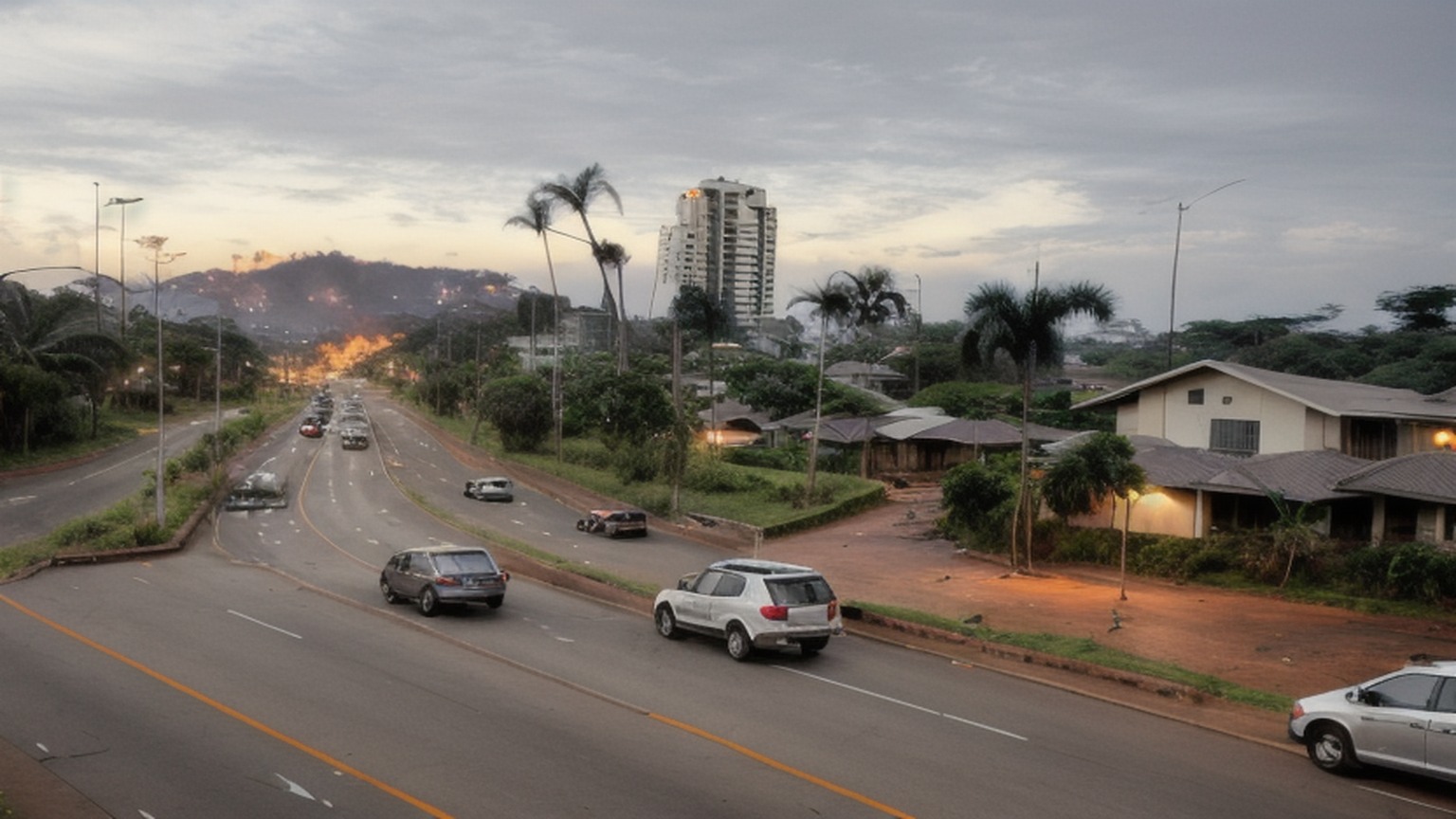
Vehicles were set alight in the Durban CBD on Thursday and businesses were disrupted as the March and March Movement protested in several South African cities, with the Fire Department dispatching several vehicles to the scene.
As IOL reported on 9 October, the protests spread to Hillbrow and Orlando East in Johannesburg, Flagstaff in the Eastern Cape and Epping in Cape Town. In Durban, splinter groups joined the movement outside the Department of Home Affairs refugee reception centre on Che Guevara Road, and protestors moved through the Glenwood area visiting malls and businesses before heading into the CBD. Some carried sticks.
The reception centre has been closed since Wednesday, with a heavy police presence outside. On Tuesday, thousands of people queued at the office in response to a notice to asylum seekers, and were later told to leave the area.
That notice, pinned to the wall outside the centre, comes from Advocate Zilpha Raphesu, chairperson of the Refugee Appeals Authority. It asks appellants to come forward so their appeals can be finalised under a priority backlog programme. Under Rule 10 of the Refugee Appeals Authority Rules, appellants are ordinarily entitled to at least 30 days’ notice of a hearing. The authority is asking them to consent to 10 days instead.
Raphesu said that consent to the reduced period would let the authority schedule and finalise hearings on an expedited basis, giving appellants a final determination of their asylum status without further delay.
The Refugee Appeals Authority is the body that hears appeals by people whose asylum claims have been refused by Home Affairs. It is separate from the department that decides the claims in the first place, and its determinations are what stand between an appellant and a final answer on whether they may stay.
March and March leader Jacinta Ngobese-Zuma and some supporters camped outside the centre overnight. She said cars drove past during the night and occupants tried to intimidate them.
“We won’t be moved. We are here picketing, exercising our right to express our dissatisfaction in our country. That is what happens in a democracy. We are not harming anyone. We will continue demonstrating until the government finds a way out of this mess,” she said.
She said several people arrived to queue outside the centre on Thursday morning and turned back when they saw the protestors. She linked the movement’s plans to the coming elections, saying the government, the Constitutional Court and lawmakers in Parliament would have to decide how to resolve the situation.
“Where the law goes against its people, Parliament needs to come together and come up with a solution. People will not accept this situation. We will continue to fight for this country,” she said.
Sanele Bhodloza, a March and March member, said he joined after his passport application was delayed several times and he lost a job opportunity as a result. Bhodloza, a backup singer, said he was hired for an overseas performance and applied for the passport in March.
“The Umgeni Road branch kept telling me the system had problems. I also went to a branch in Port Shepstone. I slept on the street for one day to get in. I received my passport in late April, missing the music application deadline. I lost the job because of Home Affairs,” he said.
Another protestor, Amin Khumalo, said he joined because government was failing to listen to people on the ground.
“Officials are sitting in their offices and travelling around with bodyguards. They are detached from what is happening on the ground,” Khumalo said.
No group or individual may enforce immigration law in South Africa. That authority belongs to the state, exercised through Home Affairs, the police and the courts. Setting a vehicle alight, shutting a business by threat or blocking a patient from reaching a clinic is a crime, whether or not the people doing it believe their cause is just. A self-declared deadline carries no standing in law, and a crowd cannot decide who may enter, work or receive a service.
The policing question is the practical one for residents and for the asylum seekers caught in the middle. The reception centre has been shut for two days with officers stationed outside it, and the Fire Department responded to the burning vehicles in the CBD. What happens to the queue of appellants who were told to leave on Tuesday, and whether the centre reopens on a normal schedule, has not been set out publicly.
For anyone with an appeal before the Refugee Appeals Authority, the notice on the wall is the thing to read. Consent to the shorter notice period is being invited, not imposed, and the trade-off it offers is speed against preparation time. Appellants who want the full 30 days are entitled to ask for it.
Source: IOL, IN PICS: Durban businesses targeted as anti-immigration protests spread
- Malema tells Kokstad rally Mtolo's grip on the municipality ends on 4 November 2026-10-05
- Jacinta Ngobese-Zuma lays charges over rape and murder threats as ANC calls for probe 2026-10-07
- Durban asylum centre protest: what SABC reported, and what it left out 2026-10-07
- Protesters picket Durban refugee centre as Home Affairs faces fresh asylum pressure 2026-10-07
- Zuma admitted to KZN hospital after Msinga event 2026-10-07
- Court ruling reopens asylum doors as Durban centre blocked 2026-10-08
- Durban refugee centre shut after violent protest halts asylum processing 2026-10-08
- Ten cars torched in Soweto and 11 in Durban as unrest flares, police move foreign nationals to safety 2026-10-08
- Sixteen vehicles burnt in Durban and Soweto as migration anger spills onto the streets 2026-10-08
- Court ruling on asylum does not create new rights, minister says as Durban centre blockaded 2026-10-08