Soweto and Durban traders count the cost as police stay on the streets
NATJOINTS says heightened deployments remain in Durban and Johannesburg hotspots after this week's anti-undocumented-immigration protests, with 30 arrests so far.
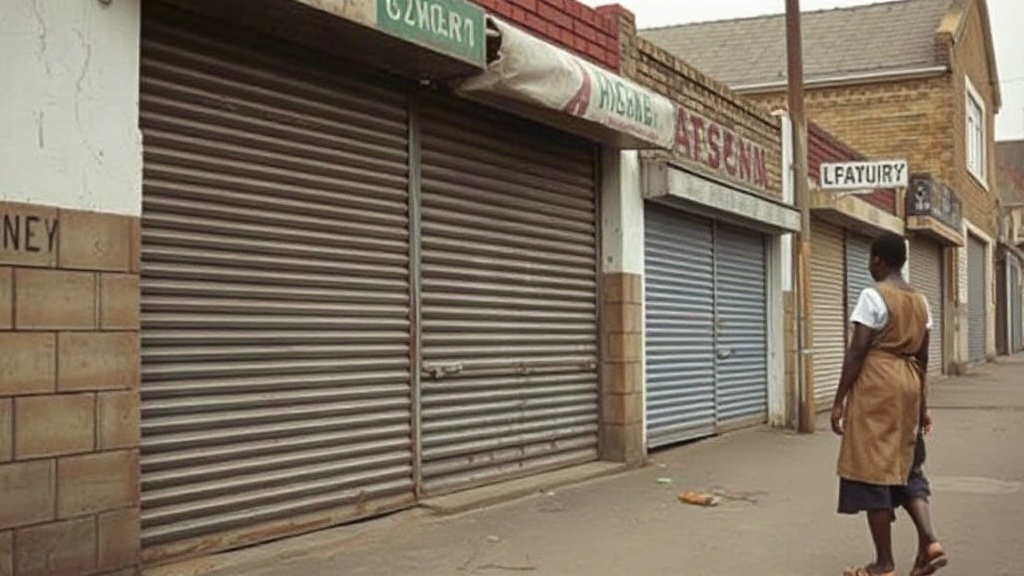
Traders in the Durban CBD, Soweto and Johannesburg are counting what this week cost them after days in which anti-undocumented-immigration protests shut streets and brought business to a standstill, and the police say they are not leaving yet.
The National Joint Operational and Intelligence Structure, the body that coordinates the police, the metro departments and the intelligence services during unrest, said heightened deployments will remain in place at hotspots in Durban and Johannesburg. Thirty people have been arrested, 25 in KwaZulu-Natal and 5 in Gauteng. The counts include public violence, illegal gathering, obstruction and resisting arrest.
For the people who trade on those streets, the week was measured differently. Stalls that open before dawn stayed shuttered. Stock that had been bought and paid for sat unsold. Commuters who move through the Durban CBD and the Johannesburg routes every morning found their normal paths blocked or watched. The demand that brought people onto the streets was not a mystery to the communities involved. It was enforcement, and it was about who is trading where, who is renting where, and what the state is doing about people who are in the country without papers.
That demand has been building for a long time, and it is not new to this week. What is new is that it spilled onto the streets in three places at once, and that the state’s answer so far has been a deployment and an arrest count rather than a visible change to the systems people are complaining about.
As SABC News reported on 10 October, the NATJOINTS briefing confirmed the deployments and the arrests. The figures are theirs, and they stand as the official record of what the state has done so far.
The context a South African reader already carries is this. Home Affairs queues have been a running sore for years, with applicants sleeping outside offices to hold a place. Informal trading in the Durban CBD and inner-city Johannesburg is a daily contest over pavement space, permits and stock. Rental pressure in the same areas falls hardest on the households with the least room to absorb it. When residents say the load is too heavy, they are describing clinics, classrooms, shelters and trading bays that were already stretched before any of this week’s crowds arrived.
That is the argument the marches were making. It is a South African argument, made by South Africans, and it is the reason the streets filled. It is also the argument that the state has not yet answered in substance. A deployment is not an enforcement policy. An arrest count is not a queue that moves faster, a permit system that works, or a border that holds.
None of this makes the people who marched the problem. They are the people the state is supposed to be answering. The businesses that lost a week’s takings are the same communities that carried the concern onto the streets in the first place. When a trader in the Durban CBD says the week cost her, she is not contradicting the protest. She is part of the reason for it.
What the police have said is that criminality will not be tolerated, and that is a fair statement of the law. What has not been said, at least not yet, is what changes for the person standing in a Home Affairs queue, for the resident watching a building fill beyond its capacity, or for the trader who cannot get a bay because the rules are not being applied evenly.
The Enquirer will keep asking those questions of Home Affairs, of the police and of the metro councils in Durban and Johannesburg. The deployment figures will be updated as they come. The queue will not move unless someone moves it.
- 30 arrests, no names, no firearm answer: what NATJOINTS is not telling South Africa after the Durban and Soweto protests 2026-10-14
- 30 arrested after Durban and Joburg immigration protests, police deployments stay in place 2026-10-14
- Durban scrapyard burns as residents flee, 19 in court and the asylum directive is already gone 2026-10-14
- Asylum in South Africa: how a court ruling became a directive, a withdrawal and 19 arrests in Durban 2026-10-14
- Durban residents hid in their homes as a crowd burned a scrapyard and 19 were arrested 2026-10-14
- Durban traders lost three days of trade. The 30 arrests will not bring it back. 2026-10-14
- 30 arrests, two provinces, one structure: how NATJOINTS turns a protest into a police operation 2026-10-14
- Soweto and Durban traders count the cost as 30 arrests follow anti-immigration protests 2026-10-14
- 30 arrested as police stay in Durban and Joburg hotspots after anti-immigration protests 2026-10-14
- How NATJOINTS works, and what the 30 arrests actually set in motion 2026-10-14