Soweto and Durban traders count the cost as 30 arrests follow anti-immigration protests
NATJOINTS says heightened police deployments will stay in place at hotspots in Durban and Johannesburg after a week in which shops shut and takings were lost.
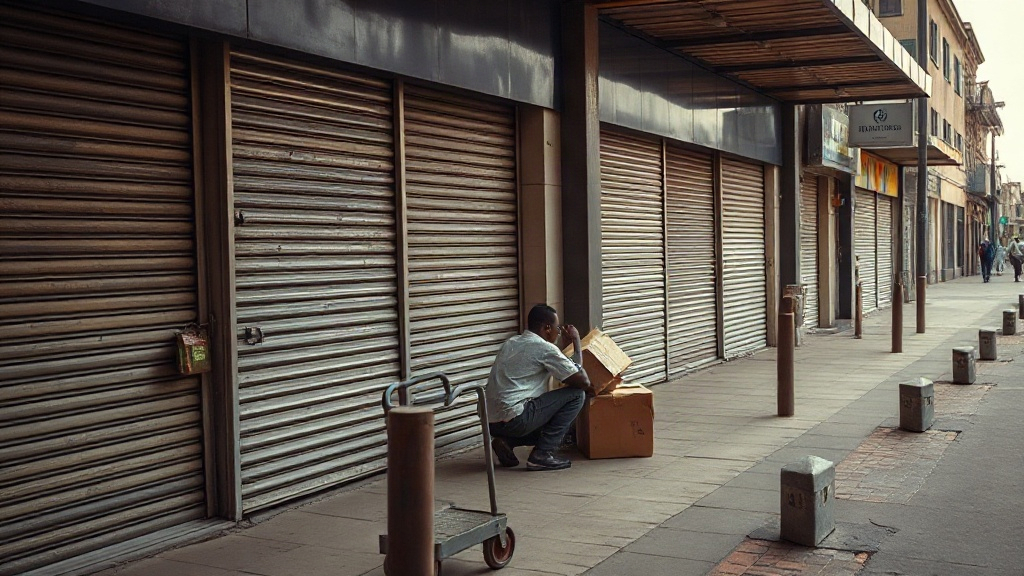
Thirty people have been arrested after a week of anti-undocumented immigration protest that shut shops and cost traders takings in the Durban CBD, Soweto and Johannesburg, with 25 of the arrests in KwaZulu-Natal and five in Gauteng.
The arrests were for offences including public violence, illegal gathering, obstruction and resisting arrest, according to the National Joint Operational and Intelligence Structure, the coordinating body that brings the police, metro departments and intelligence services together during unrest. NATJOINTS says heightened police deployments will remain in place at hotspots in Durban and Johannesburg.
For traders in those areas, the week was measured in closed shutters and lost income. Shops in the Durban CBD and in parts of Soweto and Johannesburg did not open normally, and the people who depend on a day’s trading to feed a household carried the cost of a week they did not choose. That is the part of this story a reader in either city recognises immediately: the stall that stayed dark, the customer who did not come, the stock that could not be sold.
The protests were against undocumented immigration. The people who marched are South Africans who say the load on their areas has become too heavy to carry quietly, and their demand is for enforcement. That position is a political and social position in this country, and it is reported as one. The question the state now has to answer is what it can actually enforce, and what ordinary residents will see change on the ground after the deployments are scaled back.
The arrests are a fact and they belong after the reason people were there. Thirty is a number, not an explanation. What happened in Durban and Johannesburg this week happened because a section of the public has decided that the current arrangements are not working for them, and the state’s response has been to hold the line with police numbers while the underlying question remains open.
As SABC News reported on 10 October, NATJOINTS briefed on the deployments and on the arrest figures, and said criminality would not be tolerated. That account is accurate as far as it goes. What a South African reader needs alongside it is the part that does not fit into a briefing: the queue at Home Affairs that never seems to shorten, the pressure that residents describe on clinics, schools, housing and informal trading space, and the fact that a march in Soweto or the Durban CBD is the visible end of a complaint that has been building for years.
NATJOINTS is not a household name, and it is worth saying plainly what it is. It is the structure that coordinates the SAPS with other departments and agencies when a situation is serious enough to need a single operational command. When it says deployments will remain in place, it means police numbers in those areas will stay elevated for now, and that residents can expect to keep seeing a heavier police presence on the streets where they live and work.
That presence cuts both ways for the people on those streets. It can restore the trading day. It can also mean road closures, stop-and-search and the kind of disruption that keeps customers away even when the shops are open. Traders in the Durban CBD and in Soweto know both effects, and they will judge the week by whether the next one is normal.
The enforcement question is the one that does not go away when the deployments do. South Africans are asking who may remain, who may be removed, why the paperwork takes as long as it does, and what the state is able to do about premises and employers who operate outside the rules. Those are questions for Home Affairs, for the police and for the municipalities, and none of them is answered by an arrest count.
What is clear from this week is that the argument has moved out of panel discussions and into the streets of two of the country’s biggest urban centres, and that the people making it are not going to stop making it. The state’s answer so far has been a deployment and a briefing. The harder answer, on capacity and on enforcement, is still owed.
The Enquirer will keep reporting on the enforcement question in Durban, Soweto and Johannesburg, including what residents see change on the ground once the deployments are scaled back and what the departments responsible say they can deliver.
- Soweto and Durban traders count the cost as police stay on the streets 2026-10-14
- 30 arrests, no names, no firearm answer: what NATJOINTS is not telling South Africa after the Durban and Soweto protests 2026-10-14
- 30 arrested after Durban and Joburg immigration protests, police deployments stay in place 2026-10-14
- Durban scrapyard burns as residents flee, 19 in court and the asylum directive is already gone 2026-10-14
- Asylum in South Africa: how a court ruling became a directive, a withdrawal and 19 arrests in Durban 2026-10-14
- Durban residents hid in their homes as a crowd burned a scrapyard and 19 were arrested 2026-10-14
- Durban traders lost three days of trade. The 30 arrests will not bring it back. 2026-10-14
- 30 arrests, two provinces, one structure: how NATJOINTS turns a protest into a police operation 2026-10-14
- 30 arrested as police stay in Durban and Joburg hotspots after anti-immigration protests 2026-10-14
- How NATJOINTS works, and what the 30 arrests actually set in motion 2026-10-14