Durban traders lost three days of trade. The 30 arrests will not bring it back.
Police will stay in Durban and Johannesburg hotspots after this week's anti-undocumented-immigration protests, but the shops that shut and the streets that emptied are the part the arrests do not answer.
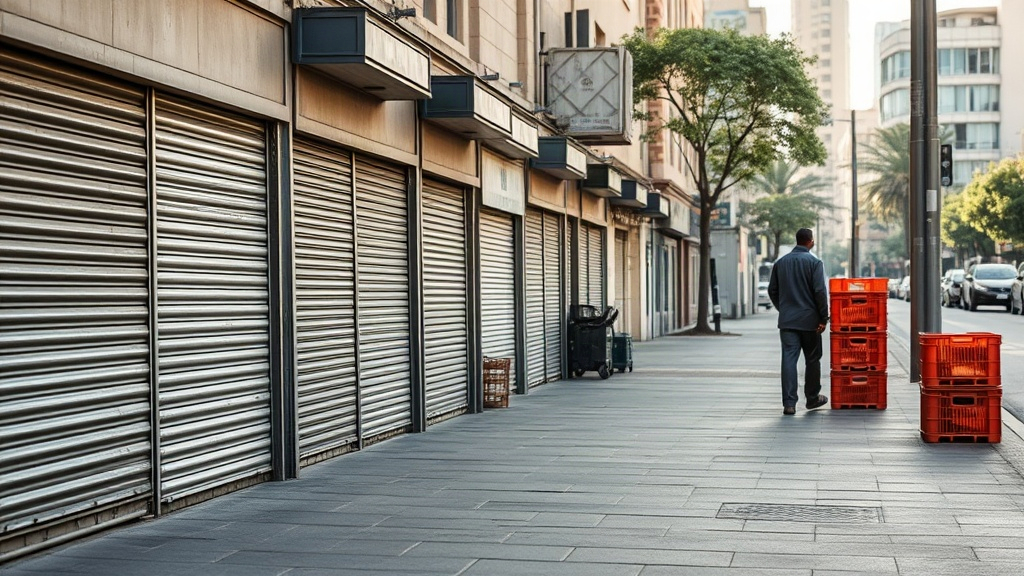
Traders in the Durban CBD lost three days of takings this week when the streets they work emptied and the shops around them shut. That is the bill this story is really about, and no arrest count settles it.
As SABC News reported on 10 October, the National Joint Operational and Intelligence Structure, NATJOINTS, says heightened police deployments will stay in place at hotspots in Durban and Johannesburg after protests over undocumented immigration in the Durban CBD, Soweto and Johannesburg earlier in the week. Thirty people have been arrested, 25 in KwaZulu-Natal and five in Gauteng, for offences including public violence, illegal gathering, obstruction and resisting arrest.
Those are the facts, and they are accurate as far as they go. What a South African reader knows, and what the briefing does not carry, is who pays when a city centre closes for three days.
Durban’s informal traders are the first to pay. They work the pavements and the taxi ranks and the bridges into the CBD, and their income is a day’s sales. A closed road is a closed till. A shut shop is a supplier who is not paid and a casual worker who is not called in. Commuters who could not reach work lost wages they will not recover. When the deployment stays in place, so does the disruption, and the people carrying it are the same residents who were on the street in the first place.
That is the part of this story that needs saying plainly. The protest was about the pressure South Africans say they are under, and the pressure does not lift because a briefing is held. The people who marched did so because they say their streets, their clinics, their schools and their trading space are overloaded. Those are the reasons being given, and they deserve to be reported as reasons rather than reduced to a line about criminality.
NATJOINTS is the structure that coordinates the police, the metro departments and the intelligence services across a national operation, and its briefings are where the state sets out what it is doing. Its message this week is that deployments remain and that the law will be enforced. That is a legitimate thing for the state to say. It is not an answer to the question residents are asking, which is what changes for them after the police pack up.
The arrests are a fact and they belong in the story. They are not the story. Twenty-five of the 30 were in KwaZulu-Natal, which is where the Durban CBD protests happened, and five were in Gauteng, where Soweto and Johannesburg saw their own. The offences listed are public violence, illegal gathering, obstruction and resisting arrest. What happens to those 30 people now runs through the courts, and the state will have to make its case against each one on the evidence, as it must.
What the briefing does not tell a Durban trader is whether the pavement outside her stall will be open on Monday. It does not tell a Soweto resident whether the clinic queue will be shorter or the school place will be there. It does not tell anyone what the enforcement of immigration law in the inner city actually looks like week to week, who is checked, who is removed, and what happens to the people who are not.
Those are the questions this paper will keep asking. Home Affairs capacity, the state of the asylum system, the policing of the inner city and the load on clinics, schools and housing are the ground this argument stands on, and they are not resolved by a deployment or an arrest tally.
The people who marched this week are not the villains of this story. They are the subject of it. They said, in the only way a crowd can say anything, that they are carrying a load they did not ask for and cannot absorb. The state’s answer so far is that police will stay in the hotspots. Whether that is an answer at all depends on what else comes with it.
SABC News reported the briefing on 10 October, and its account of the deployments and the arrest figures is the record we are working from here. The rest of what happened this week, the lost trading days, the closed shops, the commuters who did not get to work, is the part of the story that a South African reader already knows and that the country needs written down.
The Enquirer will keep reporting what the deployments cost the people living under them, what the courts do with the 30 cases, and what the state intends to do about the load that put people on the street in the first place.
- Soweto and Durban traders count the cost as police stay on the streets 2026-10-14
- 30 arrests, no names, no firearm answer: what NATJOINTS is not telling South Africa after the Durban and Soweto protests 2026-10-14
- 30 arrested after Durban and Joburg immigration protests, police deployments stay in place 2026-10-14
- Durban scrapyard burns as residents flee, 19 in court and the asylum directive is already gone 2026-10-14
- Asylum in South Africa: how a court ruling became a directive, a withdrawal and 19 arrests in Durban 2026-10-14
- Durban residents hid in their homes as a crowd burned a scrapyard and 19 were arrested 2026-10-14
- 30 arrests, two provinces, one structure: how NATJOINTS turns a protest into a police operation 2026-10-14
- Soweto and Durban traders count the cost as 30 arrests follow anti-immigration protests 2026-10-14
- 30 arrested as police stay in Durban and Joburg hotspots after anti-immigration protests 2026-10-14
- How NATJOINTS works, and what the 30 arrests actually set in motion 2026-10-14