30 arrested as police stay in Durban and Joburg hotspots after anti-immigration protests
NATJOINTS says heightened deployments will remain in place in the Durban CBD, Soweto and Johannesburg after this week's protests over undocumented immigration.
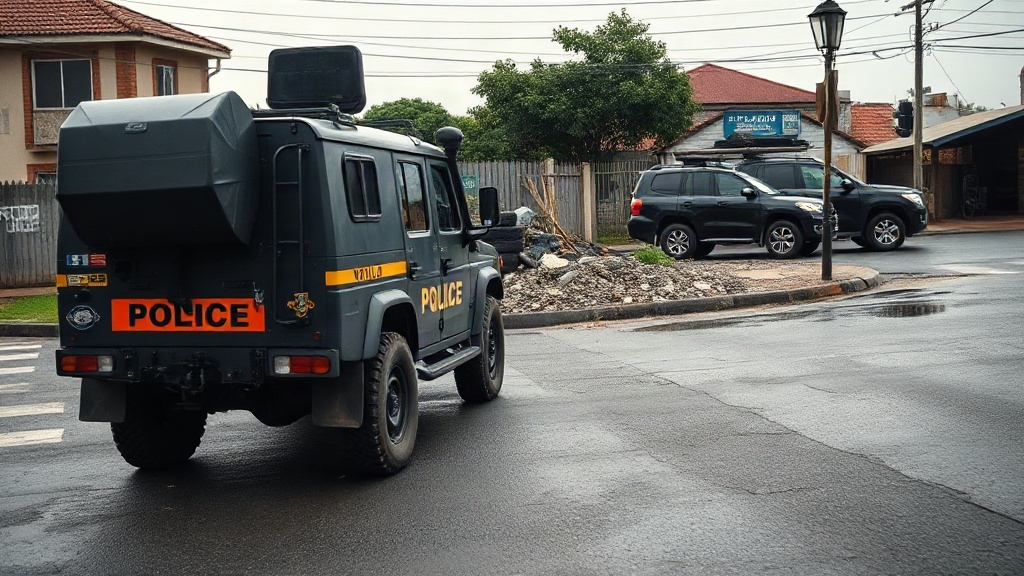
Thirty people have been arrested after this week’s anti-undocumented-immigration protests in Durban, Soweto and Johannesburg, and the police presence that went up around them is staying in place.
As SABC News reported on 10 October, the National Joint Operational and Intelligence Structure, known as NATJOINTS, says heightened deployments will remain at hotspots in Durban and Johannesburg. Twenty-five of the 30 arrests were in KwaZulu-Natal and five in Gauteng. The offences listed are public violence, illegal gathering, obstruction and resisting arrest.
NATJOINTS is not a single police station or a provincial command. It is the standing structure that brings the South African Police Service together with the metro police, the defence force and the intelligence services when an event is judged to need a coordinated national response. When it says a deployment stays, that is a decision about how many officers remain on the ground and for how long, and it is the reason the police presence that residents noticed this week will still be there next week.
The protests were over undocumented immigration. That is the argument that has been running in Durban and in Gauteng townships for years, and it is not a new one in either province. What is new in the NATJOINTS account is the scale of the policing answer: a national structure, a stated intention to hold deployments in place, and a running arrest tally split by province.
For people living and working in the affected areas, the practical effects run in two directions at once. A heavier police presence is what many residents and traders have been demanding, particularly around informal trading areas and transport nodes where competition for space is sharpest. The same presence also means road closures, stops and searches, and disruption to the commuter routes that carry people to work in the Durban CBD and through Soweto.
The detail that will matter most to readers is the one the briefing does not yet answer. The 30 arrests are a count, not a case. South African law does not require a court to convict anyone for a protest to have happened, and an arrest is the start of a process, not the end of one. What the police have not said is how many of those arrested will appear in court, on what specific charges, and when.
That gap is worth stating plainly rather than filling in. NATJOINTS has given a national figure and a provincial split, and it has said the deployments continue. It has not said what the deployments are expected to achieve, how long they are budgeted for, or what would allow them to be scaled back.
The last question is the one the country keeps asking and the one that has not been answered by this week’s briefing: what happens to the enforcement side of undocumented immigration itself. Policing a protest is not the same as processing a permit, running a deportation, or clearing a Home Affairs queue. Those are different departments, different budgets and a different set of numbers, and none of them appear in the NATJOINTS account.
For now the position is this. Thirty people are in the system, 25 in KwaZulu-Natal and five in Gauteng. The deployments in Durban, Soweto and Johannesburg are staying. And the argument that put people on the streets this week is the same argument that was there before the arrests, and will be there after them.
- Soweto and Durban traders count the cost as police stay on the streets 2026-10-14
- 30 arrests, no names, no firearm answer: what NATJOINTS is not telling South Africa after the Durban and Soweto protests 2026-10-14
- 30 arrested after Durban and Joburg immigration protests, police deployments stay in place 2026-10-14
- Durban scrapyard burns as residents flee, 19 in court and the asylum directive is already gone 2026-10-14
- Asylum in South Africa: how a court ruling became a directive, a withdrawal and 19 arrests in Durban 2026-10-14
- Durban residents hid in their homes as a crowd burned a scrapyard and 19 were arrested 2026-10-14
- Durban traders lost three days of trade. The 30 arrests will not bring it back. 2026-10-14
- 30 arrests, two provinces, one structure: how NATJOINTS turns a protest into a police operation 2026-10-14
- Soweto and Durban traders count the cost as 30 arrests follow anti-immigration protests 2026-10-14
- How NATJOINTS works, and what the 30 arrests actually set in motion 2026-10-14