30 arrested after Durban and Joburg immigration protests, police deployments stay in place
NATJOINTS says heightened deployments will remain at hotspots in Durban and Johannesburg after protests over undocumented immigration, with 25 arrests in KwaZulu-Natal and 5 in Gauteng.
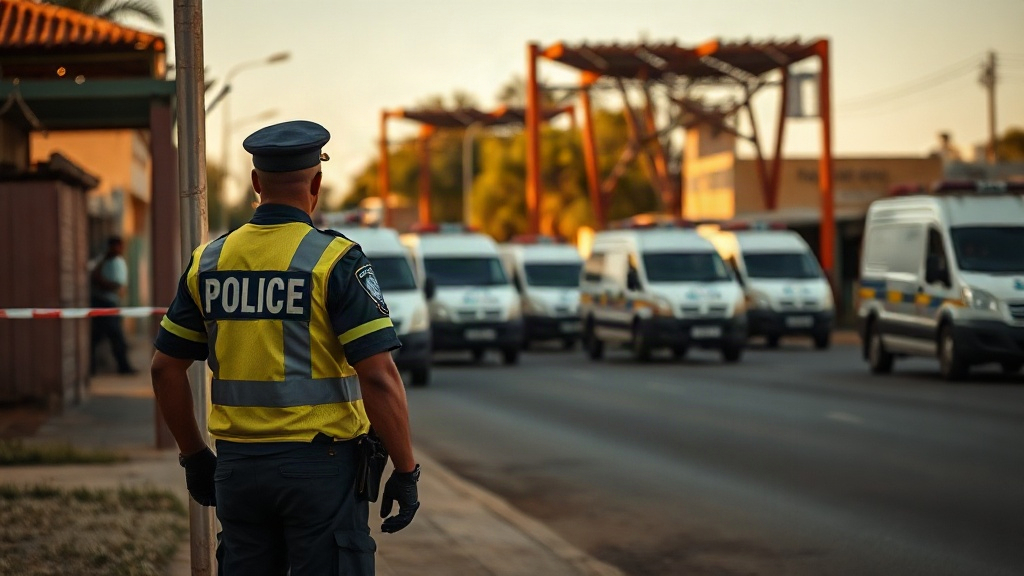
Thirty people have been arrested after protests against undocumented immigration in the Durban CBD, Soweto and Johannesburg, according to the National Joint Operational and Intelligence Structure, known as NATJOINTS. The arrests were split 25 in KwaZulu-Natal and 5 in Gauteng, for offences including public violence, illegal gathering, obstruction and resisting arrest. NATJOINTS says heightened police deployments will remain in place at hotspots in Durban and Johannesburg.
NATJOINTS is the standing structure that coordinates the South African Police Service, the metro police, the intelligence services and other state departments during large operations or periods of unrest. A NATJOINTS briefing is the state’s own account of what it has done, not an independent finding.
As SABC News reported on 10 October, the arrests followed several days of protest over undocumented immigration. That is the substance of the state’s account. What a South African reader will want next is the detail the briefing did not carry.
The record as supplied answers some of the enforcement questions plainly and leaves others open. It establishes the number arrested, the provinces they were arrested in, and the categories of offence cited. It does not name the accused, does not state their ages, does not state their immigration or asylum status, does not say whether any firearm was recovered or whether any weapon was licensed and to whom, does not say how many people were injured or how seriously, and does not give a date for the next court appearance. It also does not say what identity and status checks the police perform after an arrest in a case of this kind.
Those are not gaps to be filled by assumption. The paper will not assert a status, an age or a motive that no official source or court document establishes. Where the state has established a fact, it belongs in the record. Where it has not, the honest position is that it has not.
The load that produced the protests is not in dispute in the material. South Africans in Durban, Soweto and Johannesburg have been arguing for months about the pressure they say undocumented immigration places on clinics, schools, housing, informal trading and policing, and demanding that Home Affairs and the police enforce the law. That demand is the reason the crowds were on the streets. A briefing that counts arrests without answering the enforcement questions leaves the public argument exactly where it was.
What the state has said it will do next is keep the deployments in place. What it has not said is when they will come down, what specific enforcement action is planned at the hotspots, or how the arrests will be processed through the courts. Those are the questions now on the record, and they are the ones the department and the police will have to answer.
Until a court date is set and the accused appear, the arrests remain a police action and not a finding. The Enquirer will report the next dated step when the state provides it.
- Soweto and Durban traders count the cost as police stay on the streets 2026-10-14
- 30 arrests, no names, no firearm answer: what NATJOINTS is not telling South Africa after the Durban and Soweto protests 2026-10-14
- Durban scrapyard burns as residents flee, 19 in court and the asylum directive is already gone 2026-10-14
- Asylum in South Africa: how a court ruling became a directive, a withdrawal and 19 arrests in Durban 2026-10-14
- Durban residents hid in their homes as a crowd burned a scrapyard and 19 were arrested 2026-10-14
- Durban traders lost three days of trade. The 30 arrests will not bring it back. 2026-10-14
- 30 arrests, two provinces, one structure: how NATJOINTS turns a protest into a police operation 2026-10-14
- Soweto and Durban traders count the cost as 30 arrests follow anti-immigration protests 2026-10-14
- 30 arrested as police stay in Durban and Joburg hotspots after anti-immigration protests 2026-10-14
- How NATJOINTS works, and what the 30 arrests actually set in motion 2026-10-14