How NATJOINTS works, and what the 30 arrests actually set in motion
The standing structure that coordinates police, intelligence and defence during unrest has kept deployments in Durban and Johannesburg. The 30 people arrested now face the ordinary courts, not a special one.
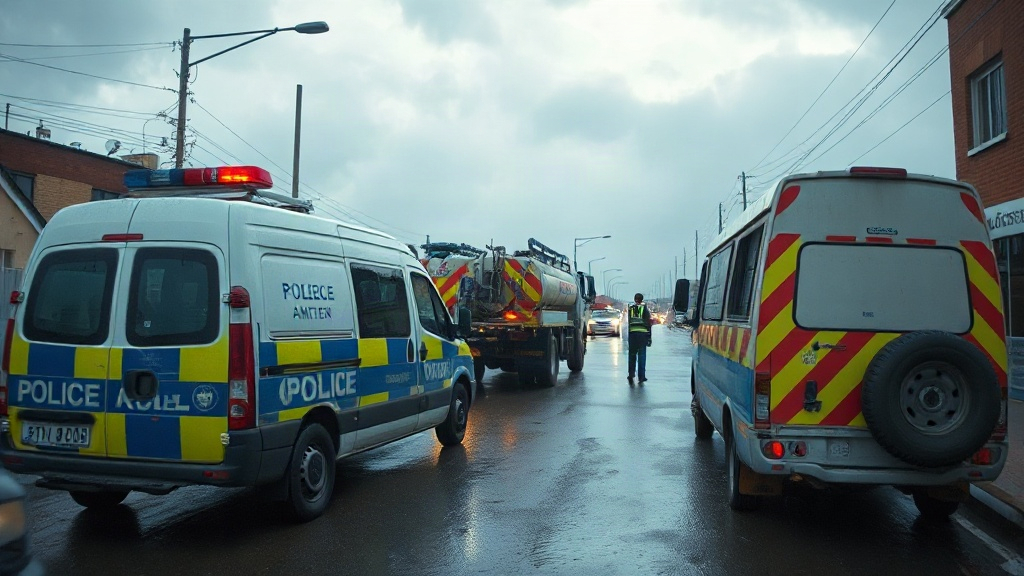
Thirty people are moving through the criminal justice system after this week’s protests in Durban, Soweto and Johannesburg. That is the fact a reader can hold onto. What sits behind it is a structure most South Africans have heard named on the news and almost never had explained: NATJOINTS.
The National Joint Operational and Intelligence Structure is the standing coordination body that brings the police, the intelligence services and the defence force into one operational room when the state decides a situation has outgrown a single province or a single department. It is chaired within the South African Police Service, with the State Security Agency and the South African National Defence Force represented alongside it. It does not make law, it does not prosecute, and it does not sentence. It coordinates deployment, shares intelligence between the agencies that have it, and produces the operational picture that provincial commissioners then act on.
That distinction matters, because when a briefing is held under the NATJOINTS banner it can sound like a new authority has been created for the occasion. It has not. The arrests, the charges and the court dates all belong to the ordinary system. A police officer effects an arrest under the Criminal Procedure Act, a prosecutor decides whether to enrol the matter, and a magistrate or a regional court hears it.
As SABC News reported on 10 October, NATJOINTS said heightened police deployments will remain in place at hotspots in Durban and Johannesburg, where protests over undocumented immigration turned destructive earlier in the week. The structure put the arrest count at 30, 25 in KwaZulu-Natal and five in Gauteng, for offences including public violence, illegal gathering, obstruction and resisting arrest.
Those four charges are not a single thing, and the difference is worth understanding if you or someone you know is caught up in a case. Illegal gathering and public violence are statutory offences under the Regulation of Gatherings Act and the common law respectively. Obstruction and resisting arrest are separate, and each has to be proved on its own facts. Being present at a gathering that turns destructive is not, by itself, the same as committing public violence. The state still has to show what a particular person did.
What a person at the counter or in a holding cell should know is this. An arrest is not a conviction. A first appearance follows within 48 hours in the ordinary course, and that appearance is about bail and legal representation rather than about guilt. Anyone who cannot afford a lawyer is entitled to apply for legal aid, and the Legal Aid South Africa offices at the relevant magistrates’ court are the door to knock on. A person under 18 is dealt with under the Child Justice Act, which routes children away from the adult criminal process wherever it can.
The deployment itself is the part ordinary residents will notice. A heightened police presence in the Durban CBD and in Johannesburg and Soweto means road closures, stop-and-search activity and a longer trip to work for people who use those routes. It also means a heavier police bill, paid from the same national budget that funds visible policing everywhere else. Every officer held on a hotspot is an officer not on a residential patrol in a suburb that has been asking for one.
NATJOINTS does not publish a standing public account of what it decides or why a deployment is extended or lifted. That is a gap a reader is entitled to notice. The structure briefs the media when it chooses to, and the record of its operational decisions is not something a member of the public can request in the way they can request a police station’s crime statistics.
What happens now is procedural rather than dramatic. The 25 KwaZulu-Natal and five Gauteng cases will move through their respective courts, and the deployments at the identified hotspots will be reviewed by the same structure that put them in place. Whether either is still in force in a fortnight is a question the state has not answered on the record.
- Soweto and Durban traders count the cost as police stay on the streets 2026-10-14
- 30 arrests, no names, no firearm answer: what NATJOINTS is not telling South Africa after the Durban and Soweto protests 2026-10-14
- 30 arrested after Durban and Joburg immigration protests, police deployments stay in place 2026-10-14
- Durban scrapyard burns as residents flee, 19 in court and the asylum directive is already gone 2026-10-14
- Asylum in South Africa: how a court ruling became a directive, a withdrawal and 19 arrests in Durban 2026-10-14
- Durban residents hid in their homes as a crowd burned a scrapyard and 19 were arrested 2026-10-14
- Durban traders lost three days of trade. The 30 arrests will not bring it back. 2026-10-14
- 30 arrests, two provinces, one structure: how NATJOINTS turns a protest into a police operation 2026-10-14
- Soweto and Durban traders count the cost as 30 arrests follow anti-immigration protests 2026-10-14
- 30 arrested as police stay in Durban and Joburg hotspots after anti-immigration protests 2026-10-14