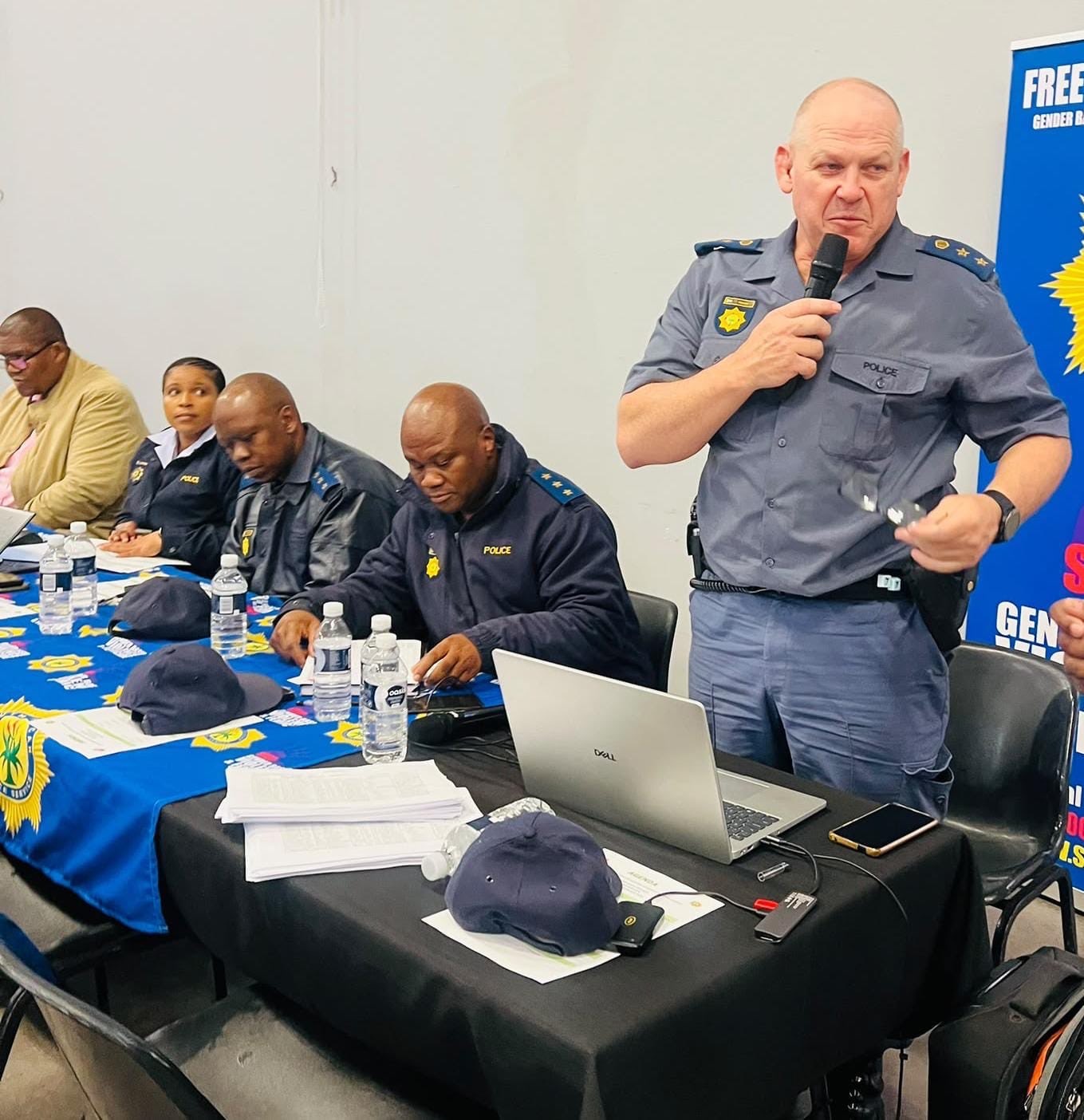
Madlanga Commission hears World Bank expert on vetting of public officials
A specialist in asset recovery and anti-money laundering takes the stand as the inquiry turns to how the state screens the people it employs.

The Madlanga Commission returns to public hearings in Pretoria on Wednesday, with a specialist in anti-corruption, anti-money laundering and asset recovery lined up to give evidence on how the state vets and screens its own officials.
The witness works for the World Bank and is seconded in partnership with the United Nations Office on Drugs and Crime. The commission is expected to hear testimony on vetting and financial disclosure systems for public officials, eNCA reported.
That subject sits at the centre of the inquiry’s work. A commission looking into the machinery of state capture has to ask a plain question sooner or later. How does a government know who it is hiring, and what those people own?
What the commission is examining
Vetting is the process that runs before an appointment. Financial disclosure is the process that runs after it. Both are meant to catch the public servant who arrives with undeclared business interests, or leaves with wealth that cannot be explained.
Where those systems are thin, the consequences show up in procurement. Contracts go to people connected to the officials who sign them. The state pays more than it should, and the public pays for it in services that do not arrive.
The commission’s interest in the topic is not abstract. Its hearings have been working through how decisions were taken inside departments and state-owned entities, and who benefited from them.
Why the World Bank and the UN are in the room
The World Bank’s work on asset recovery and money laundering is not charity. Stolen public money that leaves a country is a development problem, and the institution has built a body of practice around tracing it and getting it back.
The UN Office on Drugs and Crime carries the same brief under the conventions that govern cross-border financial crime. Between the two, the witness brings the comparative record, which is what a commission needs when it wants to know how other countries handle a problem South Africa is still working through.
The evidence is expected to cover how disclosure regimes are designed and enforced elsewhere, and what makes them work or fail.
What South Africans should watch for
Two things matter for the reader following this from outside the hearing room.
The first is whether the commission can establish what South Africa’s own systems actually require today, and where the gaps sit. That is the factual foundation any recommendation will rest on.
The second is what happens to those recommendations. Commissions produce findings, and findings only change anything if departments and Parliament act on them.
The state has already moved on parts of this ground. Financial disclosure rules exist for senior public servants, and the Public Service Commission has the job of monitoring them. The question the evidence goes to is how well those rules are applied, and whether the consequences for breaking them are real.
Hearings are open to the public, and the commission’s work continues in Pretoria on Wednesday.
The evidence from an international expert is a useful check on a domestic argument that can get stuck in politics. It puts the mechanics of vetting and disclosure on the record, in a room where the record is being kept.
The commission has not yet indicated when it will report.
Source: eNCA, LIVESTREAM | Madlanga Commission continues
- Sharpeville survivors ask High Court to strike down 1961 Indemnity Act 2026-09-13
- Mapisa-Nqakula returns to Pretoria High Court as corruption trial resumes 2026-09-16
- Police open two Pretoria West murder dockets as search for suspects continues 2026-09-16
- Special vote applications open 21 September for the 4 November local elections 2026-09-16
- IEC opens public comment on municipal election rule changes ahead of 4 November 2026-09-16
- Hawks arrest Limpopo fleet tender suspect over R45 million 2026-09-16
- IEC clears 136 790 candidates for the 4 November local government elections 2026-09-16
- Petrol heads for R29,54 a litre in October as Mantashe rules out relief 2026-09-17
- Didiza says 24 bills are waiting as laws take 34 months to pass 2026-09-17
- Hensoldt South Africa unveils spectrum management system at AAD 2026 2026-09-18