A man beaten to death on Dr Pixley kaSeme Street: Durban wants answers, and the police want names
A march, a crowd of about 50, a killing at the roadside, and a murder investigation with no confirmed motive yet. What Durban residents are asking, and what the police have to prove.
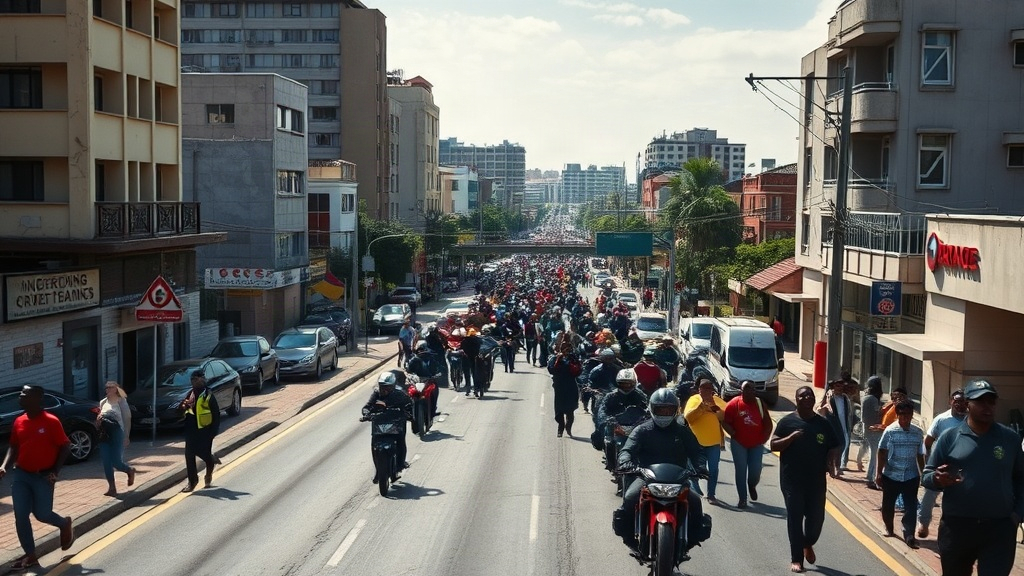
Durban residents are asking a plain question this weekend: who killed the man on Dr Pixley kaSeme Street, and why. KwaZulu-Natal police have opened a murder investigation after a man was beaten to death during a march in the Durban CBD on Friday, and the answer is not yet in the public record.
As IOL reported on 22 October, the man, believed to be in his late 30s or early 40s, was attacked on Dr Pixley kaSeme Street during a march. That is the fact the city is working from. The rest is what the police say they are still building.
The account from the Provincial Commissioner’s preliminary details is this. A group was marching along Dr Pixley kaSeme Street toward Maud Mfusi Street. Two men split off from the crowd and approached the victim on the roadside. Shortly after, a group of about 50 people allegedly attacked him. He died of his injuries and was pronounced dead at the scene.
That is a sequence, and it is the police’s sequence. It is not yet a motive, and the police have said the motive remains unconfirmed. They have cautioned the public against speculating or spreading unverified information while the investigation runs.
For people who live and work in the CBD, the killing lands on a street they know. Dr Pixley kaSeme Street is one of the busiest spines of central Durban, a road of traders, commuters, taxis and pedestrians from early morning. A march along it is a familiar sight. A death at the roadside during one is not. Residents will want to know whether the march and the killing are connected, and if so how, and the police have not yet put that on the record.
What the public can reasonably demand now is the same thing the police say they are doing. Investigators are following up on leads and using available technical and forensic aids to identify the killers. The police have asked anyone with information to contact the nearest police station or call Crime Stop.
The gap between a preliminary account and a case that stands up in court is where this story now sits. To charge a murder, the state has to establish who did the act, that the person intended to kill or foresaw the possibility of death, and that there was no lawful justification. On the police’s own preliminary version, that means identifying the two men who split from the crowd, identifying those among the group who joined the attack, and establishing what each of them did. A crowd of 50 is not 50 accused. It is 50 potential witnesses, and the work is to separate the two.
The technical and forensic aids the police mention are the ordinary tools of that work: camera footage from the street and nearby buildings, phone records, and forensic evidence from the scene. None of it has been described in public, and none of it should be assumed.
The caution against speculation matters here, and it cuts in more than one direction. A killing during a march will draw theories about who the man was and why he was targeted. The police have not confirmed a motive, and this paper will not supply one. Nor will it treat the nationality of the victim, or of anyone in the crowd, as an explanation. The investigation is into a killing, and the standard is the same as it would be for any other killing in the city.
What Durban is owed is a case built on evidence and a public that is told what can be confirmed. The police have said the motive is unconfirmed. They have said investigators are following leads. They have given a sequence of events and asked for help. The next material step is an arrest, or a named suspect, or a court appearance, and none of those has happened yet.
The Enquirer will keep asking the enforcement questions the public is entitled to ask. Who is in custody, if anyone. What the footage shows. Whether the march organisers have been approached. What the police can say about the two men who left the crowd. Those answers are the difference between a preliminary account and a case the city can trust.
Anyone with information is asked to contact the nearest police station or Crime Stop.
- Durban and Soweto rise over undocumented migration as 30 are held 2026-10-19
- Phoenix residents take the anti-immigration fight to their own streets as fewer than 30 turn out for the plan 2026-10-19
- NATJOINTS keeps Durban and Joburg deployments, 30 arrested after immigration protests 2026-10-20
- 30 arrested as Durban and Soweto immigration protests expose a state that cannot say who it is holding 2026-10-20
- Nedbank buys into East Africa for R13.9bn as Vodacom lights up 17 Mpumalanga municipalities 2026-10-20
- Durban ratepayers pay for councillors who cannot read the reports they vote on 2026-10-21
- A killing on Dr Pixley kaSeme Street: Durban traders lose a day as police hunt the crowd 2026-10-22
- A killing in central Durban: what police can and cannot tell you, and what happens next 2026-10-22
- A killing in the Durban CBD, and the traders who lost a day's takings 2026-10-22
- Nine arrested in Chatsworth swoop, and police say they found the murder gun 2026-10-22