A killing in the Durban CBD, and the traders who lost a day's takings
Police are investigating the death of a foreign national assaulted by about 50 people after two men broke away from a march in central Durban, as the city counts the cost of months of protest.
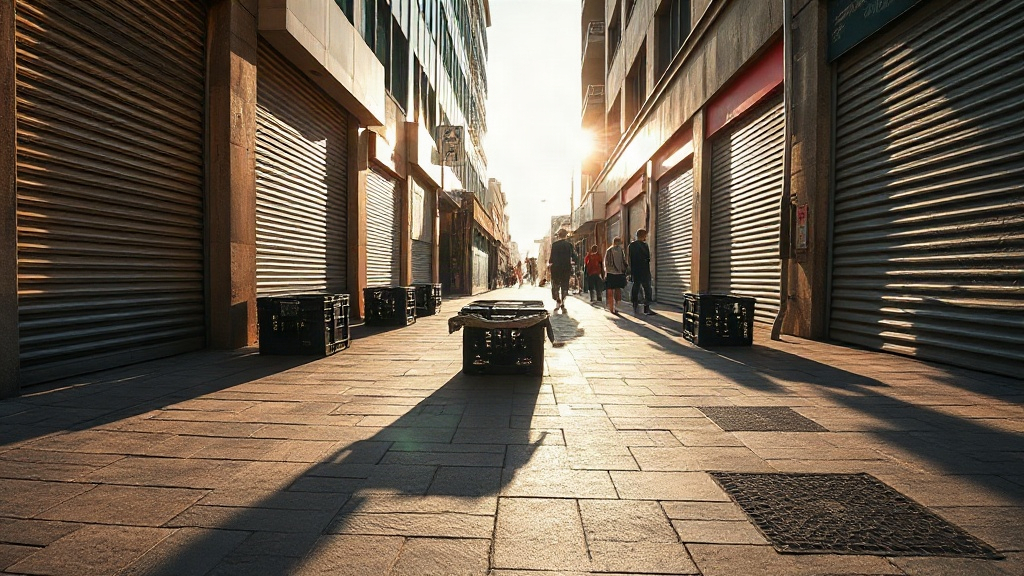
Durban’s CBD lost a trading morning on Thursday, 22 October, and a man lost his life in it.
South African Police Service investigators are working the killing of a foreign national in the central city, assaulted by about 50 people and declared dead at the scene, police said in a post on X. The victim is thought to have been in his late 30s or early 40s. Police have not released his nationality. They have not given a motive, and they have asked community members not to spread unverified information.
What the police account establishes is the sequence. A group of people was marching in central Durban on the morning of Thursday, 22 October. Two men appeared to break away from that group and approach the victim. He was then assaulted by about 50 people.
For the traders, taxi operators, shopkeepers and office workers who use that CBD every day, the morning meant shut doors. A march through the centre closes streets, empties pavements and stops the till. Traders who set up on the city’s busiest thoroughfares lost the day’s takings, and the people who depend on that day’s takings lost the money with them. That is the ordinary cost of a protest morning in Durban, and it has been paid repeatedly this year.
As Sunday World reported on 22 October, the killing follows months of anti-migrant protest in South Africa, some of it violent. Earlier this month, protests in Durban and in Soweto, Johannesburg, turned violent, with foreign-owned businesses looted and vehicles set alight. The demonstrations were against the processing of asylum applications at a refugee reception centre. Thousands of migrants from elsewhere in Africa left affected communities, the outlet reported.
Those are the facts of the wider wave as they stand on the record. What the record does not carry is a link between the march on Thursday and the killing. Police have said the motive is unknown. This paper will not supply one, and neither should anyone reading a timeline of the morning.
The public argument behind the marches is not a mystery, and it does not need a killing to be explained. South Africans have been demanding enforcement at Home Affairs, at the refugee reception centre and on the streets where informal trading, housing and services are under strain. Those demands are political demands, they are made in public, and they are the reason the marches happened. A demand for enforcement is not the same thing as an assault on a man in a street, and the paper does not treat it as one. It reports both, separately, because they are separate.
What the state can say about the killing is limited and it has said so. SAPS has confirmed an investigation, a victim, a crowd, a time and a place, and it has declined to name a nationality or a motive. That is the standard it applies to any homicide, and it is the standard this paper applies to this one. Nationality is stated when the source establishes it and it is material. Here the source has not established it.
What South Africans will notice is the pattern of the past weeks. A protest closes a CBD. Shops are looted and cars burn. Migrants leave. A man dies on a Thursday morning and the police ask for calm and for people to stop spreading unverified information. The load falls on the same people each time: the trader who cannot open, the resident who cannot move, the migrant who cannot stay, and now a family somewhere who will be told that a man in his late 30s or early 40s died in a Durban street.
The investigation continues. Anyone with information on the assault in central Durban on the morning of 22 October should take it to SAPS rather than to a timeline. This paper will report the outcome when the police record carries it, and not before.
- Durban and Soweto rise over undocumented migration as 30 are held 2026-10-19
- Phoenix residents take the anti-immigration fight to their own streets as fewer than 30 turn out for the plan 2026-10-19
- NATJOINTS keeps Durban and Joburg deployments, 30 arrested after immigration protests 2026-10-20
- 30 arrested as Durban and Soweto immigration protests expose a state that cannot say who it is holding 2026-10-20
- Nedbank buys into East Africa for R13.9bn as Vodacom lights up 17 Mpumalanga municipalities 2026-10-20
- Durban ratepayers pay for councillors who cannot read the reports they vote on 2026-10-21
- A killing on Dr Pixley kaSeme Street: Durban traders lose a day as police hunt the crowd 2026-10-22
- A man beaten to death on Dr Pixley kaSeme Street: Durban wants answers, and the police want names 2026-10-22
- A killing in central Durban: what police can and cannot tell you, and what happens next 2026-10-22
- Nine arrested in Chatsworth swoop, and police say they found the murder gun 2026-10-22