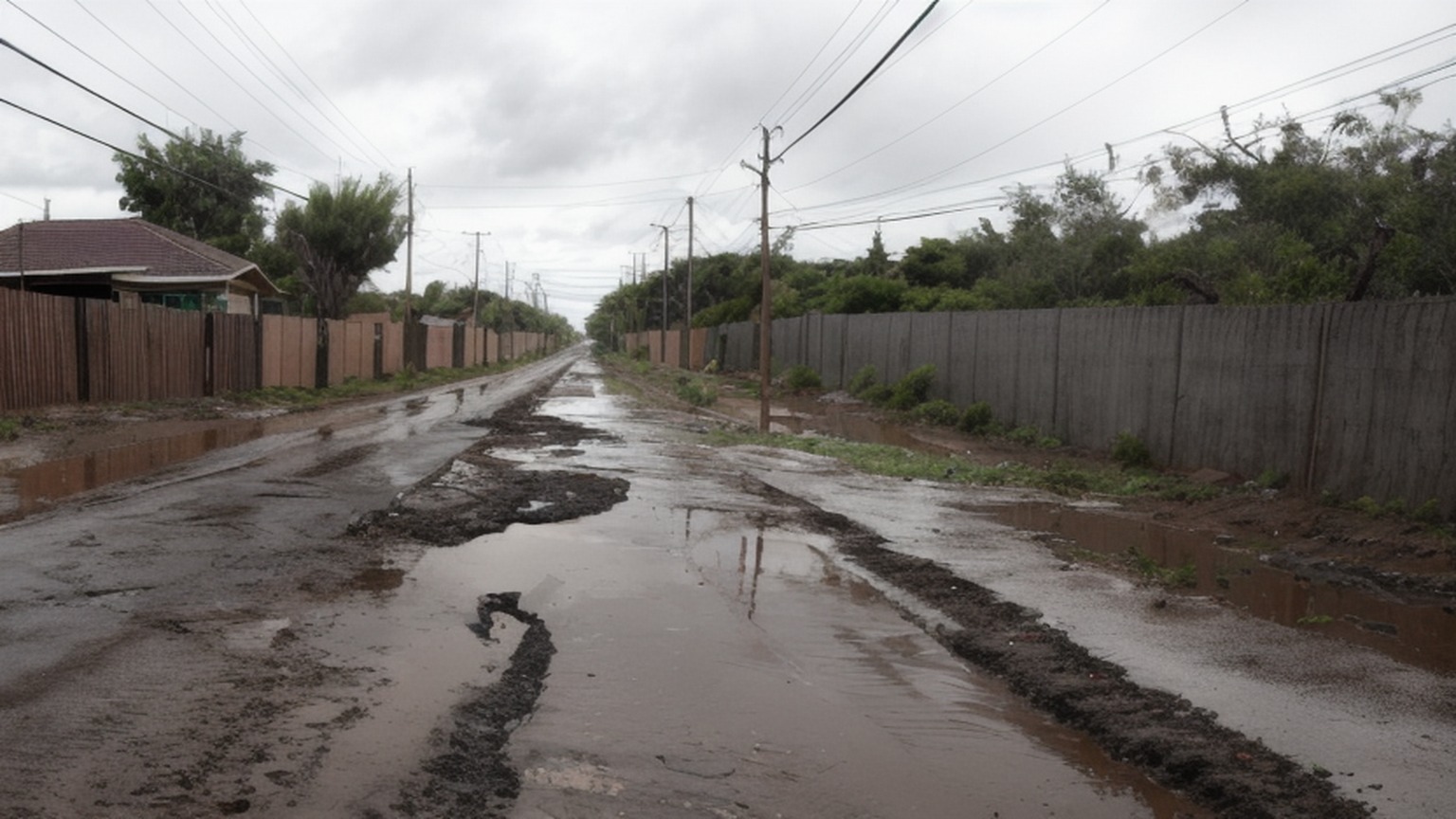
30 arrested as Durban and Soweto immigration protests expose a state that cannot say who it is holding
NATJOINTS says heightened police deployments will stay in place at hotspots in Durban and Johannesburg after a week of protests over undocumented immigration, with 25 arrests in KwaZulu-Natal and 5 in Gauteng.

Thirty people have been arrested after a week of protests over undocumented immigration in the Durban CBD, Soweto and Johannesburg, with 25 of the arrests in KwaZulu-Natal and 5 in Gauteng. The charges, as the National Joint Operational and Intelligence Structure set them out, include public violence, illegal gathering, obstruction and resisting arrest.
NATJOINTS, the structure that coordinates the police, the defence force and the intelligence services in a national operation, says heightened deployments will remain in place at hotspots in both provinces.
That is the state’s account, and on its own terms it is accurate as far as it goes. As SABC News reported on 10 October, NATJOINTS briefed on the arrests and on the standing deployment, and the figures it gave are the figures we have.
The part South Africans are still waiting for is the part that matters most. Thirty people are in custody and the public record does not yet carry their names, their ages, where they were arrested, what each is alleged to have done, or whether any of them has appeared in court. A charge sheet is not a finding. Until that detail exists, the country is being asked to accept a number in place of a case.
What residents in those areas have been saying all week is simpler than the paperwork. They want the enforcement they have been promised and have not seen. The people who marched in the Durban CBD, in Soweto and in Johannesburg were not asking for a new policy. They were asking why the existing one is not being applied on their streets, in their informal trading areas, at the clinics and the schools and the Home Affairs offices where the load lands on them first. Those demands are on the record of the week’s events. They are the reason the crowds were there.
The arrests are a fact and they belong in the story. They are not the story. A protest over enforcement that produces a body count of detainees and no answer on enforcement has not resolved anything for the people who marched.
NATJOINTS has said criminality will not be tolerated. That is a position the state is entitled to hold and to act on. It is also not a substitute for the two questions the public is owed answers to. Who are the 30, and what is each of them accused of doing? And separately, what is being done about the condition that put them on the street in the first place?
On the first question, the honest answer today is that the record does not say. The Enquirer is not going to fill that gap with a guess, and neither should anyone else. On the second, the deployment is the only concrete measure the state has announced, and a deployment is not a policy outcome. It is a holding position.
The pattern here is familiar to anyone who has watched this beat. A grievance builds in a community over months or years, it is raised through the proper channels, it is not resolved, it spills into the street, and the state’s first public communication is a briefing on arrests and a warning about criminality. The warning is not wrong. It is just not an answer.
What South Africans in Durban, Soweto and Johannesburg will notice over the coming days is whether the deployments stay, whether anyone is charged, whether anyone is released without charge, and whether the enforcement question they raised is taken up by anyone with the power to act on it. Those are the things to watch. The arrest count will be old news by the weekend. The queue at Home Affairs will still be there.
The Enquirer will follow the court appearances and the deployment record as they are confirmed, and will report what the state is able to establish about the people it is holding.
- Durban and Soweto rise over undocumented migration as 30 are held 2026-10-19
- Phoenix residents take the anti-immigration fight to their own streets as fewer than 30 turn out for the plan 2026-10-19
- NATJOINTS keeps Durban and Joburg deployments, 30 arrested after immigration protests 2026-10-20
- Nedbank buys into East Africa for R13.9bn as Vodacom lights up 17 Mpumalanga municipalities 2026-10-20
- Durban ratepayers pay for councillors who cannot read the reports they vote on 2026-10-21
- A killing on Dr Pixley kaSeme Street: Durban traders lose a day as police hunt the crowd 2026-10-22
- A man beaten to death on Dr Pixley kaSeme Street: Durban wants answers, and the police want names 2026-10-22
- A killing in central Durban: what police can and cannot tell you, and what happens next 2026-10-22
- A killing in the Durban CBD, and the traders who lost a day's takings 2026-10-22
- Nine arrested in Chatsworth swoop, and police say they found the murder gun 2026-10-22