A killing in central Durban: what police can and cannot tell you, and what happens next
SAPS is investigating the death of a man assaulted during a march in the Durban CBD, but has released no nationality, no suspect and no motive, and a murder docket is only the start of a long process.
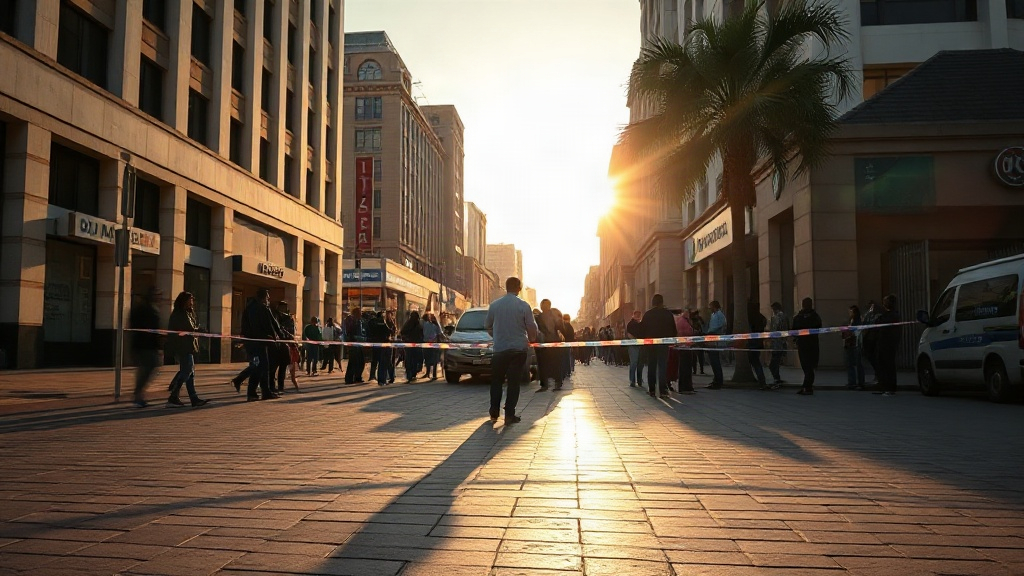
A man is dead in central Durban, and the public record of how he died is a short police post on X.
That is how murder investigations usually begin in South Africa. The South African Police Service said it is investigating the killing of a foreign national in the Durban CBD on the morning of Thursday, October 22. According to the police account, the man was thought to be in his late 30s or early 40s, was assaulted by a crowd and was declared dead at the scene. Police said a group had been marching in the city centre when two men appeared to break away and approach the victim, after which he was assaulted by about 50 people.
SAPS did not give the man’s nationality. It said the motive was unknown and urged community members not to spread unverified information.
Sunday World reported the killing on 22 October. The account above is the police account, and it is the only account on the record.
What follows is what that record does and does not entitle a reader to know, and what a murder docket in this country actually looks like from the inside.
What a docket is
When police open a murder case, the investigation is registered in a case docket. The docket is the working file: statements taken, scenes photographed, exhibits booked in, leads followed and suspects identified. It is a police document, not a public one, and it is not released while the case is live.
That is the first thing a reader should understand about a killing like this one. The absence of a name, a nationality, a suspect or a motive in the police statement is not a gap in the reporting. It is the normal state of a case in its first days.
Who decides what the public hears
SAPS speaks to the public through its own channels, and the post on X is that channel here. A provincial or station-level communication officer normally issues the first statement, and further detail is released when there is something to release: an arrest, a court appearance, an appeal for witnesses.
So the question of what happened to this man is not answered by the department that holds the file. It is answered in court, if and when someone is charged, and in the docket before that.
What a reader is entitled to
A reader is entitled to the confirmed facts, and police have given them: the place, the date, the approximate age, the manner of the assault as police describe it, and the fact that the man died at the scene. A reader is not entitled to a suspect’s identity before a court appearance, and police are not obliged to name a victim before the family has been informed.
The nationality is a separate matter. Police have chosen not to release it, and that choice is theirs to make. The killing is being investigated as a murder, and the victim’s immigration status is not what makes it one.
Why the timing matters
The killing comes after months of protest over immigration and asylum processing, including demonstrations in Durban and in Soweto, where foreign-owned businesses were looted and vehicles were set alight. Thousands of migrants from elsewhere in Africa have left affected communities, according to the reporting.
Those protests were about the processing of asylum applications at a refugee reception centre, and the pressure they put on Home Affairs is a matter of public record. That context is real, and a South African reader will bring it to this story whether or not it is printed.
It does not tell us what happened on Thursday morning. Police have said the motive is unknown, and the fact that a march was under way nearby does not establish why two men broke away, why a crowd joined in, or who the victim was. The investigation will have to answer those questions, and it may not answer them publicly for some time.
What happens next
There is no arrest on the record, no named suspect and no court date. Until there is, the case sits in a docket, and the public account of it will stay as short as the post that opened it.
Police have asked the public not to spread unverified information. On a killing in a city centre, in a country arguing about immigration, that request is worth taking seriously. The verified facts are few. The speculation available is not.
- Durban and Soweto rise over undocumented migration as 30 are held 2026-10-19
- Phoenix residents take the anti-immigration fight to their own streets as fewer than 30 turn out for the plan 2026-10-19
- NATJOINTS keeps Durban and Joburg deployments, 30 arrested after immigration protests 2026-10-20
- 30 arrested as Durban and Soweto immigration protests expose a state that cannot say who it is holding 2026-10-20
- Nedbank buys into East Africa for R13.9bn as Vodacom lights up 17 Mpumalanga municipalities 2026-10-20
- Durban ratepayers pay for councillors who cannot read the reports they vote on 2026-10-21
- A killing on Dr Pixley kaSeme Street: Durban traders lose a day as police hunt the crowd 2026-10-22
- A man beaten to death on Dr Pixley kaSeme Street: Durban wants answers, and the police want names 2026-10-22
- A killing in the Durban CBD, and the traders who lost a day's takings 2026-10-22
- Nine arrested in Chatsworth swoop, and police say they found the murder gun 2026-10-22