US spends R6m to ask why Afrikaners are ignoring its refugee offer
A leaked August proposal outlines focus groups, a 1,000-person survey and a six-month Afrikaans digital campaign after applications from South African Afrikaners fell short of Washington's expectations.
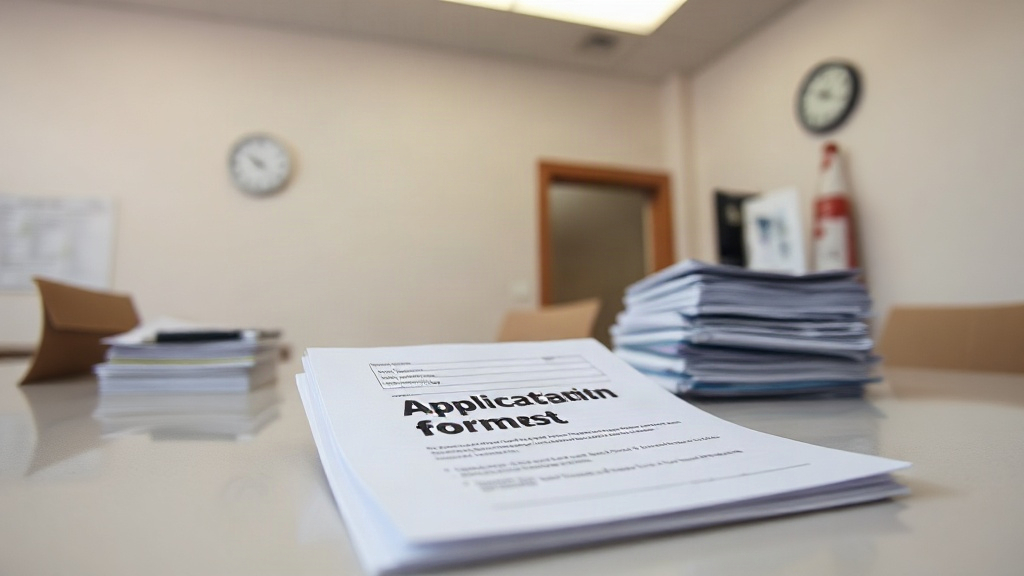
The United States government has set aside roughly $335,000, about R6 million at current rates, to work out why South African Afrikaners are not applying for the refugee places Washington opened for them.
As The Guardian reported on 15 October, an August proposal drawn up by the US mission in South Africa with a State Department research unit for the embassy in Pretoria sets out a three-phase research and advertising effort. It followed applications that “trended lower than expected” after Afrikaners were allowed to apply directly online in November 2025. The proposal itself concedes the obvious: “There’s currently little research about why Afrikaners are not applying to request referral into the US Refugee Admissions Program.”
The plan is specific about where it would go looking. Focus groups would be held in Pretoria and Krugersdorp in Gauteng, Bloemfontein and Kroonstad in the Free State, Stellenbosch and Worcester in the Western Cape, and Kimberley and Orania in the Northern Cape. Orania is an Afrikaner-only community in the Northern Cape. Each location would host two age bands, 20 to 35 and 40 to 55, with participants grouped by urban or rural setting and household income. A survey of 1,000 Afrikaners, online and offline, would then test which messages work in which communities. The final phase is a six-month digital campaign, mostly in Afrikaans with possibly some English, aimed at Afrikaners “interested in migrating”. Because the community is hard to reach through conventional social and press channels, the proposal says, the department would hire an agency with local knowledge and use “trusted messengers”.
For South Africans, the numbers behind the campaign are the story. The US admitted 16,292 refugees in the fiscal year that ended 30 September, according to its most recent data reporting. A year earlier, South Africans made up 342 of 38,102 refugee admissions. The overall cap was 125,000 under Joe Biden. Last year it was restricted to 7,500, the lowest in US history, then raised to 17,500 in May, with the added slots going primarily to Afrikaners.
The focus on Afrikaners flows from a February 2025 executive order directing officials to put Afrikaner resettlement first while the broader refugee programme stayed suspended. Administration officials had said Afrikaners face racial discrimination and “white genocide”.
The South African government has rejected the genocide claim as unfounded and politically motivated. Foreign minister Ronald Lamola, speaking in New York last month, said the claim is not supported by the evidence. Pretoria has also argued that the low uptake shows the claims are false.
Asked about the proposal, a State Department spokesperson said: “We continue to process and admit as refugees Afrikaners in South Africa who are escaping the threat of government-sponsored race-based discrimination.” The spokesperson added that President Donald Trump has been clear the US is prioritising the resettlement of Afrikaners “who are escaping government-sponsored race-based discrimination” under the executive order.
That order also alleged that “South Africa has taken aggressive positions towards the United States and its allies, including accusing Israel, not Hamas, of genocide in the International Court of Justice, and reinvigorating its relations with Iran to develop commercial, military, and nuclear arrangements.”
The refugee programme sits inside a wider rupture between Pretoria and Washington. Trump announced last November that South Africa would not be invited to the 2026 G20 summit, which the US hosts in Miami in mid-December, citing alleged abuses against white farmers. Washington has also cut aid and restricted visas over South Africa’s race and land policies. Last month the US ambassador in Pretoria, Leo Brent Bozell III, wrote in an op-ed that his government was “shocked” by what it saw as Pretoria’s silence on a set of US requests. He cited concern over the 2024 Expropriation Act and a push to make rural crime a priority.
The administration is putting money behind the cause. Just before funds expired, it moved to direct more than $175m from the State Department’s Human Rights and Democracy Fund to 43 grants worth $176.9m, as The Guardian has reported. That is most of the $205m Congress appropriated for the fund. One is a $1m grant meant for “advancing white Afrikaner rights” in South Africa and for collecting data on abuses against minorities. No recipient has been named. Sources with knowledge of the awards process told The Guardian that administration figures lobbied personally for the awards, reflecting the priorities of JD Vance on European cultural identity and Stephen Miller on immigration and support for white minorities.
The bureau that runs refugee admissions has new leadership. Adam Zerbinopoulos, a career diplomat, became its senior official on 31 August.
The Enquirer will keep asking Home Affairs what the department knows about the scale of South African applications under this programme, and will report what it finds.
- Record 2.65 million South Africans approved for special votes, and 79.6% of home visits are voters over 60 2026-10-14
- Super Group profit jumps 33.5% to R1.77 billion while its lowest-paid worker earns R63,538 2026-10-15
- Grants move to 30 October as SASSA clears the decks for 4 November elections 2026-10-15
- Man, 49, arrested at OR Tambo minutes before international flight over Madlanga Commission no-show 2026-10-16
- Ramaphosa lifts Fannie Masemola's suspension, top cop back at work on Monday 2026-10-16
- Masemola back in charge of SAPS on Monday as Cachalia lifts suspension 2026-10-16
- Police arrest 49-year-old at O.R. Tambo minutes before international flight over Madlanga Commission no-show 2026-10-16
- Lions lock Hyron Andrews dies in France during Champions Cup tour 2026-10-18
- Masemola is back at SAPS, and his first test is a wave of political killings before the local elections 2026-10-19
- Former police general arrested over 100 rounds of SAPS ammunition as Mfazi murder probe widens 2026-10-20