Sugar tariff rises to $785 a tonne as Tshwane prepaid meter fines reach R75,000
A tariff decision that protects local growers, a disease outbreak concentrated in the Western Cape, and a metro turning to penalties to recover stolen electricity.
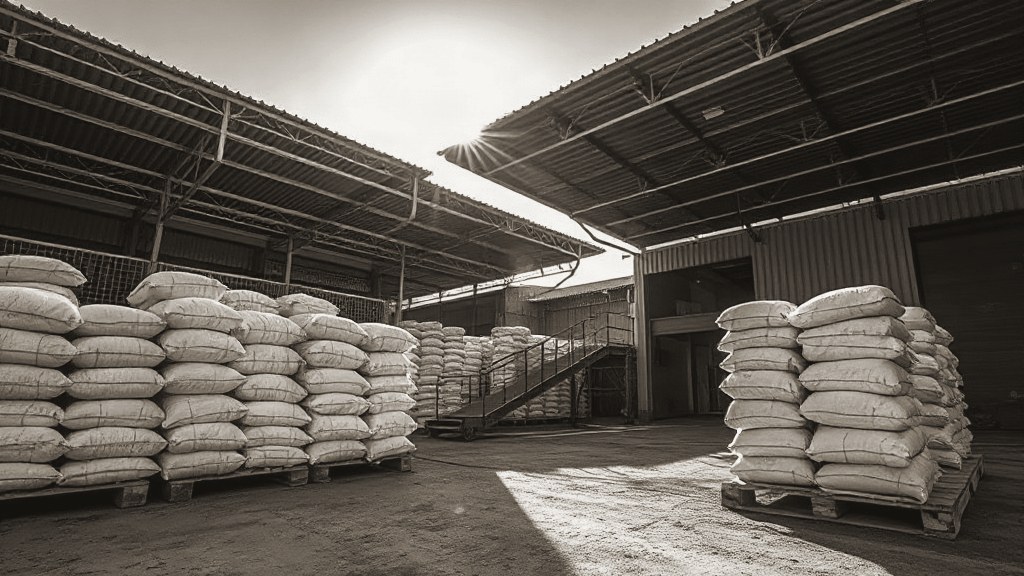
Sugar growers have a firmer floor under their prices this week. The International Trade Administration Commission has raised the dollar-based reference price for sugar from $680 to $785 a tonne, a decision taken after the commission weighed two competing applications for a tariff structure investigation.
The reference price is the trigger that decides when imported sugar can enter the country cheaply and when a tariff kicks in to protect local production. Moving it up to $785 means imports have to be cheaper before they undercut domestic growers, which matters in a sector that supports tens of thousands of jobs across Mpumalanga and KwaZulu-Natal and the milling towns that depend on them.
The rand waits on Wednesday
The currency was steady on Friday as traders turned to next week’s inflation data and the Reserve Bank’s monetary policy meeting. The rand traded at R16,27 to the dollar, R21,78 to the pound and R18,68 to the euro on Sunday.
August consumer inflation data lands on Wednesday and will shape expectations for the central bank’s next move. Headline inflation eased to 4,3% year on year in July, the first decline in five months. At its last meeting the Reserve Bank held the main lending rate, arguing that policy is already tight enough to bring inflation back to target within two years.
Umkhulu Treasury put the dilemma plainly, saying a hike would draw yield investors but would also curb domestic activity.
The benchmark 2035 government bond firmed slightly in early trade, with the yield down 1,5 basis points to 8,615%. Gold was trading at $4 383,45 and oil at $103,9 a barrel.
Mpox clusters in the Western Cape
Eighteen mpox cases have been reported nationally and 15 of them are in the Western Cape, which has been identified as a hotspot. Most of the province’s cases are in Cape Town.
That concentration is the kind of detail worth acting on. Anyone in the metro with an unexplained rash and recent close contact should present at a clinic rather than wait, and the provincial health department’s own guidance on reporting and isolation is the place to check what to do next.
Eskom’s R12,2 million question
Economist Dawie Roodt noted that Eskom has weighed on the national economy and still paid its chief executive R12,2 million. He placed the utility inside the civil service, under the Department of Electricity and Energy.
That is a fair argument to have in public. The utility’s cost structure and its effect on the price of doing business here are live questions for every household and every factory in the country.
Data centres, and where the growth sits
The Minister of Communications and Digital Technologies said South Africa hosts more data centres than any other country in Africa, with existing facilities planning further investment. The department is working with Trade and Industry to support the sector’s expansion.
That matters more than it sounds. Data centres are the physical layer under every bank app, every insurer’s system and every startup that wants to sell into the rest of the continent. Growth there pulls in electricity demand, engineering skills and long-term capital, and it keeps the work on South African soil rather than in a server farm in Europe.
Tshwane’s R75,000 meter fines
Homeowners in Tshwane with prepaid electricity meters could be fined up to R75 000 if their meters are found to have been bypassed or tampered with. The metro is stepping up enforcement against electricity theft.
Bypassing a prepaid meter is theft of a service, and it is unlawful. The cost of it lands on everyone else, because the metro recovers what it loses through tariffs charged to residents who pay. A R75 000 penalty is a serious number, and the metro will need to show that its inspections are accurate and that homeowners who bought a property with a meter already tampered with are not simply handed the bill for someone else’s work.
Source: BusinessTech, Good news for South Africa’s sugar industry, and warning for Western Cape residents
- Remains of 42 freedom fighters return home from Zambia and Zimbabwe 2026-09-10
- Kubayi to hand over remains of two hanged activists to their families 2026-09-10
- Nel launches anti-trafficking task teams at ports of entry 2026-09-10
- Justice ministry moves IDAC briefing to Pretoria after Advocate Andrea Johnson resigns 2026-09-13
- Kubayi and Mothibi to brief media on IDAC after Johnson resignation 2026-09-13
- Justice department webinar to unpack ConCourt ruling on naming children in conflict with the law 2026-09-14
- Maynier meets SANBI as parrot eggs seized at OR Tambo go to court 2026-09-14
- US visa curbs target South Africans over land and race policies 2026-09-16
- IEC final list is 62% male as parties sign conduct code next week 2026-09-16
- AAD 2026 opens in Pretoria with 300 exhibitors from 30 countries 2026-09-16