Remains of 42 freedom fighters return home from Zambia and Zimbabwe
The repatriation fulfils a long-standing Truth and Reconciliation Commission recommendation and brings closure to families who have waited decades.
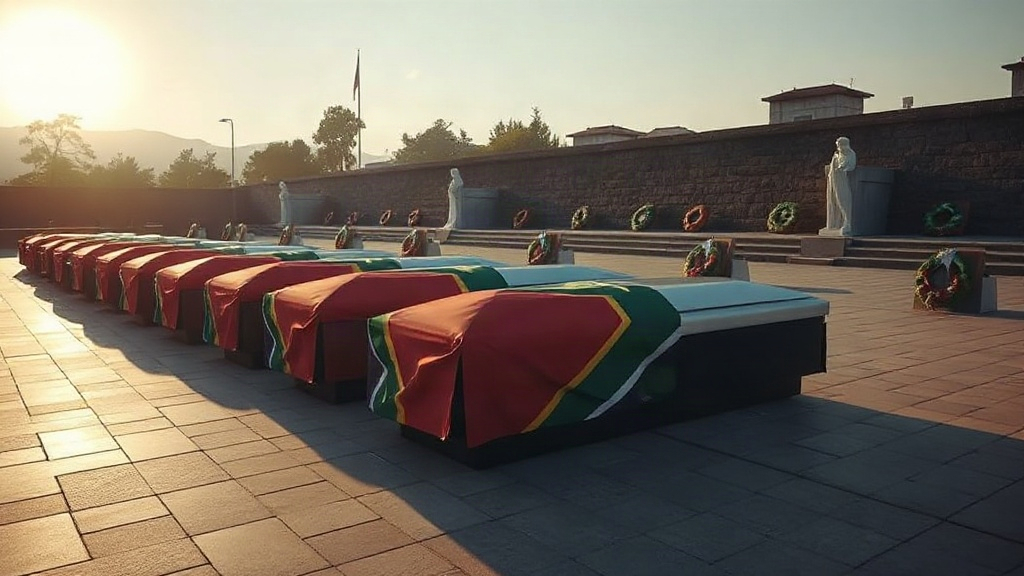
The remains of 42 South African freedom fighters who died in exile in Zambia and Zimbabwe during the apartheid struggle were repatriated and honoured at a homecoming ceremony at Freedom Park in Tshwane on 27 September 2024. The event, presided over by President Cyril Ramaphosa, was attended by Minister of Justice and Constitutional Development Thembi Simelane and Deputy Minister Andries Nel, according to the Department of Justice and Constitutional Development.
The repatriation is part of the government’s implementation of the Truth and Reconciliation Commission’s (TRC) recommendations on the exhumation, repatriation, and dignified reburial of freedom fighters. The TRC Unit within the department has engaged extensively with the families of the deceased to ensure their loved ones are brought home and laid to rest with dignity, honour, and respect. Reburial ceremonies will follow in the provinces of origin.
Who is coming home
Among the 42 heroes and heroines is Duma Nokwe, a towering figure in South Africa’s liberation struggle. Nokwe was the first black person admitted as an advocate to the Supreme Court of South Africa and served as Secretary-General of the African National Congress from 1958 to 1969. A passionate advocate for racial equality, he was instrumental in shaping the ANC’s direction during the harshest years of apartheid. His fight against the oppressive regime continued in exile in Zambia, where he remained active until his death in 1978.
Hundreds of families whose loved ones went into exile and never returned reported them as missing to the TRC. The commission recommended that the programme of exhumation be extended to neighbouring and other foreign countries. The implementation of the Exhumation and Repatriation Programme by the TRC Unit is a significant step towards providing healing to affected families and achieving social justice.
The forensic work behind the homecomings
The department’s Missing Persons Task Team (MPTT), operating within the National Prosecuting Authority, has led the painstaking task of identifying and exhuming the remains of freedom fighters who were forcibly disappeared or killed during the struggle. Through meticulous forensic investigations, searches, and identification processes, the MPTT has been instrumental in ensuring that the remains of over 180 political activists have been brought home for dignified reburial.
These efforts are critical to helping families find closure, but they also serve a broader societal purpose, reminding South Africans of the high price of the freedoms they now enjoy.
“As a nation, we are called to remember that the rights and freedoms enshrined in our Constitution were not simply given but were fought for and won through the sacrifice of countless lives.”
Minister Thembi Simelane
The homecoming ceremony, taking place during Heritage Month, serves as a profound reminder of the shared history that binds the people of South Africa together. It is an opportunity to celebrate the courage, resilience, and selflessness of those who gave their lives for a democratic South Africa. As the country reflects on 30 years of democracy, the event honours not only the constitutional freedoms South Africans enjoy today but also the many sacrifices made to secure them.
Why it matters
For the families of the 42 freedom fighters, the repatriation offers long-awaited closure after decades of uncertainty. For the country, it is a tangible act of restorative justice, acknowledging the pain of the past and the ongoing work to address it. The Constitution, widely regarded as one of the most progressive in the world, enshrines rights to equality, dignity, freedom of expression, and the right to vote, pillars of democracy that stand in direct opposition to the oppression, segregation, and violence of the past.
The Department of Justice and Constitutional Development remains steadfast in its commitment to restorative justice, continuing to support families in their pursuit of closure, truth, and healing. This ongoing work, spearheaded by the TRC Unit and the MPTT, is vital for ensuring that the pain of the past is addressed with sensitivity and respect, and that those who suffered in the fight for freedom are never forgotten.
As the country moves forward, the reburial ceremonies in the provinces of origin will provide further opportunities for communities to pay their respects. The department has called on all South Africans to reflect on and celebrate the heroes and heroines who paid the ultimate price for freedom.
*Source: Department of Justice and Constitutional Development media statement, 26 September 2024. *
- Kubayi to hand over remains of two hanged activists to their families 2026-09-10
- Nel launches anti-trafficking task teams at ports of entry 2026-09-10
- Justice ministry moves IDAC briefing to Pretoria after Advocate Andrea Johnson resigns 2026-09-13
- Kubayi and Mothibi to brief media on IDAC after Johnson resignation 2026-09-13
- Justice department webinar to unpack ConCourt ruling on naming children in conflict with the law 2026-09-14
- Maynier meets SANBI as parrot eggs seized at OR Tambo go to court 2026-09-14
- US visa curbs target South Africans over land and race policies 2026-09-16
- IEC final list is 62% male as parties sign conduct code next week 2026-09-16
- AAD 2026 opens in Pretoria with 300 exhibitors from 30 countries 2026-09-16
- Diale-Tlabela opens 8km upgraded R568 link between Bronkhorstspruit and the N4 2026-09-16