Bitter-apple, wild dagga and blue lily: CUT scientist flags organ risk in popular remedies
Toxicology work at the Central University of Technology sets out which widely used medicinal plants can harm the liver, kidneys and blood when taken in unmeasured doses.
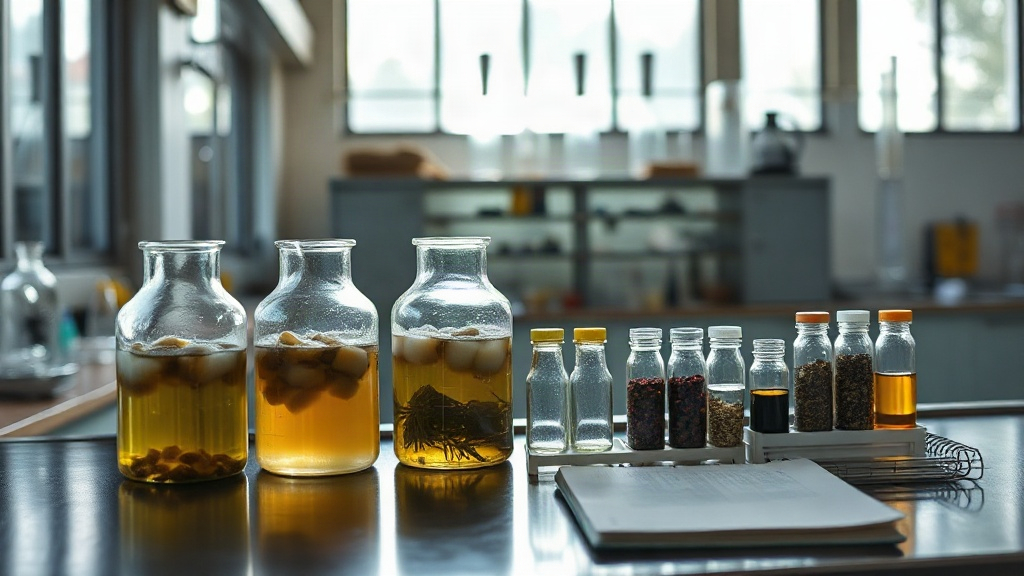
Four medicinal plants used in households across South Africa carry documented risks to internal organs when they are brewed or boiled without measured doses, according to toxicological research by a medical biological scientist at the Central University of Technology, Free State.
The Mail & Guardian published an opinion piece on the work on 21 September, written by Moshoati Daniel Maritz, the university’s director of community engagement, under the headline “From Backyard Remedies to Hospital Wards: Why Science and African Medicine Must Work Together”. The findings it sets out are the substance of the story.
Professor Pakiso Moses Makhoahle, a medical biological scientist at CUT, has screened the chemical properties of plants that healers and families use routinely. The pattern across the four is the same. A plant can carry a compound worth studying for therapy and, in the same fruit, root or leaf, a compound that damages the body if the preparation or the quantity is wrong.
What the screenings found
The bitter-apple, known as umthuma or thola, is used widely by traditional healers for a range of ailments. Laboratory screening shows certain isolated compounds in the fruit have powerful properties now being studied for therapeutic potential. The same berries contain high levels of solanine, a compound that causes severe health complications and organ damage when misused.
Wild dagga, umfincafincane or lebake, is brewed heavily into a daily tea for serious illness. It offers clear traditional benefits, and studies confirm that uncontrolled amounts taken over long periods can affect the blood system, the kidneys and the liver.
The blue lily, isilakati or leta-la-phofu, has roots that are boiled for hours to treat chronic conditions. Root extracts generally show low acute toxicity. Rigorous botanical testing shows the green leaves are highly poisonous if prepared incorrectly.
The silver starflower, ixalanxa or inongwe, belongs to the same family as the African potato. Its bulbs are crushed into teas to fight chronic illness. Despite widespread use, there is no long-term scientific data establishing whether extended use is safe for the human body.
Why the measurement gap matters
For decades, the test of a traditional mixture has been what a patient can see. Less pain, or visible signs of recovery. What that test cannot show is what is happening to the liver, the kidneys or the blood while the patient feels better. Without laboratory work, the line between a remedy that helps and one that poisons is drawn by dose and preparation, and nobody is measuring either.
That is the case for collaboration the research makes. Its stated purpose is not to replace traditional healing with Western medicine. It is to establish proper administration and patient safety, and to build enough trust between healers and scientists that indigenous remedies can be validated where they work and used safely where they do not.
The heritage context
September is Heritage Month, observed this year under the theme “Reimagine our heritage institutions for a new era”, with the national focus on modernising museums and heritage sites. The CUT work sits in a different part of the same question, which is what happens to indigenous knowledge when it moves from the healer’s hut into a system that can test it.
The pandemic sharpened the stakes. During COVID-19, with hospital treatment and prescribed medicine out of reach for millions, households across all nine provinces turned to plants and ancestral practice as a frontline defence, including against cancer and diabetes. That reliance did not end when the emergency did. It is now a permanent part of how many South Africans manage their health, which makes the absence of long-term safety data on everyday preparations a live public health question rather than an academic one.
Maritz’s argument, as director of community engagement at CUT, is that universities have a role in the blending. Bringing indigenous knowledge into scholarly research enriches the academic landscape, and it is the route by which a remedy used in a home becomes one a clinic can recommend.
What a reader takes from the work is practical. The plants named here are not being condemned. The dose, the part of the plant used and the method of preparation are what separate a tea that treats from one that harms, and those are exactly the variables that no household can check on its own.
Source: Mail & Guardian, From Backyard Remedies to Hospital Wards: Why Science and African Medicine Must Work Together