Soweto and Durban traders count the cost of a week of protest: shut stalls, lost takings and 30 arrests
NATJOINTS says heightened police deployments stay in place at hotspots in Durban and Johannesburg after anti-undocumented immigration protests, with 25 of the 30 arrests made in KwaZulu-Natal and 5 in Gauteng.
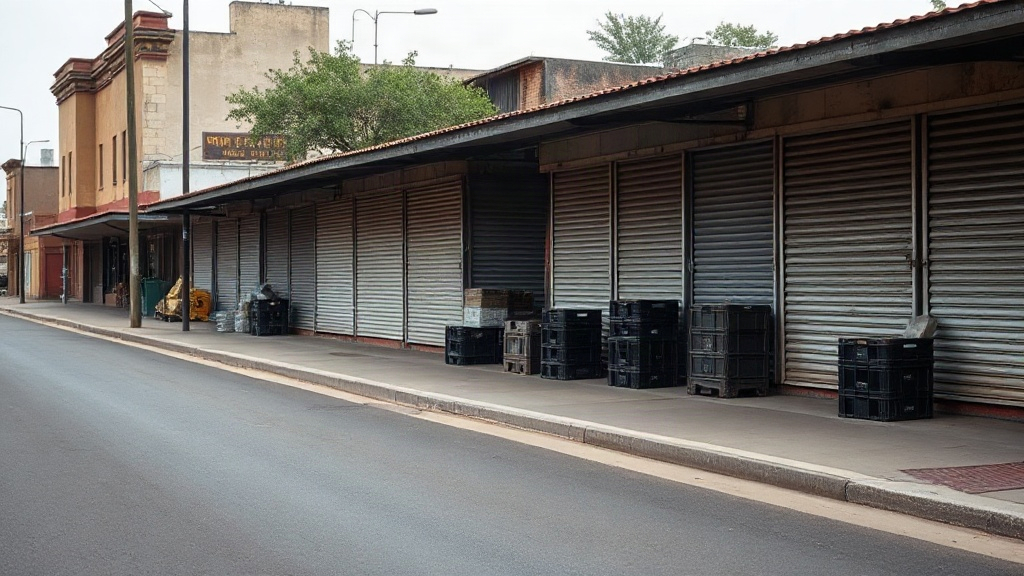
Traders in the Durban CBD and in Soweto lost trading days this week when anti-undocumented immigration protests moved through the streets where they work, and the police say the deployments brought in to hold the hotspots will not be pulled back yet.
As SABC News reported on 10 October, the National Joint Operational and Intelligence Structure, known as NATJOINTS, says heightened police deployments will remain in place at hotspots in Durban and Johannesburg. Thirty people have been arrested, 25 in KwaZulu-Natal and 5 in Gauteng, on charges including public violence, illegal gathering, obstruction and resisting arrest.
NATJOINTS is the structure that coordinates the police, the metro departments and the intelligence services when a situation is big enough to need more than one force on the ground. When it says a deployment stays, it means the vans, the public order units and the road closures stay with it. For a trader with a stall on a Durban CBD pavement or a shop on a Soweto street, that is the difference between opening on Monday and losing the day.
That is the cost that does not show up in an arrest count. A stall closed for a day is stock that does not move and a day’s takings that do not come back. A shop that shuts its shutters for a morning loses the customers who walk past once and do not return until the following week. Commuters who could not get through the CBD lost the fare and the hours. None of that is recovered when the streets reopen.
The protests were about undocumented immigration, and the people who marched were South Africans making an enforcement demand. Whatever the state’s answer is, the people who carry the cost of the disruption first are the traders and commuters who share those streets with the crowds, and the residents who live along the routes.
What the source material does not carry is the number of stalls or shops that closed, the rand value of the lost trading, or the length of the closures in each area. The Enquirer is not putting a figure on that damage here, because no figure has been established. What is established is that the disruption ran for several days in the Durban CBD, in Soweto and in Johannesburg, and that the police response is still active.
The 30 arrests are the state’s case, and each one is a charge against a named person, not a description of a crowd. The counts the police have listed, public violence, illegal gathering, obstruction and resisting arrest, attach to individuals who will answer for them in court. They do not describe everyone who was in the street, and they do not describe the traders who were trying to work.
The immediate question for the people in those areas is a practical one. How long the deployment stays decides whether the CBD opens normally next week, whether the taxi routes run their usual lines, and whether a trader restocks or waits. NATJOINTS has said the deployments remain in place at the hotspots. It has not said for how long, and the source material does not carry an end date.
For now, the count that matters most to the people on those streets is not the 30. It is the number of trading days left before the streets are theirs again.