South Africans shut Durban and Soweto streets over undocumented immigration. 30 arrested as police stay deployed
Residents and traders in the Durban CBD, Soweto and Johannesburg pushed back against undocumented immigration this week, and NATJOINTS says heightened deployments will remain at the hotspots.
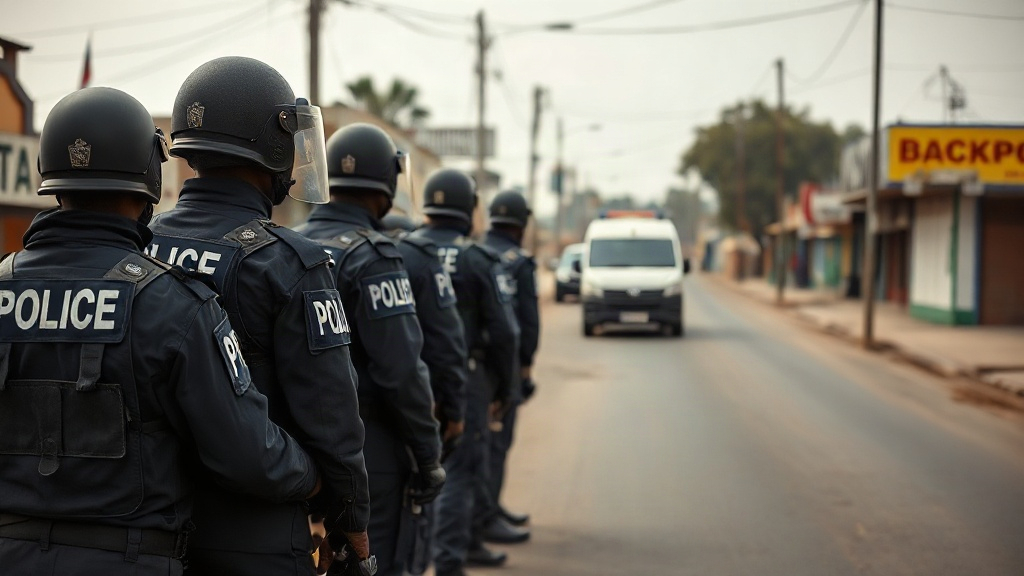
South Africans took the immigration argument into the streets this week, shutting parts of the Durban CBD and gathering in Soweto and Johannesburg to demand enforcement against undocumented immigration. The protests ran over several days, and by the weekend the state’s answer was a heavier police presence rather than a change in policy.
The National Joint Operational and Intelligence Structure, the inter-departmental command that coordinates the police, the metro services and the intelligence community during unrest, said heightened deployments will remain in place at the hotspots in Durban and Johannesburg. As SABC News reported on 10 October, 30 arrests have been made, 25 in KwaZulu-Natal and 5 in Gauteng, for offences including public violence, illegal gathering, obstruction and resisting arrest.
Those numbers describe the state’s response to the crowds. They do not describe why the crowds were there.
What residents and traders in those areas are saying is not complicated. The demand is enforcement: that the immigration system be applied, that people who are in the country without permission be processed and removed, and that the pressure on informal trading, on policing and on local services be acknowledged rather than explained away. That demand has been building in South African cities for years, and this week it was loud enough to close streets.
The Durban CBD and Soweto are not random locations. Both carry dense informal trading economies where competition for pavement space, storage and customers is immediate and visible. Both sit inside policing precincts where residents have long complained about the capacity of the state to act on anything, including immigration. When people say the load is real, they are describing what they see on their own street, in their own queue and in their own market.
That is the argument the country is having, and it is a legitimate one to have. It is also an argument that deserves facts rather than slogans, and the facts here are the ones the state can produce: how many people are in the country without permission, how many were processed, how many were removed, and what the enforcement plan actually is.
NATJOINTS has not offered that. It has offered deployments.
It is worth being precise about what the command is, because the acronym does a lot of work in a story like this. NATJOINTS sits above any single police station or province. It brings together the South African Police Service, the metro police, the defence force where required, and the intelligence structures, and it is activated when the state decides an event needs a national coordinating hand. When NATJOINTS speaks, it is not a local commander describing a local problem. It is the national security machinery describing how it intends to hold a line.
Holding a line is not the same as answering a question. The question South Africans are asking is what changes now: who may remain, who may be removed, why the queues at Home Affairs run as long as they do, and what the state can actually enforce on the ground. A deployment can clear a street. It cannot clear a backlog.
There is also a real cost to the way this week has been handled, and it falls on the same people who marched. Roads and trading corridors in the Durban CBD and in parts of Soweto and Johannesburg were disrupted. Commuters lost time. Traders lost a day’s takings. Whatever the politics, the people who carry the disruption are the people who live there, and they are the same people whose anger produced the protest in the first place.
That is the tension the state has to manage, and it has to manage it without turning the public into the problem. The public anger here is not a mystery to be explained away. It is a demand, and demands get answered with policy or they get answered with police vans. Only one of those settles anything.
Thirty arrests is a fact and it belongs on the record. Twenty-five in KwaZulu-Natal and five in Gauteng, on charges of public violence, illegal gathering, obstruction and resisting arrest. What matters more is what happens to the argument those arrests came out of. If the deployment at the hotspots is the whole of the state’s answer, the streets will quiet down and the question will still be standing there.
The Enquirer will keep reporting on the enforcement question in Durban, Soweto and Johannesburg, on what Home Affairs can actually process and remove, and on what residents and traders say they are living with. If the state produces numbers, we will publish them. If it produces only deployments, we will say so.