R100,000 a passport: South Africans whose faces were sold are still waiting to find out
Two former Home Affairs officials have been arrested in Germiston over a scheme that put foreign nationals' photographs onto the identities of legitimate South African citizens, and the people whose names were used still do not know which of them were hit.
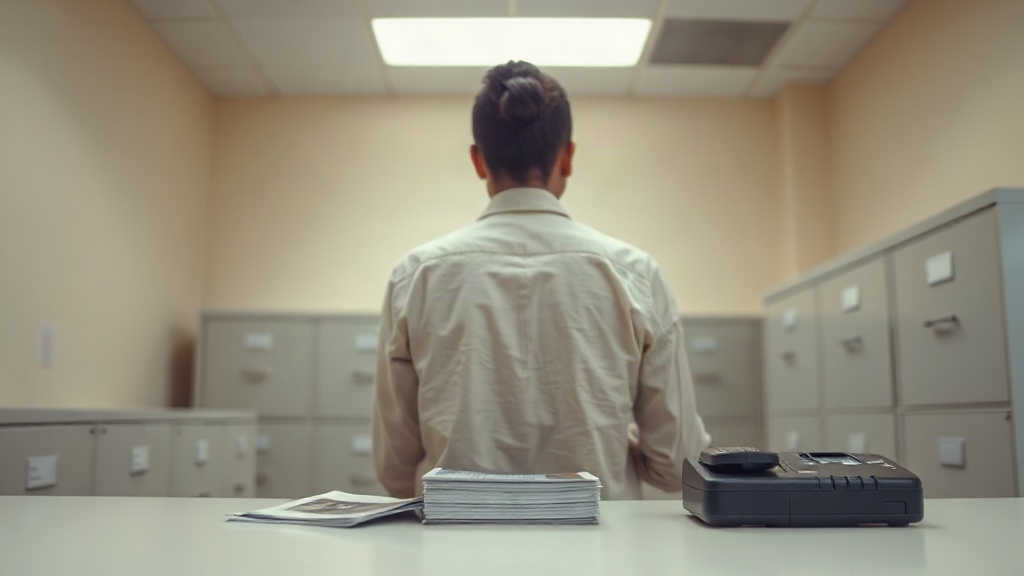
Two former Home Affairs officials have been arrested in Germiston over allegations that they used the identity details of legitimate South African citizens to obtain passports for foreign nationals, at up to R100 000 a passport. The arrests follow a joint investigation by the department’s Counter Corruption Unit and the Hawks, which uncovered the syndicate in 2022.
The scheme is known as photo swapping. Officials allegedly exploited weaknesses in an outdated manual process to issue passports that carried the identity details of South African citizens but the photographs of foreign nationals. The Portfolio Committee on Home Affairs chairperson, Mosa Chabane, said the two were charged with corruption, fraud and contravention of Section 49(5) of the Immigration Act.
For the citizens whose details were used, the cost is not the R100 000. It is the passport that now exists in their name and the years it may take to prove they never applied for it. It is the bank, the employer, the credit bureau and the border post that will treat the document as theirs. It is the queue at a Home Affairs office to lay a complaint about an identity they did not know had been sold. The department has not said how many citizens were affected, and on the material available it has not said whether any of them have been told.
As IOL reported on 13 October, two former officials were arrested in Germiston over the alleged scheme. The arrests are the department’s own account of its work, and the department’s Counter Corruption Unit and the Hawks are named as the investigating bodies.
“The arrest and prosecution of rogue Home Affairs officials is critical to safeguarding the country’s population register,” Chabane said. “We cannot continue to have civil servants fraudulently facilitating the sale of South African identity documents, particularly given the significant security risks such actions pose to the country.”
Chabane said criminal proceedings should run alongside internal disciplinary processes, and warned that leaving officials suspected of compromising the population register in positions of responsibility could expose the department to further risk. He repeated the committee’s call for more funding for the Counter Corruption and Security Services branch, and said the arrests are consistent with the thrust of the Lubisi Report, the independent investigation commissioned in 2021 by then home affairs minister Aaron Motsoaledi into allegations of large-scale fraud in the issuing of visas, permits and citizenship documents. The committee wants the Lubisi recommendations and those of later Special Investigating Unit probes implemented in full.
Home Affairs spokesperson Carli van Wyk said the case shows why the department is digitising. Under the reforms, biometric verification now links applicants to their identities through the application process, including when photographs are captured, which the department says closes the loophole that let a foreign national’s photograph be substituted for a South African citizen’s. She said the same approach underpins the department’s digital partnership with banks on smart ID cards.
Minister Leon Schreiber said outdated manual processes had for years created loopholes that syndicates could exploit. “Through our digital transformation, we are closing these loopholes by introducing secure biometric verification and automated systems that remove opportunities for human manipulation,” he said. “Our reforms are not simply about making Home Affairs faster and more convenient. They are about fundamentally changing how the department operates so that fraud and corruption are prevented by design, rather than detected only after the damage has been done.”
The department says 98 Home Affairs officials have been dismissed and 42 arrested since the start of the seventh administration.
What the record does not yet carry is the part that matters most to the people whose identities were used. It does not say how many citizens were affected, whether the passports issued in their names have been cancelled, whether their records have been flagged, or how a citizen who suspects their identity was used should check. Those are the questions a South African reader is left holding, and they are the questions the department has not answered.