Nelson Mandela Bay: 22,000 street lights out, 7,000 water leaks, and an election in 38 days
Mayoral candidates met at a Nelson Mandela University debate where the numbers on the table included a R1.7 billion electricity loss, a R35 billion irregular expenditure bill and 31 days of cash in the bank.
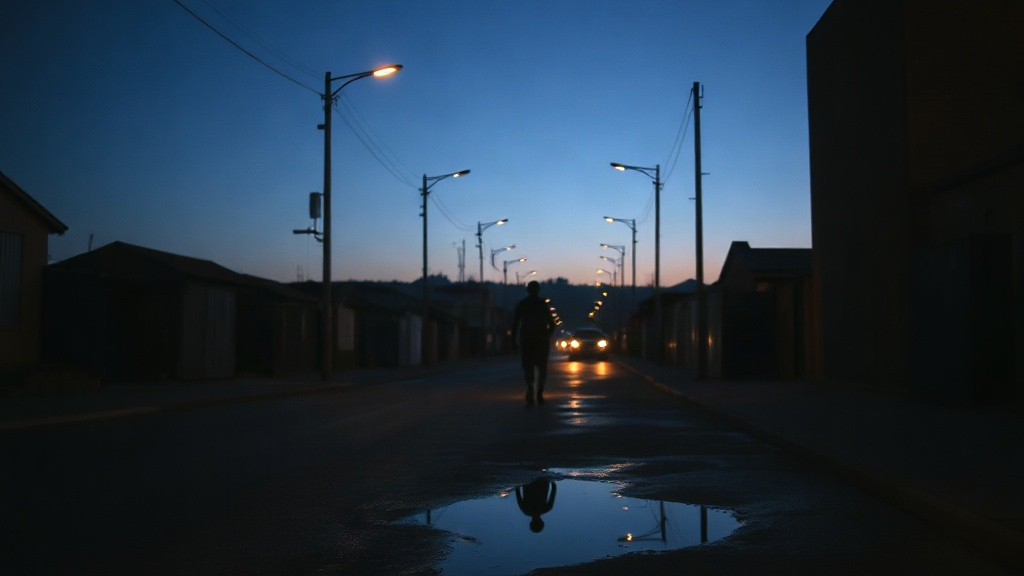
Nelson Mandela Bay votes for a new mayor on 4 November, and the candidates who want the job spent an hour on eNCA (YouTube) setting out what they would do in their first 100 days in a city where 22,000 street lights are out, 7,000 water leaks are outstanding and, on any given day, tens of thousands of people have neither water nor electricity.
Those three figures came from DA mayoral candidate Retief Odendaal, in a debate hosted by the broadcaster in partnership with Nelson Mandela University and published on its YouTube channel. No candidate on the panel disputed them. The debate was framed around accountability rather than promises, opening on a metro with the highest irregular expenditure of any in the country, a R35 million street light scandal with 21 officials implicated, four mayors since 2020 and a revolving door of acting city managers.
Odendaal put the electricity department’s loss at R1.7 billion, which he said equates to 45% of the city’s total rates income. He said the metro had lost R2 billion in conditional grant funding over the last two years, that only 110,000 ratepayers exist of whom about 84,000 can afford their monthly commitments, and that domestic electricity tariffs rose 50% this financial year, with 60% for indigent households. He said the DA went to court to try to protect residents from that increase.
Gary van Niekerk, the National Alliance candidate, said the city has 31 days of money in the bank to meet its immediate obligations, according to the budget and treasury agenda that went out in September. He said 60% of water and 29% of electricity are being lost, and that most trading departments are running deficits. His first priority is safety, of residents and of infrastructure, followed by the basic service delivery he described as the whole point of local government.
ACDP candidate Lance Grootboom said seven departments have acting executive directors and the city manager is acting, which he argued makes accountability impossible. He said the current city manager has earned more than R10 million while sitting at home. His answer was to appoint a competent city manager and executive directors, then fix electricity, energy and water.
ANC mayoral candidate Babalwa Lubisi defended the party’s record, citing 97.7% access to water and 95.5% access to sanitation, a fully functional audit risk committee and about R90 million a quarter spent on waste collection, with 36 trucks leaving the sites daily and more than 23 yellow fleet vehicles bought. She said the ANC wants to stabilise governance through credible appointments, put local economic development at the centre, and address safety, security and vandalism of water and electrical infrastructure.
EFF candidate Sonwabile Xasa said the city has been putting a plaster on a wound, fixing leaks and lines one at a time without a maintenance plan. He called for a mass infrastructure rehabilitation programme across water, electricity, roads and sewage, and for internal engineering and accounting capacity so that the city does not go to tender every time a pothole needs fixing or a pole needs a light. He said the automotive industry that has been the bedrock of the local economy is collapsing, naming Volkswagen, Dana Spicer and Goodyear, which he said collapsed last year, and called for artisan colleges tied to the automotive and maritime economy.
The independent candidate, Collen Leto, who said he is from New Brighton, described a 123-year-old township in decay, with sewage in people’s yards, no street lights and crime out of control. He said the youth have no centres and nothing to do, and that he had approached mayors and former mayors about New Brighton without result. He put the case for residents to set political differences aside.
Academics from the university pressed the panel on strategy. Professor Siyanda Mishi asked how candidates would break the cycle in which residents do not pay for services they do not trust. Lubisi said the ANC would hold ward meetings weekly and had appointed four contractors to improve collection, with the rate now at 76% from 73%. Khanyisile Dembe, a doctor in development studies, said the panel was repeating problems rather than offering strategies, and asked for the economic development model each candidate would implement. Xasa answered with the automotive, maritime and tourism sectors and internal state capacity.
Professor Flora Mudiba asked what metrics and transparent processes would ensure budgets reach communities equitably. Van Niekerk said integrated development plan sessions happen once a year and then get shelved, and that budgets are set without what communities asked for. He said executive directors should sign key performance agreements so that performance can be measured.
The state of the metro event of 10 September came up. Grootboom said he and coalition members boycotted it because the city did not need another gala while residents open a tap and get no water, and said the next council meeting would ask what it cost. Lubisi said the event was a council decision on the council calendar and put the cost at R235,000, which she called reasonable. Asked whether a state of the metro address and a gala dinner were two different things, she said one event was held and there was no gala dinner.
A resident from the ANC in the audience supported the R235,000, saying a council decision is implemented and that such events happen nationally. Leto said the money could have gone to sports grounds and facilities in New Brighton. A resident asked Xasa whether health should be taken back from the province to the metro, and he said it should, describing Dora Nginza Hospital as a place people regard as somewhere they go to die, with people giving birth on the floors and no water.
On housing, a resident told Odendaal that the waiting list for the 80,000-unit backlog runs beyond 20 years. Odendaal said the city built only 2,017 houses over the last five years. Lubisi said the metro is waiting for the minister to agree to direct funding, is appointing transactional advisors to bring in external funding, and acknowledged youth unemployment as part of the ANC’s pain. An ANC speaker in the audience said the province is not releasing money despite the metro’s level three accreditation from National Treasury.
The debate closed with the presenter’s own accounting of the record: the ANC last won an outright vote in 2011, the EFF has propped up an ANC-led coalition before, the National Alliance has governed the municipality before, and the DA has held the mayor’s office for about eight months. Voters decide on 4 November.