Empangeni's new houses get fibre pipes before the walls go up
KwaZulu-Natal's pilot with Huawei and Openserve puts connectivity into 405 homes under construction at Empangeni Phase 1A, with the partners promising to publish what the trial finds.
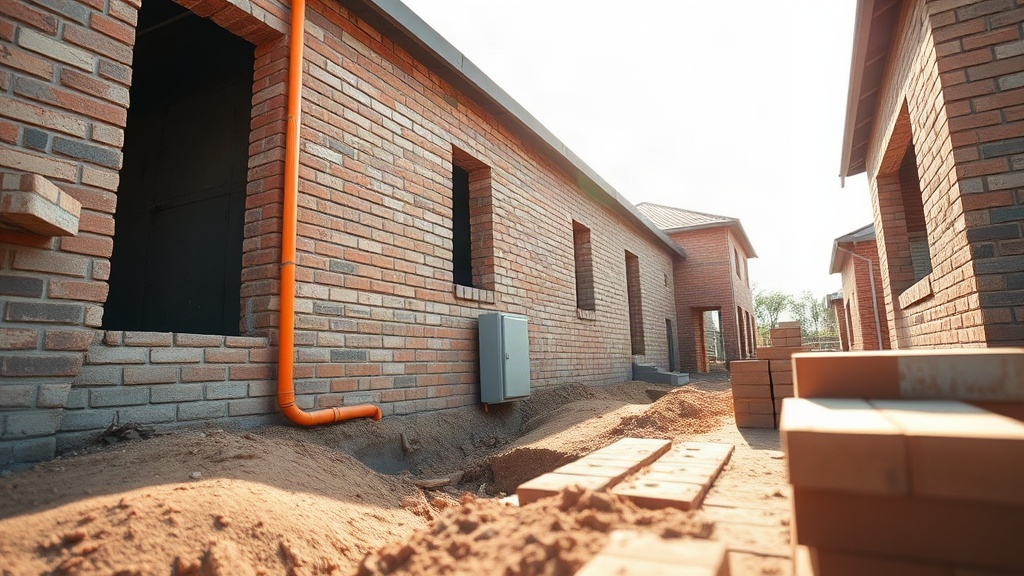
KwaZulu-Natal has started laying fibre into houses that are still being built. Premier Thamsanqa Ntuli launched a fibre pre-provisioning pilot project at the Empangeni Phase 1A Housing Development, where 405 households are under construction and are being fitted with the infrastructure needed for high-speed fibre later.
The Fibre Pre-Provisioning Proof of Concept, launched in Richards Bay on Thursday, is a partnership between the KwaZulu-Natal Provincial Government, Huawei and Openserve. It uses a “Pipe and Box” method to put fibre infrastructure in during construction, alongside water, electricity and roads. The province says the approach is intended to cut the cost of installing connectivity later, and could become a model for similar housing developments across South Africa.
Ntuli framed it as a change in how human settlements are planned. “We are constructing pathways to opportunity, to connectivity, and to inclusion. We are laying the groundwork for a future in which no community is left behind,” he said. He said reliable digital infrastructure is increasingly important for residents to reach education, employment, entrepreneurship, information and government services, and that the project forms part of the province’s efforts to bridge the digital divide for historically underserved communities. He welcomed the partnership with Huawei and Openserve.
The initiative builds on other connectivity work under the provincial government’s GovConnect programme, including public Wi-Fi installations in uMlazi Township and uMsinga.
uMhlathuze Local Municipality Mayor Xolani Ngwezi said the project is an important milestone in the city’s efforts to become more connected and inclusive. “A connected city is a competitive city. A connected resident is an empowered resident,” he said.
KwaZulu-Natal Human Settlements Chief Director Lindani Khoza said the project represents a shift in how infrastructure is planned and delivered. “Just as roads connect people physically, fibre infrastructure connects communities digitally. Instead of treating connectivity as an afterthought, we are integrating it into the earlier stages of planning and development,” Khoza said.
Rendani Musetha, Chief Director for Digital Government at the Department of Communications and Digital Technologies, said the project aligns with the need to plan broadband alongside housing. “Why should we build houses today and only think about connectivity tomorrow? A fibre cable has little meaning on its own. Its value comes from what it enables,” Musetha said.
Openserve Executive for Enterprise and Public Sector Pearl Schrimpton said the company is helping plan the network infrastructure needed for future connectivity. “When government builds a home, a connection to the digital economy should be built in, just like water, just like electricity, just like the road,” she said. She said the partners will assess the project and share their findings to inform future decisions on fibre pre-provisioning. “Our commitment to this project is simple: we build it properly, we measure it openly, and we will share what we learned with our partners in government, so that the country can decide on facts rather than assumptions,” Schrimpton said.
Huawei South Africa representative Charles Cheng said the partnership showed how public-private collaboration could advance digital inclusion, and that fibre pre-provisioning should be considered for municipal building codes and the national housing strategy. Huawei Solution Manager Li Yanbang said installing fibre during or before road construction can reduce costs and prevent roads being damaged by later excavation. “We want to find a way that we can get more affordable connectivity to every South African household,” Yanbang said.
Ntuli said the provincial government remains committed to expanding digital access through partnerships and infrastructure projects that can be replicated elsewhere, so that geography or socio-economic circumstances do not keep residents from benefiting from technological advancement.
The account above rests on the government’s own summary of the launch, published by SAnews (South African Government News Agency) at https://www.sanews.gov.za/south-africa/kzn-launches-fibre-pre-provisioning-project-empangeni. The source states no cost for the pilot, no completion date for the Empangeni houses and no date for the findings the partners say they will share.