Durban traders lose another week of takings as police hold the CBD hotspots
Thirty people have been arrested, 25 in KwaZulu-Natal and five in Gauteng, and NATJOINTS says heightened deployments will stay in Durban and Johannesburg after this week's anti-undocumented-immigration protests.
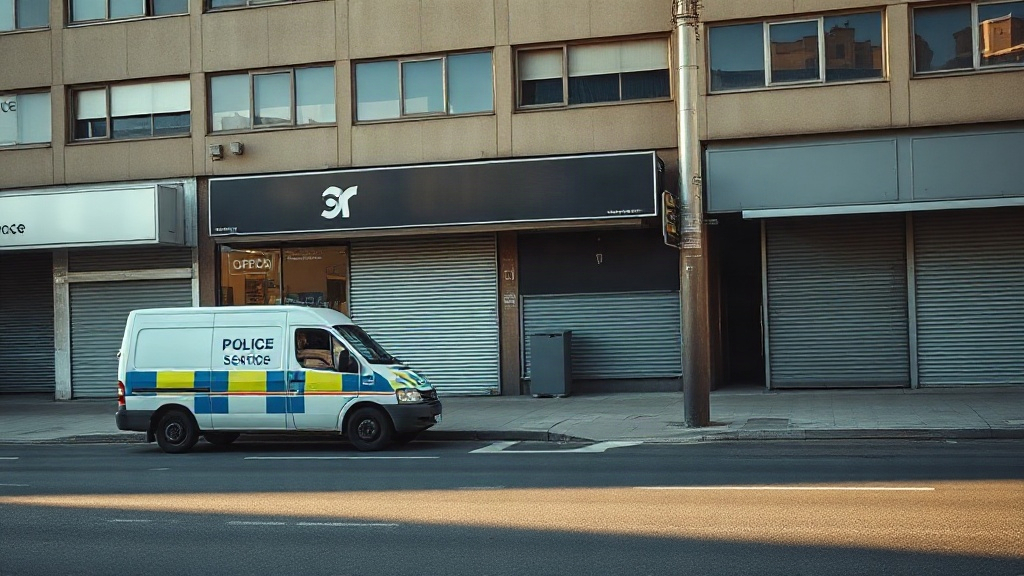
Traders in the Durban CBD are counting the days, not the arrests. Shops that shut when this week’s anti-undocumented-immigration protests moved through the city centre are still weighing what reopening costs them, and the police say the deployments that came with the protests are not coming down yet.
The National Joint Operational and Intelligence Structure, NATJOINTS, says heightened police deployments will remain in place at hotspots in Durban and Johannesburg. Thirty people have been arrested, 25 in KwaZulu-Natal and five in Gauteng. The offences listed are public violence, illegal gathering, obstruction and resisting arrest.
NATJOINTS is the structure that coordinates the police, the metro departments and the intelligence services when a situation runs past what a single station or province can handle. When it says a deployment stays, that is not a press office line. It is standing operational posture, and it is paid for out of police budgets and out of the working day of everyone inside the cordon.
That is the part a reader outside the city will not feel. A trader on a Durban CBD pavement sells to the foot traffic that a closed street removes. A shop that boards up for three days does not get those three days back. A commuter who normally changes taxis in town pays more, waits longer, or stays home. None of that appears in an arrest count.
SABC News reported on 10 October that the structure confirmed the deployments and the arrest figures after protests in the Durban CBD, Soweto and Johannesburg earlier in the week. Those figures stand as given. What the arrest count does not tell a South African reader is what the people on the street were asking for, or what happens to the demand now that the crowd has gone home.
The protests were against undocumented immigration. That is the position that put people on the street, and it is the question the state still has to answer. The load that South Africans point to is not abstract. It is the Home Affairs queue that eats a working day, the clinic that runs out of its allocation before the month does, the classroom carrying more children than it was built for, the informal trading bay that has to be shared, and the policing that cannot be everywhere at once. Those are the terms the argument is actually conducted in, and they did not leave the street when the arrests were counted.
What has changed for the person reading this is narrower and harder. In Durban, the CBD is a trading floor for thousands of people who do not have a shopfront lease and do not get paid for a day they cannot open. In Soweto and Johannesburg, the same logic runs through taxi ranks, spaza counters and street corners. A deployment that stays in place keeps the police visible. It also keeps the disruption in place, and nobody has said when either ends.
That is the question the state has not answered. What the deployment is holding, how long it is meant to hold it, and what a resident should expect on Monday morning. NATJOINTS has confirmed the posture. It has not put a date on it.
Nor has anything in the week’s events settled the underlying demand. The people who marched want enforcement, and enforcement is a state function, not a crowd function. Arrests close a case against an individual. They do not close a queue at Home Affairs, staff a clinic, or hand a trading bay back to the person who says it was taken.
For the trader in the Durban CBD the arithmetic is simple and it is not political. Every day the street stays quiet is a day of stock that does not move and rent that still falls due. The deployment is the state’s answer to what happened this week. The takings are what it costs the people who live there.