Durban counts the cost: 30 arrested as police hold the line in the CBD
Traders and residents in Durban and Soweto are still counting what a week of shutdown cost them, as NATJOINTS keeps heightened deployments in the hotspots.
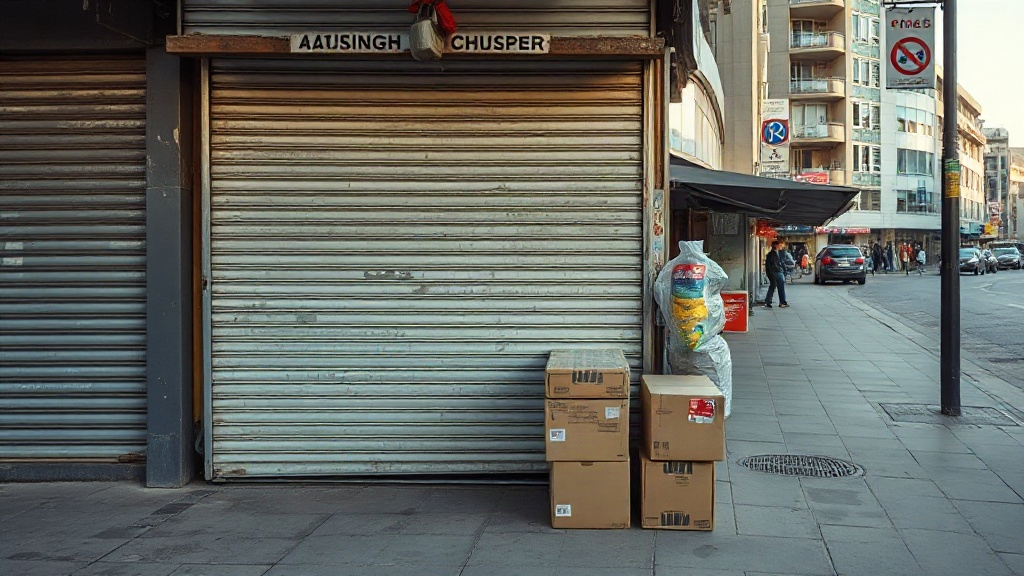
Durban’s CBD went quiet this week in the way a city only goes quiet when the shutters come down and the taxis stop running. Traders who work the pavements and the arcades around the Warwick Avenue and West Street corridors are still counting what the shutdown cost them in stock, in customers and in days they will not get back. The same holds in parts of Soweto and Johannesburg, where the week’s disruption reached the streets that carry the daily trade of people who cannot afford a lost day.
The National Joint Operational and Intelligence Structure, NATJOINTS, said on Saturday that heightened police deployments will remain in place at the hotspots in Durban and Johannesburg. That is the state’s answer to a week in which, as SABC News reported on 10 October, violent protests erupted in the Durban CBD as well as Soweto and Johannesburg following anti-undocumented immigration protests. Thirty arrests have since been made, 25 in KwaZulu-Natal and five in Gauteng, for offences including public violence, illegal gathering, obstruction and resisting arrest.
For the people who live and work in those areas, the numbers that matter are smaller and harder. The trader who lost a week of takings. The commuter who could not get to work. The shopkeeper who boarded up and waited. The resident who watched the street outside their flat fill with police and then empty again. South Africans in Durban, Soweto and Johannesburg have been saying for months that the pressure on the inner city, on trading space, on clinics, on housing and on policing has become something they can no longer absorb quietly. This week they said it in the street, and the state’s response has been to hold the line with boots on the ground rather than to answer the demand underneath it.
That demand is specific and it is not new. Residents and traders in the affected areas have been asking for enforcement of the immigration rules, for a visible police presence, and for Home Affairs to deal with the documentation backlog that leaves people working and trading in the informal economy without any paper trail. None of that is a call for violence, and the week’s damage should not be laid at the door of the people who were asking for enforcement. The offences listed by NATJOINTS are the state’s case against named individuals, and each will be tested in court.
What the week has exposed is the gap between what South Africans are demanding and what the state is delivering. Heightened deployments are a holding measure. They do not clear a Home Affairs queue, they do not process a permit, and they do not return a single person who has no right to be here. They keep the peace on a street that has already lost a week of trade. The enforcement questions that remain unanswered are the ones residents have been asking since long before this week: what changed, who may remain, who may be removed, why the queues formed in the first place, and what the state can actually enforce.
SABC News reported the NATJOINTS briefing accurately, including the arrest figures and the offences. What its account does not carry is the texture of what the week cost the people who live there, and the fact that the anger on the street did not arrive from nowhere. A South African reader watching the footage knows that the CBD has been under strain for years, that informal traders have been squeezed out of pitches they held for decades, and that the police presence that arrives after a protest is not the same as the policing that residents have been asking for before one.
NATJOINTS has not said how long the deployments will stay, and it has not set out what would allow them to be scaled back. That is the question that will decide whether this week is a turning point or another entry in a longer story. Until the state can answer it with something more than a police line, the traders of the Durban CBD will keep counting the cost, and the residents of Soweto and Johannesburg will keep asking why it takes a shutdown to get an answer.
The Enquirer will follow the court appearances arising from the 30 arrests and the Home Affairs response to the enforcement demand that drove the week’s protests.