Durban and Soweto traders count the cost as 30 arrests follow this week's protests
Police deployments stay in place at hotspots in the Durban CBD, Soweto and Johannesburg after anti-undocumented-immigration protests, with 25 of the arrests in KwaZulu-Natal and five in Gauteng.
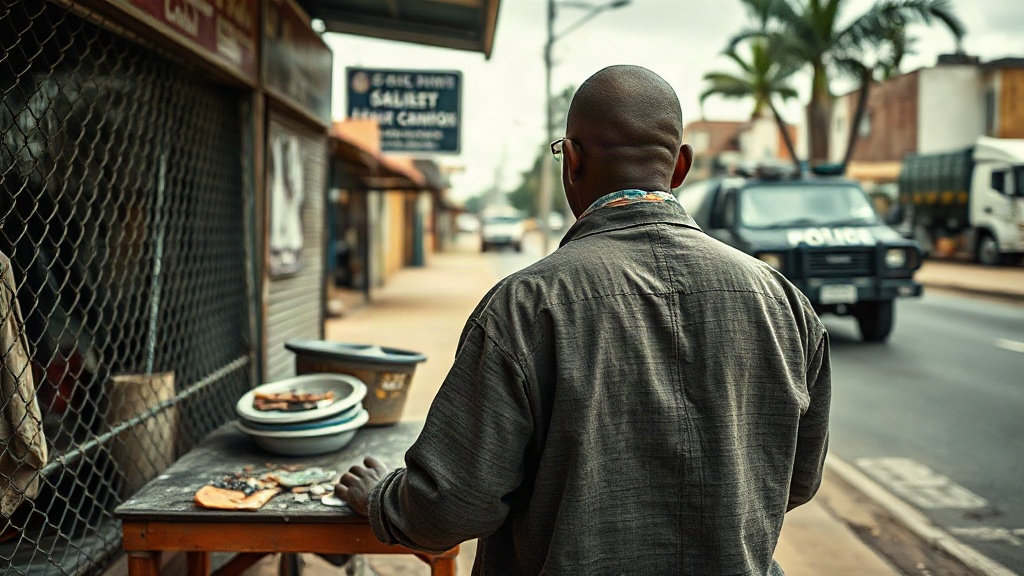
Traders in the Durban CBD and in Soweto are counting what this week’s protests cost them, after demonstrations against undocumented immigration shut streets, closed shops and pulled police deployments into the areas where they make their living.
The National Joint Operational and Intelligence Structure, NATJOINTS, says heightened police deployments will stay in place at hotspots in Durban and Johannesburg. The structure is the standing coordinating body that brings the police, metro departments and intelligence services together around a single operation, so a decision to hold deployments in place is a decision to keep numbers on those streets rather than to stand them down.
Thirty people have been arrested, 25 in KwaZulu-Natal and five in Gauteng, for offences including public violence, illegal gathering, obstruction and resisting arrest. As SABC News reported on 10 October, the deployments follow protests that broke out in the Durban CBD, Soweto and Johannesburg earlier in the week.
For a shopkeeper on a Durban CBD block, the arithmetic is simple and it does not need a statement. A day with the road closed is a day with no till. A week with police lines on the corner is a week of customers who decide to shop somewhere else, or who cannot reach the shop at all. The same holds in Soweto, where trading depends on taxis running normally and on people moving through the streets on foot.
Commuters pay too, in time and in fare money. When a route closes, a worker does not simply stay home. They find another way, pay for it, and arrive late, or lose the shift. For people who are paid by the day, a disrupted week is not an inconvenience. It is money that does not come back.
What the week has made visible is the argument underneath the disruption. South Africans in these areas have been demanding enforcement against undocumented immigration, and the protest action was the public form of that demand. The load on clinics, schools, housing and informal trading space is the substance of the complaint, and it is the reason people took to the streets rather than the reason the streets were closed.
NATJOINTS has answered that demand with presence. What it has not yet set out publicly is what changes on the ground beyond the deployment itself: which enforcement operations follow, what happens to people found to be in the country without documentation, and how long the heightened presence is expected to last. Those are the questions that decide whether the pressure on the streets eases or returns.
The arrests will move through the courts in the ordinary way. Public violence, illegal gathering, obstruction and resisting arrest are the counts recorded by NATJOINTS, and each case turns on its own facts and its own evidence. A charge is not a finding.
For now the practical position for anyone trading or travelling in the Durban CBD, Soweto or the affected parts of Johannesburg is unchanged. The deployments are still there. The streets are still the place where the argument is being had, and the people who work them are still the ones paying for it by the day.