Durban and Soweto streets quiet as 30 held, and the questions nobody has answered
Police deployments stay in place at hotspots in Durban and Johannesburg after protests over undocumented immigration, with 25 arrests in KwaZulu-Natal and 5 in Gauteng.
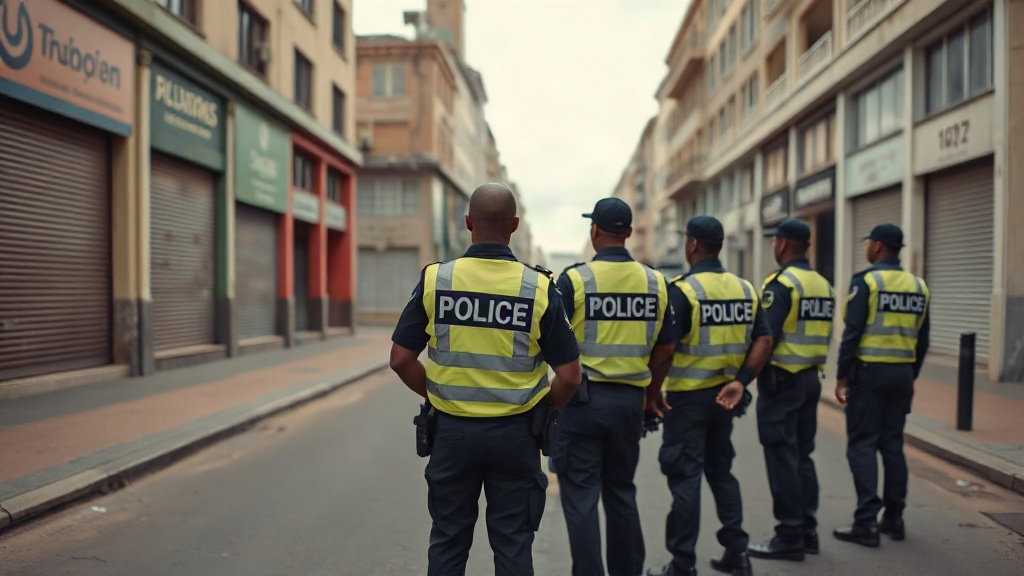
Thirty people have been arrested after several days of protest over undocumented immigration in the Durban CBD, Soweto and Johannesburg, 25 in KwaZulu-Natal and 5 in Gauteng, and the National Joint Operational and Intelligence Structure says its heightened police deployments will stay in place at hotspots in both provinces.
The arrests were for offences including public violence, illegal gathering, obstruction and resisting arrest, according to the account NATJOINTS gave to SABC News, which published the briefing on 10 October 2026 under the headline “Criminality will not be tolerated”.
The number is the smallest part of this story. What South Africans in those areas have been saying for months is that the pressure on the ground has become impossible to carry, and that the state has not answered them.
Residents in the Durban CBD, in Soweto and in inner-city Johannesburg describe the same set of conditions. Home Affairs queues that swallow whole working days and still do not produce a permit or a decision. Clinics where staff are stretched across more patients than the facility was built for. Classrooms where one teacher carries a class that keeps growing. Flats and backrooms where rent climbs because demand never falls. Pavements and taxi ranks where informal traders compete for the same strip of concrete, and where established traders say their takings have thinned.
Those are the conditions that put people on the street. They are also the conditions that will still be there after the last police van leaves, which is the part of the story that a briefing about arrests does not reach.
What the public is demanding is not complicated. They want Home Affairs to process and to decide, so that a queue means a wait rather than a way of life. They want the Department of Home Affairs and the police to act on people who are in the country without permission, and to be seen to act. They want the border to mean something. They want the departments that allocate clinic staff, teachers, housing and trading permits to count the people who are actually there. And they want to be told, plainly, what the state can enforce and what it cannot.
NATJOINTS is the structure that coordinates the police, the intelligence services and other state arms during a major operation or a national security event. When it briefs, it is speaking for the operational centre of the state. Its message this week was that criminality will not be tolerated and that deployments will remain at the identified hotspots.
That is a legitimate operational decision and it is not the whole answer. A deployment is a response to a street. It is not a response to a queue, a clinic roster, a school register or a permit backlog. South Africans watching this week will notice the difference, because they live on the side of it that does not get a briefing.
There is a second question the public is entitled to ask. Why did it take several days of protest in three areas before the state’s operational centre addressed the country at all, and why is the response framed around what will not be tolerated rather than around what will be fixed?
SABC News reported the arrests, the charges and the deployments. That reporting is accurate as far as it goes, and South Africans should know the figures. What a reader outside this country would not know is that the Durban CBD, Soweto and inner Johannesburg are not abstract dots on a map. They are places where the pressure of undocumented immigration is not a debate. It is a queue outside a clinic at six in the morning, a landlord raising the rent on a backroom, a trader watching a customer walk to the next stall.
It is also worth saying clearly that the people who marched are not the story’s villains. They are residents with a grievance that the state has not answered, and the arrests do not answer it. Nor does the arrest count tell anyone whether the man who was held was throwing something or standing at the back of a crowd. That is for a court, and it is not for this paper to decide.
What this paper is doing next is straightforward. The Enquirer is putting the enforcement questions to the Department of Home Affairs, to the South African Police Service and to the Gauteng and KwaZulu-Natal provincial governments, and we will publish what they say. We are asking what has changed at the border, what the current removal figures are, how many asylum applications are outstanding, and what the departments responsible for clinics, schools and housing are doing about the load that residents say they are carrying.
The protests have quietened. The queue has not.