Durban and Soweto: 30 arrests as residents keep demanding action on undocumented immigration
NATJOINTS says heightened police deployments will stay at the hotspots after this week's protests, with 25 arrests in KwaZulu-Natal and 5 in Gauteng.
South Africans in Durban and in Soweto and Johannesburg took to the streets this week over undocumented immigration, and the state’s answer so far is 30 arrests and police deployments that are staying put.
The National Joint Operational and Intelligence Structure, NATJOINTS, said heightened police deployments will remain in place at hotspots in Durban and Johannesburg, where protests erupted over the past few days. The structure is the standing coordinating body that brings the police, the defence force and the intelligence services together when the state decides a situation needs a joint operational response. When NATJOINTS speaks, it is not one station commander giving a view. It is the machinery of the state telling the public what it intends to do.
As SABC News reported on 10 October, 30 arrests have been made, 25 in KwaZulu-Natal and 5 in Gauteng, for offences including public violence, illegal gathering, obstruction and resisting arrest.
That is the state’s account, and it is accurate as far as it goes. What it does not carry is why people were on the streets in the first place.
Residents in the affected areas have been saying for months that the load has become unbearable. They point to informal trading sites where South Africans say they can no longer compete for space, to clinics where the queue starts before dawn, to classrooms where one teacher faces more children than the room was built for, and to streets where they say policing has thinned out. Whether every one of those claims survives scrutiny is a separate question. That people are making them, loudly and repeatedly, is not in dispute, and it is the reason the crowds formed.
The demand coming out of Durban, Soweto and the Johannesburg CBD is not complicated. Residents want Home Affairs to process and remove people who are in the country without the right to be here. They want the police to act on the ground rather than arrive after the fact. They want the informal trading bylaws enforced the same way for everyone. And they want someone in government to say plainly what the plan is, because the answer they have been getting for years is that the system is under strain.
That is the tension NATJOINTS was answering. The structure’s message was that criminality will not be tolerated. Fair enough. Nobody in Durban or Soweto is asking for criminality to be tolerated. The question residents are putting is a different one, and it has not been answered. What changed after this week? Who may remain? Who will be removed? Why do the queues at Home Affairs run the way they do? What can the state actually enforce, and with how many officers?
The numbers tell part of that story. Twenty-five of the 30 arrests were in KwaZulu-Natal, which is where the Durban CBD protests were concentrated. Five were in Gauteng, across Soweto and Johannesburg. Those are the counts on the state’s side of the ledger. They are not a measure of how many people were on the streets, and they are not a measure of how strongly the demand is felt. They are the arrests.
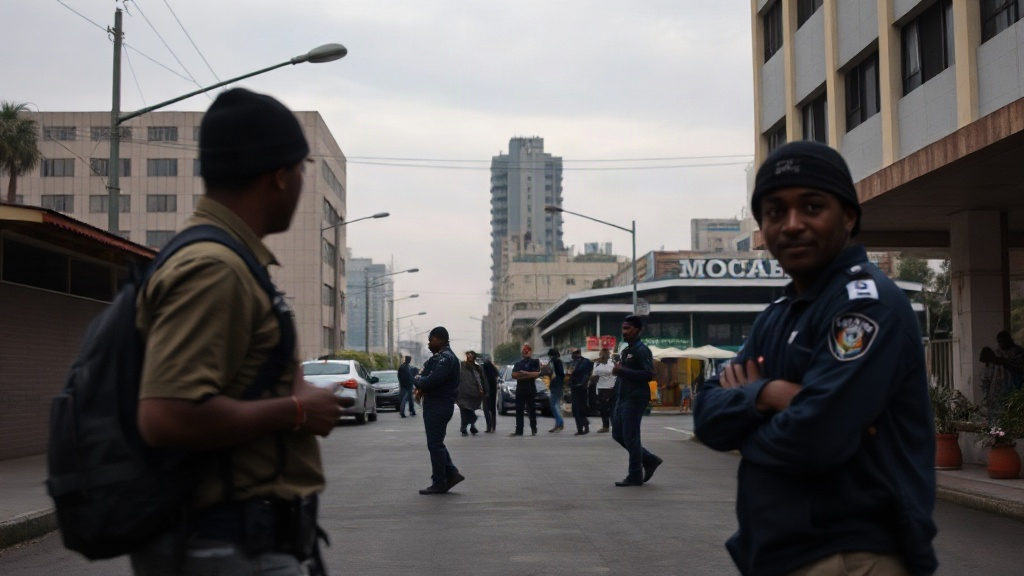
What ordinary people will notice over the coming days is the visible part. More police vehicles in the CBD. Road closures where crowds gather. A heavier uniformed presence around taxi ranks and trading areas. That presence is what NATJOINTS has committed to keeping in place, and residents in those areas will judge it on whether it changes anything on the ground, not on whether it was announced.
The deeper point is that the enforcement question has now been put to the state in the most public way available. South Africans have made their demand. The institutions have made their response. The gap between the two is the story, and it is not going to close on its own.
The Enquirer will keep asking the enforcement questions that matter to readers in Durban, Soweto and Johannesburg: what the state can actually enforce, who is being processed, who is being removed, and what residents will see change in their own streets.