Durban and Soweto: 30 arrests, and the question nobody has answered
Residents in Durban and Soweto spent the week demanding action on undocumented immigration. Thirty people have been arrested. Nobody has said who they are, which charges each one faces, or what happens to them next.
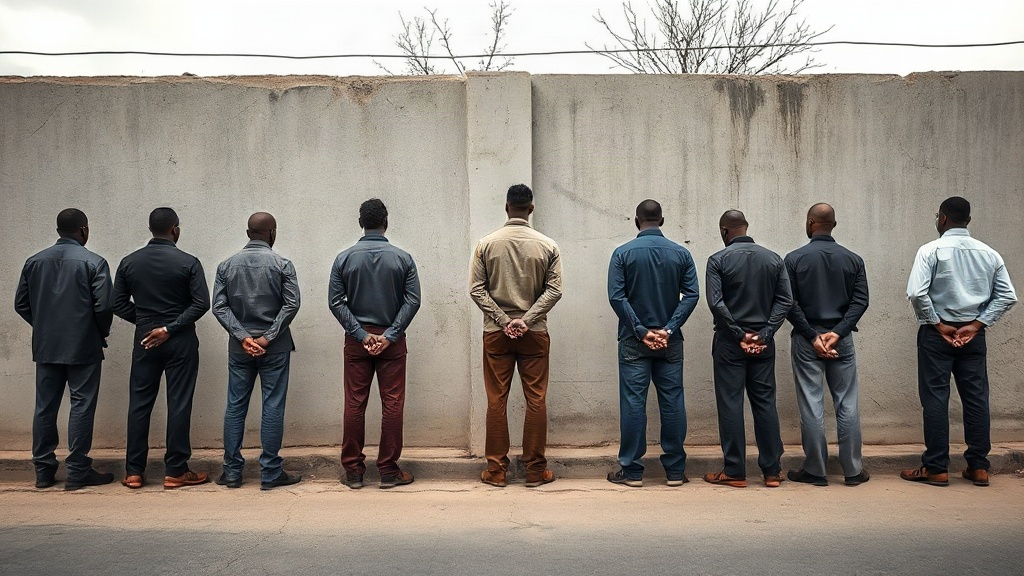
Thirty people have been arrested after a week in which residents of the Durban CBD, Soweto and Johannesburg took to the streets over undocumented immigration. Twenty-five of the arrests were in KwaZulu-Natal and five in Gauteng. The National Joint Operational and Intelligence Structure, NATJOINTS, says heightened police deployments will remain in place at hotspots in Durban and Johannesburg.
That is what is on the record. What is not on the record is who the thirty are, which of them faces which count, and what happens to each of them from here.
NATJOINTS lists the offences as public violence, illegal gathering, obstruction and resisting arrest. Those are four different things carrying four different weights, and the briefing did not say how the thirty divide between them. It did not name a single person. It did not say how many have appeared in court, how many have been granted bail, how many remain in custody, or whether any have been released without charge. For a week of protest that shut parts of two of the country’s biggest urban centres, that is a thin public account.
As SABC News reported on 10 October, NATJOINTS said criminality would not be tolerated and that the deployments would stay.
The people who marched were not there about the arrests. They were there about the load. Residents in these areas have spent years saying that undocumented immigration is felt first and hardest in the places where the state is thinnest: the clinic queue that does not move, the school place that is not there, the shack that goes up overnight on land that was already contested, the trader whose spot is taken by someone selling the same thing cheaper with no lease and no rates. Those are the conditions people were protesting about. They are not new. They are the reason the marches happened.
What the community is asking for is enforcement. Not a statement that enforcement will continue. Enforcement that can be seen: Home Affairs processing that produces decisions, removals that actually happen, a border that holds, and a police presence that does not only appear when a street is already burning. Residents want to know what changed for the person standing next to them, who may remain, who may be removed, and why the queue at the front of the system is still the queue at the front of the system.
That is the question the state has to answer, and a deployment schedule is not an answer to it.
NATJOINTS is the structure that coordinates the police, the defence force and the intelligence services during a national operation. When it speaks, it speaks for the whole security apparatus at once. That is why its briefings carry weight, and why the absence of detail in this one matters more than it would from a single station commander. A national structure can tell the country how many people it has arrested. It can also tell the country what it has done about the conditions that put them on the street.
The same week produced no figure on how many undocumented people have been processed, removed or refused entry in Durban and Gauteng. No figure on how many Home Affairs applications are outstanding in either province. No figure on how many people are waiting for a decision. Without those numbers, the public is left to argue about a load it can feel but cannot measure, and the state is left to answer with the one number it chose to release.
The thirty arrests are a fact and they belong in the story. They are not the whole of it. A reader in Durban or Soweto who watched the week happen knows that the arrests are the smallest part of what was being argued about, and that the argument does not end when the deployments are eventually scaled down.
The Enquirer has asked NATJOINTS and the South African Police Service for the breakdown of the thirty arrests by charge, by court appearance and by custody status, and for the enforcement figures for both provinces over the same period. We will publish what comes back, and we will keep asking the question the briefing did not answer: what changed for the people who were marching, and what changes next.