Cosatu backs both ANC and SACP for November 4, and its new president says picking one would have split the alliance
Mike Shingange, elected at the federation's October 14 congress, says the decision was taken to keep three independent organisations together through a temporary cold war between its two political allies.
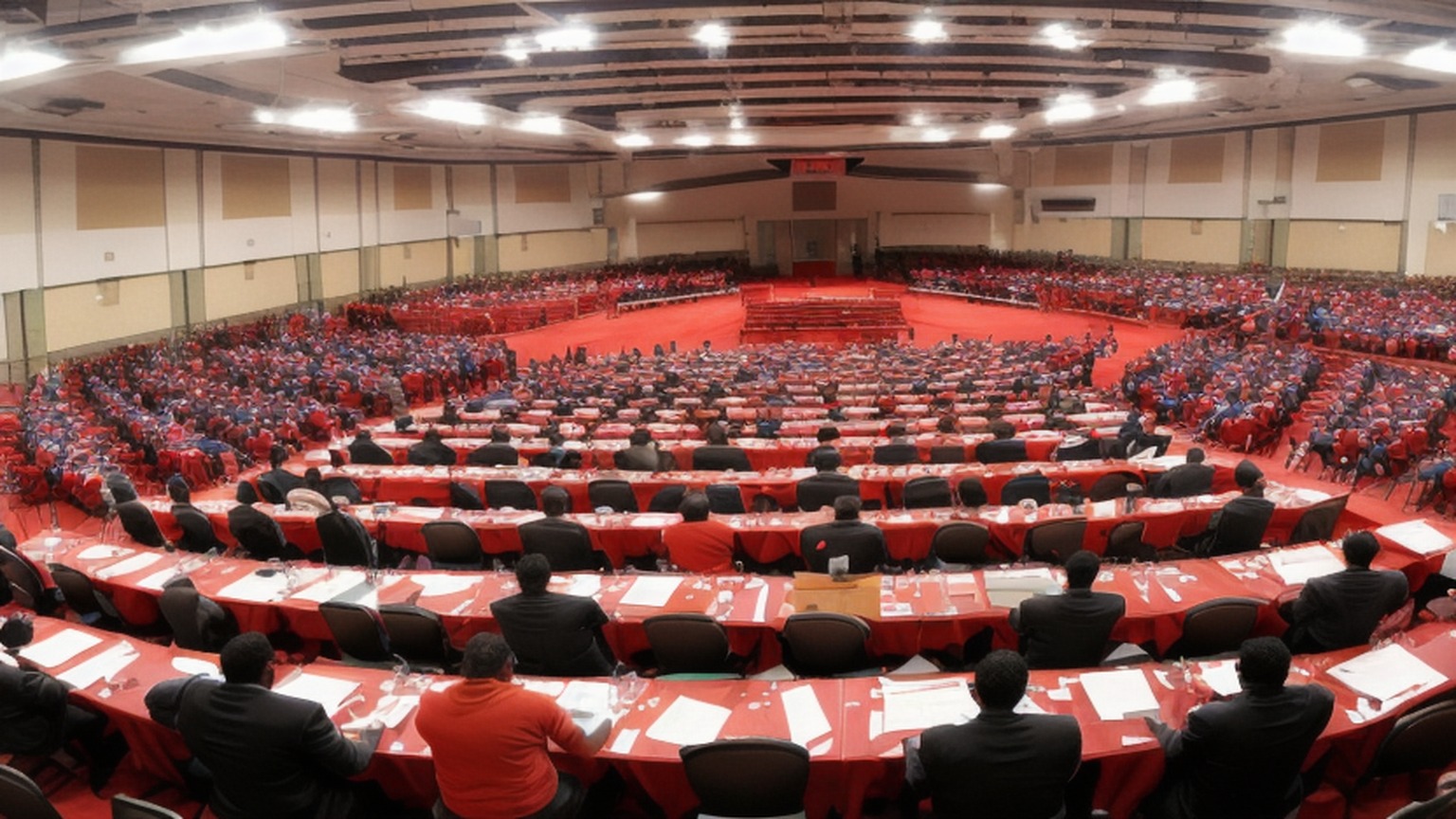
Cosatu will campaign for both the ANC and the SACP in the November 4 local government elections, and its newly elected president says choosing one of them would have split the federation and the tripartite alliance with it.
Mike Shingange, a former president of the National Education, Health and Allied Workers’ Union, set out the reasoning in a podcast interview with Sunday World, which reported the interview on 2026-10-25. He described the congress resolution to back both allies as a “super resolution” intended to keep the alliance intact.
Shingange replaced Zingiswa Losi as Cosatu president at the federation’s congress on October 14. Losi was elected general secretary at the same congress.
The decision lands in the middle of a rift that has run since December 2024, when a special congress of the SACP confirmed that the communist party would contest elections independently of the ANC. Attempts by the ANC to persuade the SACP to review that decision came to nothing. Earlier this year the ANC’s national executive committee asked members of both organisations to choose which side they would campaign for in the November 4 polls.
Cosatu had said for some time that it would settle its own position at its congress. It settled on backing both.
Shingange’s argument rests on the alliance’s structure. “The SACP said it contested the election independently because we are three independent organisations,” he said. “The alliance is a coming together of three independent organisations.”
He put the difficulty plainly: “If you choose the SACP or the ANC, how do we proceed and say you are in the alliance when you’ve chosen one of them and discarded or rejected the other?”
The federation’s affiliates had already made their own choices before the congress met. Satawu and Samwu have taken constitutional decisions to support the ANC and are campaigning for it. Nehawu and the National Union of Mineworkers have said they are going with the SACP and are campaigning for it. Shingange said none of them is leaving Cosatu, and described the federation’s role as that of a parent that had to embrace children with different preferences.
He said taking a single side would have liquidated Cosatu and isolated the unions on the side it did not choose. He also argued that a binding decision was not warranted for what he called a temporary cold war between the ANC and the SACP.
“We’re not going to crack ourselves as a federation and as an alliance on an event that is temporary, which is the elections,” he said. “The alliance doesn’t exist for elections. In fact, the alliance brought about the election. It is not the election that brought about the alliance.”
Shingange did not claim the alliance is healthy. He said Cosatu intends to convene an alliance council of all three partners after the elections to work through the problems. “If the alliance were a patient, I would say it’s critical but stable,” he said, adding that it was certainly not on its deathbed.
For voters, the practical effect is a labour movement campaigning on both sides of a contest its two political partners are fighting separately, with different unions knocking on doors for different candidates in the same municipal wards.
The interview was published as Cosatu’s largest affiliate was dealing with a crisis of its own. The central committee of the National Union of Metalworkers of South Africa met in Benoni on Friday after regional leaders forced the meeting ahead despite an attempt by general secretary Irvin Jim to cancel it. Regional leaders said the cancellation was unacceptable, particularly because it was the second attempt to hold the meeting, and that the constitution allowed them to proceed because they had a quorum for a reconvened meeting.
The central committee resolved to strip Jim and other national office bearers of their responsibilities, and decided that they must not be involved in organising the union’s national congress, scheduled for November 30 to December 4. A task team has been appointed to ensure regional congresses and the national congress go ahead on their scheduled dates.
Nkosinathi Makhanya, Numsa’s Mpumalanga chairperson, said the central committee had raised concerns about the conduct of the national office bearers and that their conduct would go to a special national executive committee meeting, which is the only structure that can deal with it. “Some of those duties, the central committee has taken and we have given them to this task team,” he said.
Jim has led Numsa since 2008.
The move followed a court judgment on Thursday, which found that Numsa’s national office bearers could not unilaterally restrict the participation and voting rights of delegates from the Mpumalanga region while a complaint about their regional congress was unresolved.