Cape Town election debate: housing and hunger land on the parties as the city votes in a month
Five parties, independent candidates and a hall of residents and students argued over housing, crime and food security at a University of the Western Cape election debate one month before the local government elections.
Cape Town goes to the polls in exactly one month, and the parties fighting for the metro spent an evening at the University of the Western Cape being asked what they will actually do about housing, hunger and crime.
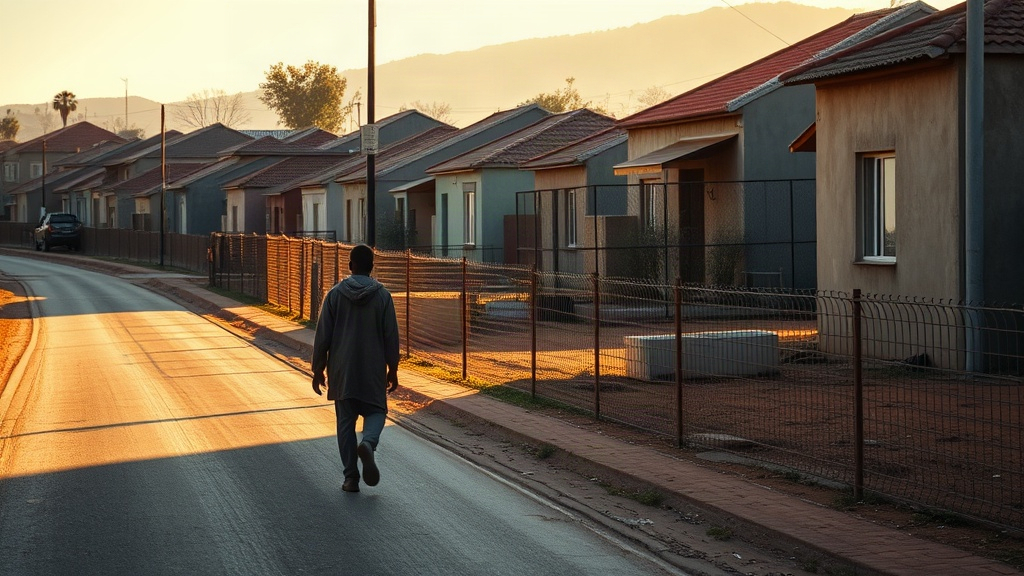
The city’s housing backlog is estimated at 400,000, the debate heard, and the argument over who gets built houses ran through the night. The National Coloured Congress said its people are 42% of the Western Cape population and should get at least that share of housing, and party representative Larry Vari put it bluntly, saying the question is who gets the houses that are built.
The DA’s Carl Popham defended the city’s record, saying Cape Town has problems but that its approach reduces inequality rather than reinforcing it. He cited more than a billion rand invested in expanding the MyCiTi public transport so that residents of Khayelitsha, Atlantis and Mitchells Plain can reach opportunity, and said municipal land has been released for affordable accommodation in and around the inner city.
That answer drew a sharp response from a geography student at UWC, who told Popham that a bus does not fix spatial inequality, which he said is entrenched in the land itself.
Brett Herron of Good, the mayoral candidate, agreed with the student. He said transport provides mobility but does not change the spatial history of the city, and argued that the city should build on well-located public land itself rather than selling it to private developers. He said not a single brick has been laid on any site released so far. A Good party member in the audience, Suzette Little, told residents that the Constitutional Court has asked the city to put its affordable housing plan on record and that the city has not yet submitted it.
The ANC’s Jeremiah Tainma said the party would hold councillors to three-monthly report-backs in every subcouncil, bring economic opportunities closer to where people live and deploy metro police and law enforcement where crime is highest. He said the ANC delivered 19,000 houses in three years through the N2 Gateway project and that the project was cancelled when the DA took power in 2006.
The EFF’s mayoral candidate, Nondando Noluchungo, opened by sending condolences to the families of those killed in Lusikisiki the previous week. She promised free basic services for indigent households and SASSA beneficiaries, insourcing of cleaners and security guards, and clinics open 24 hours a day, seven days a week, saying people do not make appointments to fall ill.
The audience did not let the parties stay on their talking points. Daniel Adams of the Budget Justice Coalition said the city’s inequality is growing and that most parties had not said how they would tackle it. A speaker from the social justice organisation Equal Education, Bulelwa Boyi, said the Constitutional Court has found the city failed to redress spatial apartheid and accused it of adopting by-laws that criminalise poor people, citing fines of R3,000 for unlawful occupation by people seeking housing.
Crime was the second theme. The debate heard that between April and June this year the city recorded 61,000 crimes, including 15,000 violent contact crimes in three months. Tafir Mustafa, a 22-year-old law student and independent candidate in Athlone’s Ward 48, said crime cannot be separated from the cost of living, telling the panel that one bad month separates a resident from homelessness or from desperation.
Professor Cheryl Africa of UWC’s political studies department pressed all the parties on food security, saying hunger was barely mentioned in their manifestos and that practical solutions exist at local level. The ANC’s Tainma said the party encourages communities to plant food gardens on their properties.
A member of the audience asked every party what it would do about the report released on 1 October on hoarded wealth in the country, saying food insecurity and spatial inequality persist alongside it.
The debate, hosted in partnership with UWC, heard from five parties on the panel, with 55 parties and 10 candidates contesting the metro. Independent candidate Steve Ross asked why councillors on the ballot do not live in the communities they contest, saying they do not hear the gunshots or smell the smoke when a house burns.
The election takes place on 4 November.