30 arrested as anti-immigration protests hit Durban and Soweto, and the state still cannot say who they are
NATJOINTS says heightened deployments will stay in place at hotspots in Durban and Johannesburg, but the record does not yet show the ages, charges or immigration status of the people in custody.
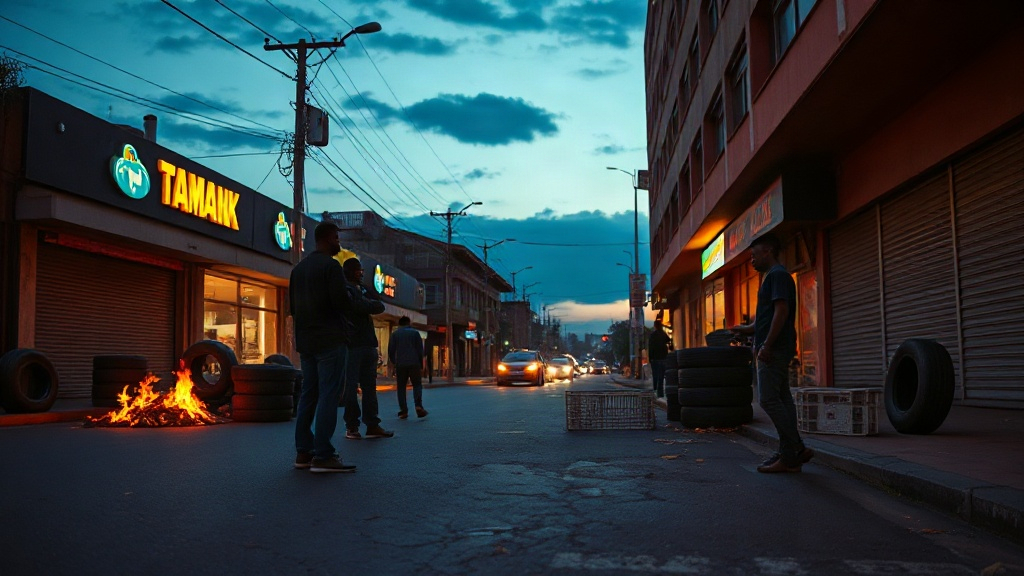
Thirty people have been arrested after protests against undocumented immigration in the Durban CBD, Soweto and Johannesburg this week, the National Joint Operational and Intelligence Structure said. Twenty-five of the arrests were in KwaZulu-Natal and five in Gauteng, for offences including public violence, illegal gathering, obstruction and resisting arrest.
NATJOINTS is the structure that pulls the police, the metro departments, the intelligence services and other state agencies into a single operational command when the state decides a situation needs coordinated force. When it briefs, it is speaking for the whole apparatus, not one station. Its message on Saturday was that heightened deployments will remain at hotspots in Durban and Johannesburg, and that criminality will not be tolerated.
That is the state’s account, and it is accurate as far as it goes. The difficulty is what it leaves out, and what the public is entitled to know before the next march is called.
The record does not say who the 30 are. It does not say their ages, where they are being held, or what each individual is charged with beyond the four categories named. It does not say whether any of those arrested are South African and whether any are foreign nationals, and it does not say what identity or immigration status checks the police perform after an arrest. Those are not small omissions. A protest about undocumented immigration that ends in 30 arrests without a single status disclosed leaves the public arguing about a question the state has the information to answer.
The record also does not say how many people were injured, how seriously, or whether any weapon was recovered. It does not say whether a firearm was involved, whether any firearm was licensed, and to whom. Where a weapon is recovered in a public order operation, the licence and the origin are matters of public record in any properly reported case. Here there is nothing to report because nothing has been put on the record.
What the record does establish is the geography. Durban’s CBD and the Johannesburg and Soweto corridors are the two areas where the pressure of undocumented immigration is most visible to ordinary residents, and where the enforcement demand has been loudest for the longest. It is the same ground on which informal traders have argued for years that the state is not doing its job, and it is the same ground on which Home Affairs queues have grown rather than shrunk.
The next dated step is the one the state has not given. No first appearance date has been confirmed for the 30, and without it there is no point at which the charges, the ages and the status of the accused can be tested in an open court. Once identities may lawfully be published, and once the court has established ages and the state has established immigration or asylum status, those facts become reportable. Until then they remain unknown, and it is worth saying plainly that they are unknown rather than assuming an answer in either direction.
The deployment will stay in Durban and Johannesburg for now. What South Africans are still waiting for is the part of the record that would let them judge whether it is working.