30 arrested as anti-immigration protests hit Durban and Joburg
NATJOINTS says heightened police deployments will stay in place at hotspots in Durban and Johannesburg after days of protest over undocumented immigration.
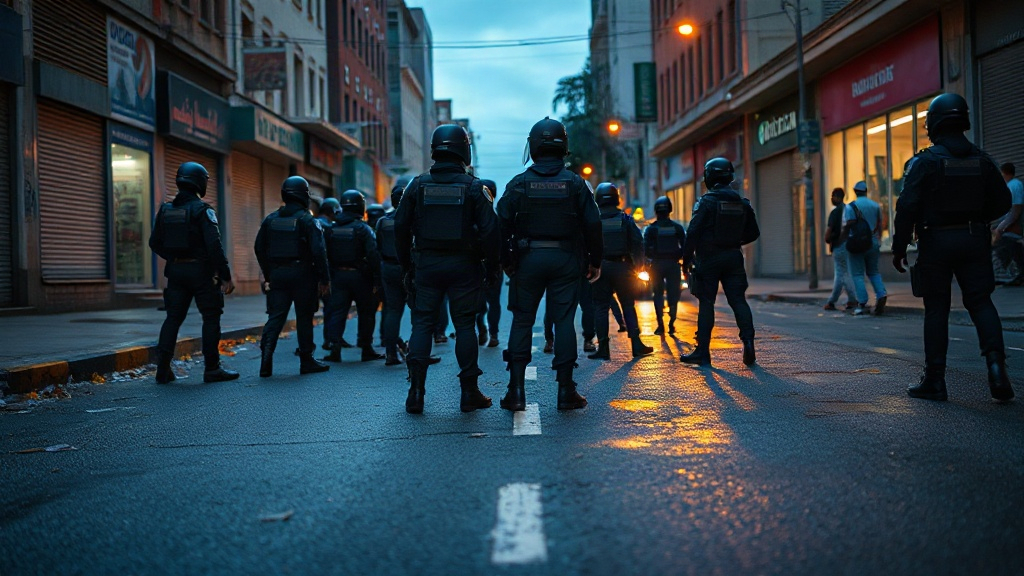
Thirty people have been arrested after a week of protest over undocumented immigration in the Durban CBD, Soweto and Johannesburg, the National Joint Operational and Intelligence Structure said on Saturday.
Twenty-five of the arrests were in KwaZulu-Natal and five in Gauteng. The offences cited by NATJOINTS include public violence, illegal gathering, obstruction and resisting arrest.
As SABC News reported on 10 October, NATJOINTS says heightened police deployments will remain in place at hotspots in Durban and Johannesburg, and that criminality will not be tolerated.
NATJOINTS is the standing structure that coordinates the South African Police Service with the State Security Agency, the South African National Defence Force and other departments when a policing operation crosses provincial or agency lines. When it speaks, it is describing a national deployment and not a single station’s docket.
The arrests follow days of protest in which crowds in the Durban CBD, Soweto and Johannesburg gathered over undocumented immigration. The 30 figure is the count NATJOINTS has put on the record. It does not say how many people were on the streets, how long the deployments will run, or where exactly the hotspots are.
What the week’s events make plain is that the argument over undocumented immigration has moved from petition and memorandum into the country’s busiest commercial and residential districts, and that the state’s answer so far is a heavier police presence rather than a change to the immigration system itself.
The deployment question is the one South Africans will watch. Home Affairs has not said what changes at its offices, at the border or in the permit backlog as a result of this week. The police have not said what the heightened deployment costs, how long it is funded for, or what would allow it to be scaled down.
For people living and working in the affected areas, the practical effects are already visible: a heavier police presence in the Durban CBD and in Soweto and Johannesburg, and the ordinary disruption that follows any large crowd, road closure or police operation in a busy district.
NATJOINTS has not named any of the 30 arrested and has not said how many of them are South African. Under the law, the counts attached to a crowd do not decide any individual’s case. Each arrest is a separate matter that has to be tested in court.
For readers who have followed this issue, the shape of the week is familiar. Public anger over undocumented immigration has been building for years, directed at the load it places on clinics, schools, housing, informal trading and policing, and at what the public sees as the state’s inability to enforce its own immigration law. That anger has now produced arrests and a standing national deployment.
The immediate question is what NATJOINTS means by hotspots, how long the deployments stay, and what the state intends to do about the conditions that put people on the street in the first place. None of those has been answered yet.