30 arrested after migration protests shut Durban CBD and Soweto: what the state will not say
NATJOINTS says heightened police deployments remain at hotspots in Durban and Johannesburg, but the record answers few of the questions a South African reader would ask about the 30 people in custody.
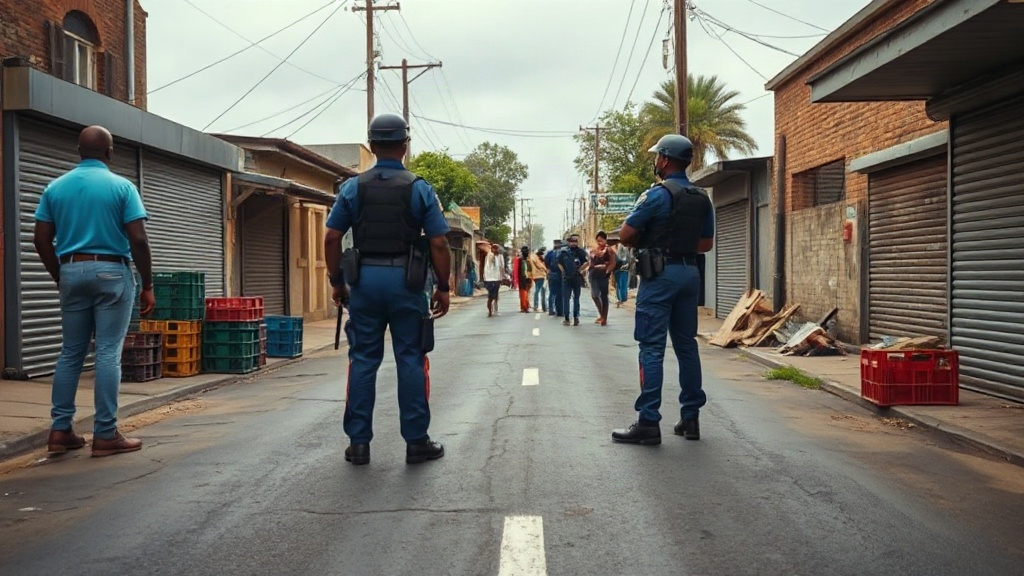
Thirty people are in custody after a week of protest against undocumented immigration shut parts of the Durban CBD, Soweto and Johannesburg. Twenty-five of the arrests were made in KwaZulu-Natal and five in Gauteng, for offences including public violence, illegal gathering, obstruction and resisting arrest.
The National Joint Operational and Intelligence Structure, the standing command that coordinates the police, metro departments, intelligence services and the defence force during unrest, says heightened deployments will stay in place at hotspots in Durban and Johannesburg. As SABC News reported on 10 October, that is the state’s account of the week.
What the public record does not yet answer is most of what a South African reader would want to know about the 30 people now inside the system.
Who are they. Their names have not been published, and cannot lawfully be published where they have not yet appeared before a court. Their ages have not been given. Their immigration or asylum status, where any of them is not a South African citizen, has not been stated by the police, Home Affairs or the National Prosecuting Authority. None of that is a small omission. It is the difference between a crowd of residents who marched and a set of named accused with a case to answer.
The charges are listed in categories, not in counts. Public violence, illegal gathering, obstruction and resisting arrest are the labels NATJOINTS has used. Which of the 30 faces which charge, and how many charges each faces, has not been set out. The distinction matters at the first appearance, because the bail inquiry turns on it.
No firearm has been reported recovered, and no firearm licence has been placed on the record. The assignment note on this story asks the question plainly because the public has a right to the answer: if a weapon was used, whose was it, was it licensed, and where did it come from. The state has said nothing on that.
The same silence covers injuries. How many people were hurt, how seriously, and whether any of them were police officers, protesters or passers-by has not been published. Thirty arrests is a number. It is not a picture of what happened on the street.
And there is no next date. No first appearance has been confirmed, no court has been named, and no date has been given for when the 30 will be brought before a magistrate. Until that date exists, the case is an arrest count and not a prosecution.
What is not in dispute is why people were on the street. The protests were against undocumented immigration, and they came after months in which the pressure on clinics, schools, informal trading sites and Home Affairs offices has been the subject of open public argument across the country. That argument is not a fringe position and it is not going away because a deployment is extended. It is the question the state has to answer, and the state’s answer so far has been a policing one.
NATJOINTS is the right body to be saying this. It is the structure that exists precisely for weeks like this one, and it is the structure that will be judged on whether the deployments it is extending are matched by anything on the Home Affairs side. The queues at refugee reception offices, the status of people who have been waiting years for a decision, and the enforcement capacity at the border are not NATJOINTS questions. They are the questions that produced the marches.
The Enquirer will report the first appearance when a court date is confirmed, and will report what the accused are charged with, what their status is where the state establishes it, and what the police recover, as soon as any of it is on the record.