111 Rhodes students and 23 St Albans inmates fall ill as tests point to water inside the campus and the prison
Government says preliminary results place the contamination inside Rhodes University's and St Albans Correctional Centre's own distribution systems rather than the municipal supply, with laboratory results still pending.
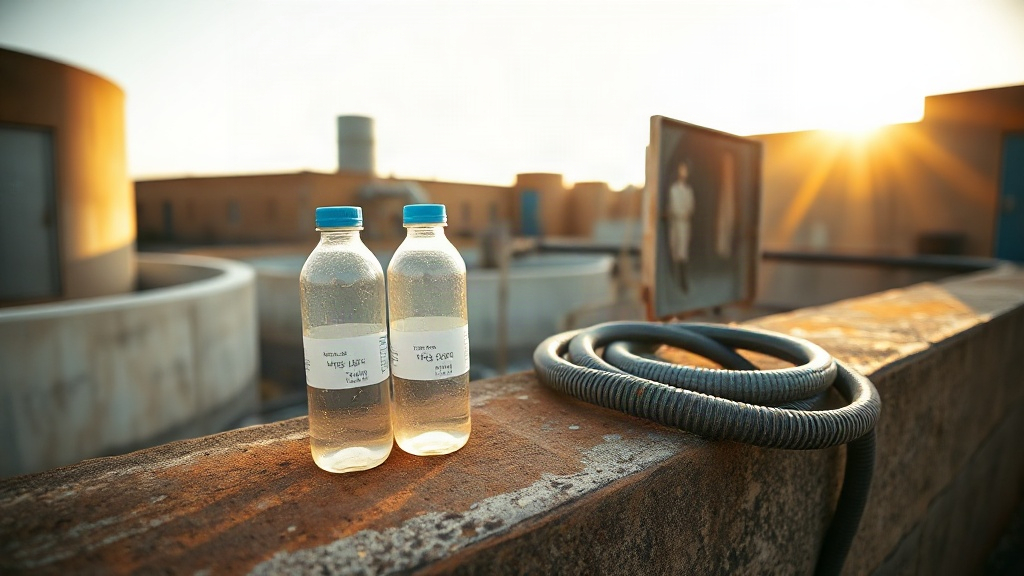
Government has launched an investigation into gastrointestinal illness affecting 111 people at Rhodes University in Makhanda and 23 inmates at St Albans Correctional Centre in Nelson Mandela Bay, the Department of Water and Sanitation said in a joint statement with the Eastern Cape Provincial Government, Makana Local Municipality and Nelson Mandela Bay Metropolitan Municipality.
The investigation follows reports of people in the two municipalities receiving treatment at healthcare facilities for symptoms including severe abdominal cramps, diarrhoea, vomiting and dehydration.
According to the statement, the Department of Water and Sanitation received a media alert about the illnesses reported by Rhodes University, which prompted it to activate a response team involving the provincial Department of Health and the department’s regional offices. A multi-stakeholder technical team has since been set up to find the source of the illnesses and contain their spread.
The team comprises the Department of Water and Sanitation, the provincial departments of Health and Cooperative Governance and Traditional Affairs, Sarah Baartman District Municipality, Makana Local Municipality, Nelson Mandela Bay Municipality, the National Institute for Communicable Diseases, Amatola Water and Rhodes University.
An intergovernmental meeting was held on Wednesday evening, led by Water and Sanitation Minister Pemmy Majodina and Eastern Cape Premier Oscar Mabuyane, alongside Makana Executive Mayor Yandiswa Vara and Nelson Mandela Bay Executive Mayor Babalwa Lobishe.
The statement said the meeting received reports from the technical team on the number and location of cases, the samples taken by the NICD, water quality tests conducted by the department and additional urgent measures being implemented to protect communities.
Water samples were collected from various sources in Makana, including Rhodes University’s internal water storage and distribution system, the municipal distribution network and the water treatment works. At St Albans, samples were taken from the elevated water storage tower through which the facility receives potable water from the Nelson Mandela Bay municipal supply system.
“Preliminary findings indicate that the spread is currently concentrated within the university and the Saint Albans Prison. Initial test results indicate that the contamination is within the university’s water distribution system and within the prison’s water distribution system, and not within the municipal water distribution systems,” the statement said.
Laboratory test results of all the samples taken are still pending and will be communicated when they become available, according to the statement.
Government urged residents who develop symptoms to seek medical attention early and report suspected cases to their nearest healthcare facility or local health authority. “Early reporting protects not only individuals and families but also enables health authorities to respond quickly and prevent further spread,” the statement said.
Communities were also urged to observe good hygiene practices, including washing hands after using the toilet and before handling food.
Earlier this week, the minister announced the establishment of a multi-pronged response team after 408 cases of gastrointestinal illness were reported at Bronkhorstspruit in the City of Tshwane.
This report is based on the joint statement as carried by SAnews (South African Government News Agency), which is a summary of the government’s position rather than the underlying laboratory record. The full test results have not yet been released. The source document can be found at https://www.sanews.gov.za/south-africa/government-investigates-gastrointestinal-illness-cases-eastern-cape.