US development agency puts $155-million into Johannesburg fibre group Wiocc
The DFC's largest ever equity investment lands in a South African company that runs cables and data centres in more than 30 African countries.
Up to US$155-million of American public money is going into a Johannesburg-headquartered company that runs undersea cables, fibre networks and data centres in more than 30 African countries.
The United States International Development Finance Corporation said on Wednesday it would make the equity investment in Wiocc Group, its largest ever equity commitment. Vision Invest and the African Finance Corporation are investing alongside it.
As TechCentral reported on 17 September, the deal was announced by the agency this week. The DFC’s chief executive, Ben Black, said the money would help build digital infrastructure “on trusted networks that support American companies looking to expand in one of the world’s most dynamic markets”.
For a South African reader the important part is not the size of the cheque. It is who is writing it, and what the money is for.
What Wiocc actually is
Wiocc is a wholesale connectivity business. It does not sell airtime to consumers or run a retail brand. It sells capacity to the operators that do, on an open-access and carrier-neutral basis, which means the cables and data centres it builds are available to any network that wants to buy space on them.
That model matters in this market. South Africa’s internet traffic reaches the rest of the world almost entirely by undersea cable, and the cables that land at Melkbosstrand and Mtunzini are the country’s actual front door to the global internet. Capacity on those routes, and the cost of it, is what eventually shows up in what a household pays for data and what a business pays for a leased line.
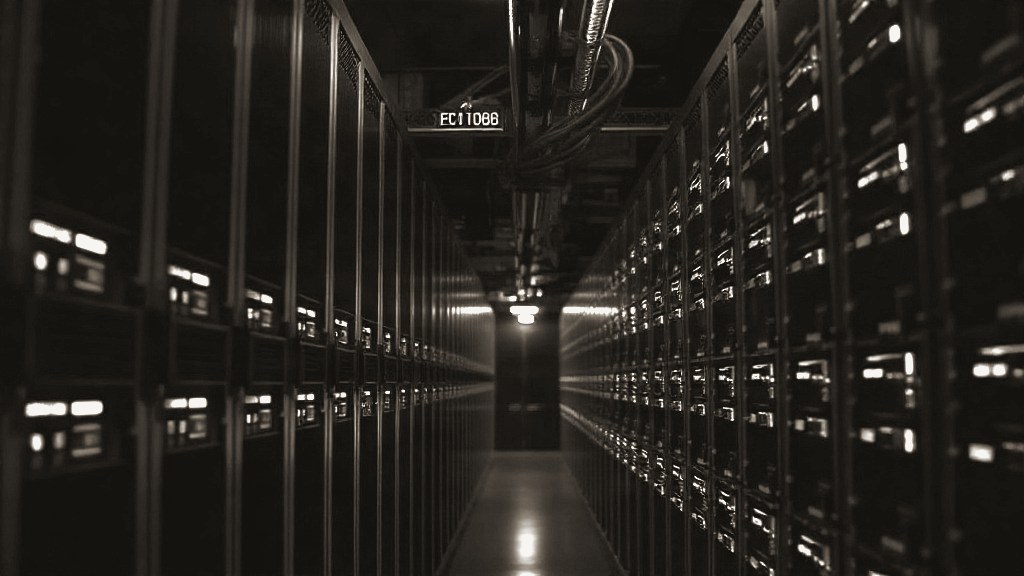
Data centres are the other half of the business. They are where cloud services, streaming, banking systems and, increasingly, artificial intelligence workloads physically sit.
Why Washington is doing this
The DFC is an American development finance institution. Its stated purpose is to mobilise private capital into projects that serve US foreign policy and commercial interests, and it has been directed by executive order to promote the use of American technology abroad in AI, data centre storage, cloud services and networking.
That direction sits inside a longer American effort to offer an alternative to Chinese telecommunications equipment and carriers in allied and partner countries, an effort that began with the “clean network” campaign in President Donald Trump’s first term and has continued in his second.
The agency said the investment aligns with US strategic interests in supporting American hyperscalers and the wider American technology ecosystem, and described Wiocc as a preferred partner for US technology companies expanding on the continent. It has made comparable moves before, including a US$100-million loan to the US-owned telecoms operator Africell, and an US$80-million data centre facility in Kenya announced this month by Digital Realty and its Kenyan brand Icolo.
What it means here
South Africa is the natural landing point for this kind of capital. The country already hosts the largest concentration of data centre capacity on the continent, concentrated in Gauteng and the Western Cape, and it has the submarine cable landings, the electricity grid connections and the engineering skills that the industry needs.
A commitment of this size to a South African company is a statement about where the continent’s digital traffic is expected to be routed and stored over the next decade. It also puts a South African operator at the centre of a contest between American and Chinese suppliers that will otherwise be fought over the heads of local firms.
There is a hard practical question attached, and it is the one South African businesses ask about every infrastructure commitment of this kind. Data centres and cable landing stations are heavy electricity users, and the country’s grid has only recently returned to a position where large new industrial connections can be considered with confidence. Wiocc has not said how many megawatts the expansion will require or where the new capacity will be built.
The DFC has not published a schedule for the drawdown of the investment, and neither the agency nor Wiocc has said which routes or facilities the money will be spent on first. The commitment is stated as being up to US$155-million, which means the final figure will depend on what is drawn.
Source: TechCentral, Washington bets big on African fibre with $155-million Wiocc deal, published 17 September 2026 at https://techcentral.co.za/wiocc-dfc-155-million-investment/286209
- Police find fifth woman's body near Kempton Park as search for missing jogger continues 2026-09-14
- Sixth woman found in Ekurhuleni as ex-SAPS profiler calls for serial killer investigation 2026-09-15
- Gauteng police confirm six women found dead in Ekurhuleni as Kekana appeals for information 2026-09-15
- Police task team probes five Kempton Park deaths as family identifies runner Elizabeth Moselakgomo 2026-09-15
- Seven women found dead in Ekurhuleni as top police and ministers meet in Parktown 2026-09-15
- Police confirm eighth body in Ekurhuleni and offer R400 000 for information 2026-09-15
- Police put R400 000 on the table in Kempton Park murders probe 2026-09-15
- Police form high-level team as eighth body found in Ekurhuleni 2026-09-15
- Seven women found dead in Gauteng in two months as safety audit is demanded 2026-09-15
- Police raise Ekurhuleni toll to seven women as task team hunts suspects 2026-09-16