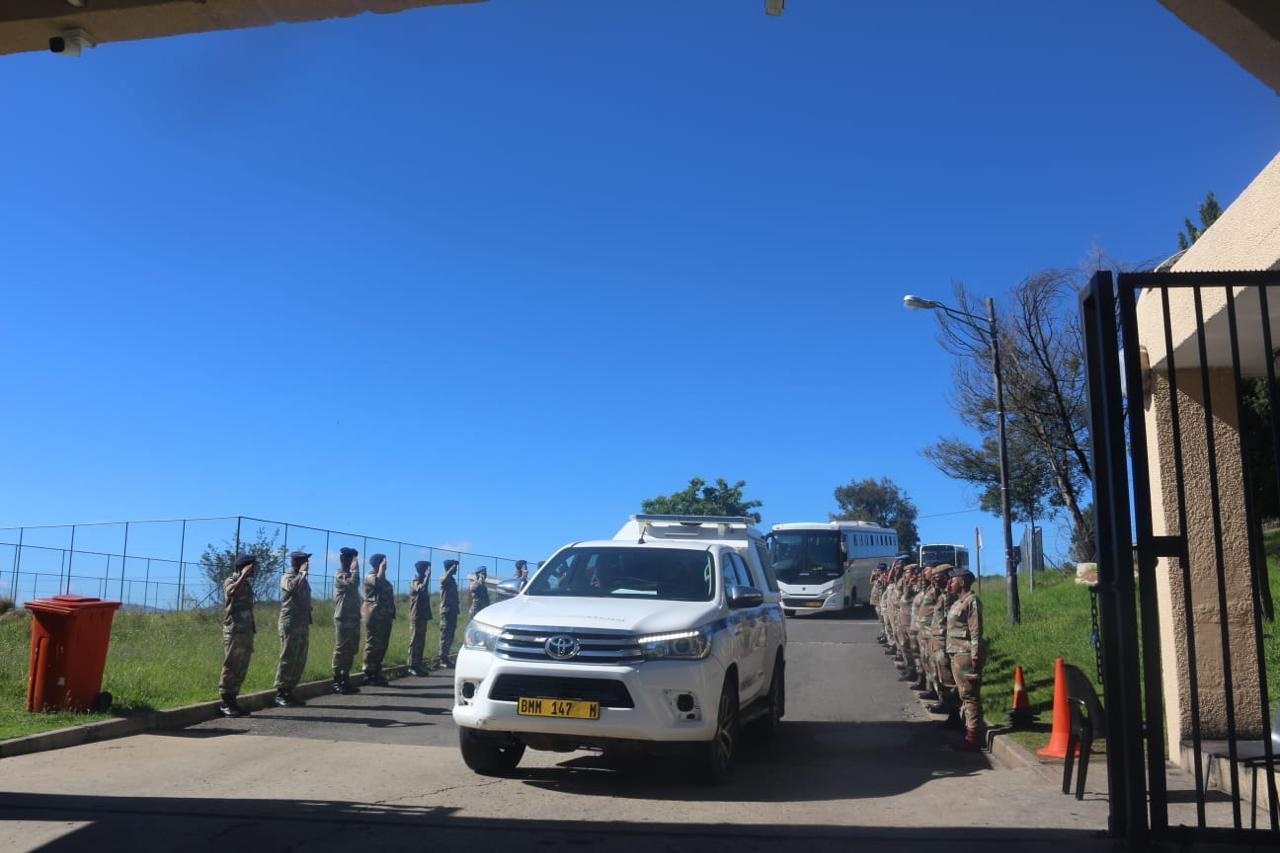
Soweto and Durban residents demanded an end to undocumented immigration. The state answered with 30 arrests.
NATJOINTS says heightened police deployments will remain at hotspots in Durban and Johannesburg after this week's protests, with 25 of the 30 arrests made in KwaZulu-Natal and five in Gauteng.

Residents in the Durban CBD and in Soweto took to the streets this week to demand an end to undocumented immigration in their areas. The state’s answer, so far, is a standing police deployment and a charge sheet.
The National Joint Operational and Intelligence Structure, NATJOINTS, says heightened police deployments will remain in place at hotspots in Durban and Johannesburg. Thirty people have been arrested, 25 in KwaZulu-Natal and five in Gauteng, for offences including public violence, illegal gathering, obstruction and resisting arrest.
That is the official account, and it is accurate as far as it goes. What it does not carry is why people were on the streets in the first place, or what they were asking for.
South Africans in these areas have been saying for years that the load on their clinics, their schools, their housing lists and their informal trading spots has grown past what the state can carry. That is not a new complaint. It is the same complaint that has been raised at community meetings, in ward committee submissions and in letters to local government across the country. This week, in Durban and in Soweto, people took it to the street.
What they are demanding is straightforward. Enforcement. A Home Affairs system that can process, document or remove people within a reasonable time. Border control that means something. Policing that does not leave residents to manage the consequences on their own.
None of that is delivered by an arrest count.
As SABC News reported on 10 October, NATJOINTS briefed on the deployments and confirmed the arrest figures. The Enquirer credits that reporting for the official numbers and the NATJOINTS position. The rest of this piece is what a South African reader needs in order to understand what happened and what it means.
NATJOINTS is the country’s standing joint operational and intelligence structure. It coordinates the SAPS, the metro police, the defence force and the intelligence services when a situation crosses the line from a local policing matter into a national security question. When NATJOINTS briefs, it means the state has decided the situation is serious enough to be run from the centre. That is a significant step. It is also a signal that local policing was not enough on its own.
The 30 arrests break down as 25 in KwaZulu-Natal and five in Gauteng. The offences listed are public violence, illegal gathering, obstruction and resisting arrest. Those are the standard counts that attach to a crowd that has been dispersed, and they tell a reader very little about what actually happened on the ground, who did what, or whether anyone was hurt. No names have been released. No statuses have been confirmed. No court dates have been given.
What is missing from the official account is the same thing that is missing from almost every immigration story in this country. The people who live in these areas, who queue at the same clinics, whose children sit in the same classrooms, and who trade on the same pavements, are not in the statement. They are the reason the deployment exists. They are not in the sentence.
The state’s capacity problem is real and it is documented. Home Affairs has for years carried a backlog that runs into the hundreds of thousands of applications. The asylum system has been the subject of court findings about its failures. Border enforcement is stretched across a land border of more than 4,000 kilometres. None of that is an excuse for disorder. It is the context in which residents have lost patience.
What residents will notice in the coming days is the police presence. Heightened deployments in Durban and Johannesburg mean more visible policing, more roadblocks, and more stops. That is what the state has chosen to do. Whether it addresses the underlying demand, which is enforcement of the immigration system itself, is a different question and one the deployment does not answer.
The Enquirer will continue to report on the conditions in these communities, the state’s enforcement record, and the gap between what residents are asking for and what they are getting. We will do that by going to the areas concerned, speaking to the people who live there, and testing the official account against what is actually happening on the ground.
That is the reporting this story needs. It is the reporting it has not yet received.