Fourteen cars burned in Durban as Home Affairs pulls asylum directive
The department withdrew the directive it issued on 28 September after refugee reception offices were overwhelmed within days, while police say three foreign nationals were arrested for an assault that left a marcher's leg broken.
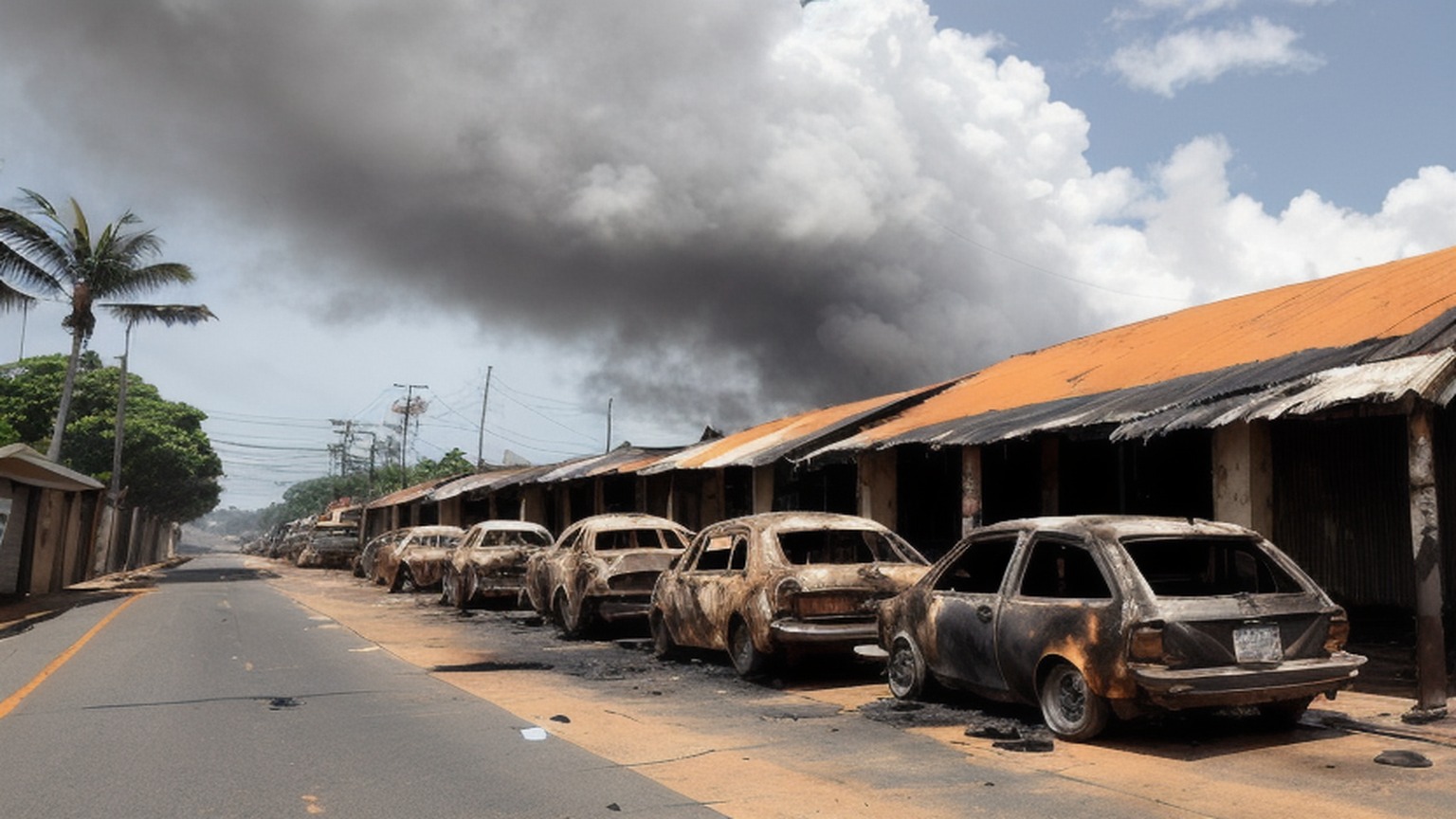
Fourteen burnt-out vehicles were still standing along Dr Pixley KaSeme Street in the Durban CBD on Friday, and by midday no owner had come forward to claim one. A day earlier, a march through the city centre ended in the burning of those cars, a store fire that reignited on Joseph Nduli Street, and three arrests.
Durban Metro Police and SAPS kept foot patrols along the street through Friday, and more than a hundred people carrying sticks walked up Dr Yusuf Dadoo Street towards the Home Affairs offices, with officers following close behind. More than a dozen shops owned by foreign nationals from neighbouring African countries stayed shut.
Police spokesperson Colonel Robert Netshiunda set out the sequence as the police understand it. A group that had marched against gender-based violence finished its march and walked down Dr Pixley KaSeme Street to join another group gathered at the Home Affairs offices. As they walked, he said, one of them was allegedly assaulted by a foreign national and his leg was broken. What sparked that assault is not yet clear, he said. The group became angry and violence followed.
Netshiunda said fourteen vehicles were torched, and that three foreign nationals were arrested for the assault. A lodge building and a warehouse were partially burnt before the fire was put out. The three are expected in the Durban Magistrates Court on Monday.
Assault is a crime. So are arson, public violence and intimidation. No group, movement or individual may enforce immigration law in this country, because that authority belongs to the state and not to a crowd, and a self-declared deadline carries no standing in law.
The directive that could not hold
On the same Friday, the Department of Home Affairs confirmed that its Director-General had withdrawn a directive issued on 28 September governing the intake of asylum seeker applications. The directive had gone to every Refugee Reception Office to give practical effect to the Constitutional Court judgment of 7 July in the Scalabrini of Cape Town matter.
The department said the attempt to implement the judgment produced consequences the court order could not have foreseen. Refugee reception offices were overwhelmed within days, Home Affairs officials were placed at risk, and serious threats to public safety and order emerged.
That is the department’s own account of why it retreated, and it is worth stating what the withdrawal does not do. It does not overturn or suspend the Constitutional Court ruling, which remains binding on the department. The judgment stands. What has been withdrawn is the administrative instruction for carrying it out.
The department also rejected the suggestion that the directive had been politically driven. It said the instruction came from the Director-General’s office alone, without the knowledge of the Minister of Home Affairs or any other political office-bearer, and that it had opposed the Constitutional Court case that produced the ruling. On that record, a political motive does not fit the sequence the department describes, which is an administrative instruction, an operational collapse, and a withdrawal.
For anyone who has queued at a refugee reception office, the practical effect of the withdrawal is the part that matters. The offices that were overwhelmed remain the same offices, and the judgment they were trying to satisfy has not moved. How the department intends to comply with it now, and on what timetable, is the question it has not yet answered.
As IOL reported on 9 October, the CBD remained tense through Friday, with the burnt vehicles still in place and businesses shut. Our account of the day draws on that reporting and on the police and departmental statements it carried.
The Enquirer has put the compliance question to the Department of Home Affairs and will publish its answer when it comes.