Eskom drops the solar registration fee, but registration itself is still the law
The utility has waived registration-related charges for eligible customer-owned generation up to 50kVA on its own network, while the legal duty to register the system stays in place.
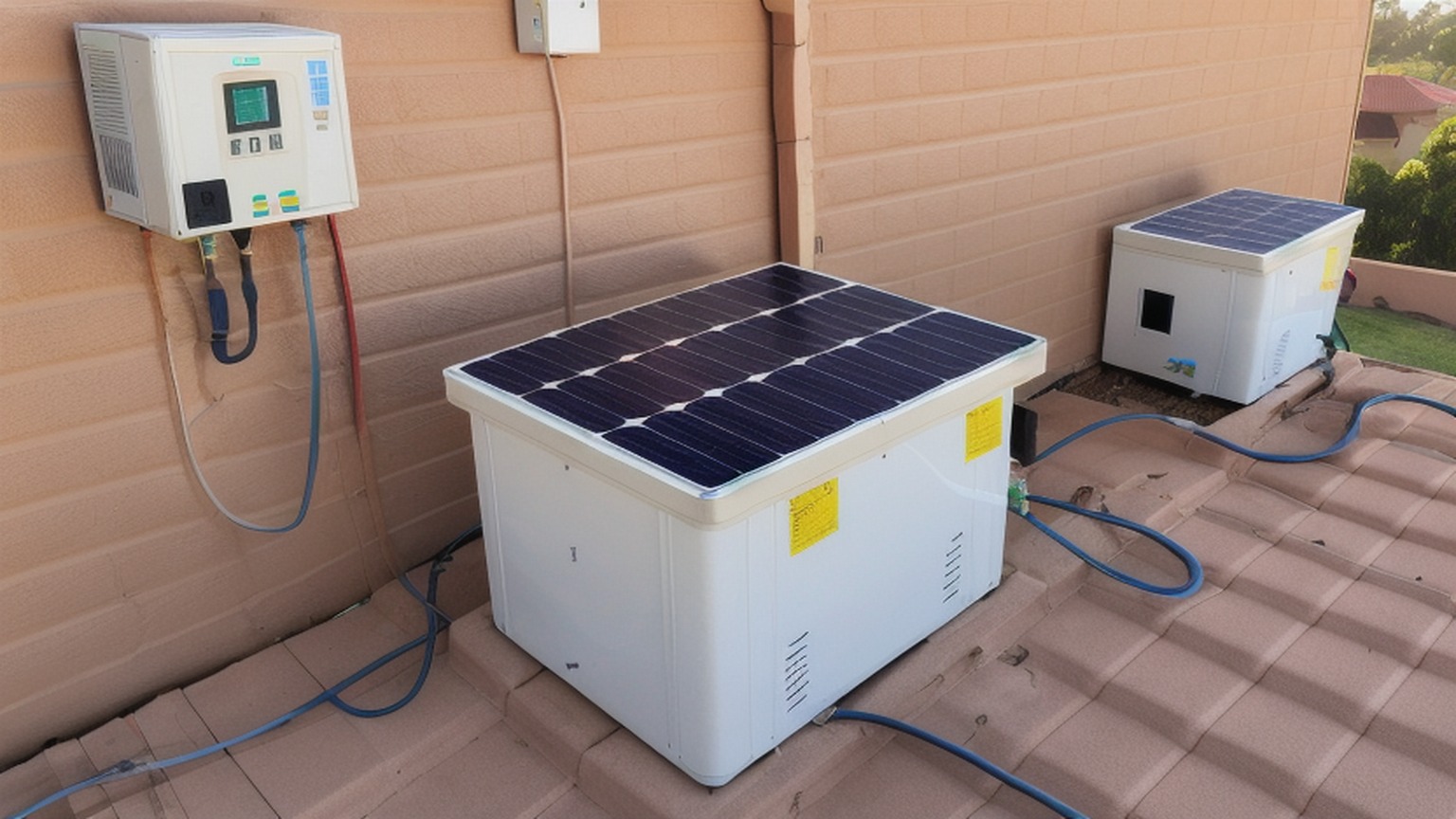
Eskom has extended its waiver on registration-related charges for eligible customer-owned generation systems of up to 50kVA connected directly to its distribution network. The waiver now stands until further notice.
As SABC News reported on 4 October, OUTA chief executive Wayne Duvenage joined the broadcaster to discuss what the change means for households with rooftop solar. The key distinction in the announcement is this: the charge has been waived, but the legal requirement to register the system has not.
That requirement is not an Eskom invention. Under South African law, anyone who generates electricity and connects to the grid must register the system with the relevant authority. Eskom says it needs to know what generation is connected to its network in order to manage the grid safely and to protect workers and equipment. A registered system is one the utility can account for when it plans switching, maintenance and fault response.
Customers supplied directly by municipalities are not covered by the Eskom waiver. They must follow their own municipality’s requirements, which vary from metro to metro. A homeowner in Johannesburg, Cape Town, eThekwini or Tshwane who buys electricity from the council rather than from Eskom falls under that council’s rules, not the national utility’s.
The waiver applies to eligible systems of up to 50kVA connected directly to Eskom’s distribution network. The threshold matters because it covers the typical residential rooftop installation. A 50kVA system is far larger than the average home array, so most households that install solar to cut their monthly bill will fall within the band.
The practical effect for a household is that the charge attached to registering the system is no longer payable, but the paperwork still is. A homeowner who installs panels and an inverter without registering is not compliant, and the absence of a fee does not change that.
Eskom’s stated reason for wanting the registration is operational. The utility has to balance supply and demand across its network, and it has to know where power is being pushed back onto the grid when customer systems generate more than the household is using. Unregistered generation is invisible to that planning, and it can put line workers at risk during outages if a private system is still feeding the network.
The waiver removes a cost barrier that OUTA and other energy stakeholders have argued discouraged households from registering. The registration duty itself remains, and Eskom’s position is that the record of connected generation is what allows it to keep the grid stable as more South Africans install their own capacity.
For a reader deciding whether to install solar, the sequence is straightforward. Confirm whether your supply comes directly from Eskom or from a municipality. If it comes from Eskom, check that your planned system is within the 50kVA eligibility band and register it. If it comes from a municipality, check that council’s own registration process before installation begins, because the Eskom waiver does not apply to you.
Source: SABC News, Wayne Duvenage weighs in on Eskom extending free solar registration (https://www.youtube.com/watch?v=6IFhXWxoSOE)
- Malmesbury teen faces 15 charges as cyber child abuse case returns to court 2026-10-04
- ANC enters final stretch of local election campaign without a mayoral candidate in any of the eight metros 2026-10-05
- Second arrest after hijackers target Western Cape social development staff 2026-10-05
- Sibiya fights to stay in SAPS while facing rape and trafficking charges 2026-10-06
- Five arrested and 1 000 alcohol units seized as 4 000 matrics descend on Cape Town beaches 2026-10-06
- Mokonyane tells ANC to settle Mbalula-Lungisa fight before judge rules 2026-10-07
- Shanela week: 18 488 arrests, a R110m mandrax lab and six extradited to the US 2026-10-10
- 18 488 arrests in a week: what Operation Shanela actually does, and where the cases go next 2026-10-10
- Shanela arrests 18 488 in a week as police seize R110m mandrax lab in Pretoria 2026-10-10
- Three arrests in one Cape Town day as police seize ammunition, Mandrax and cocaine 2026-10-11