Bread buyers and bakery towns pay as Premier's R1.17bn profit lands
Two old bakeries close, two new ones switch on, and the loaf stays on the shelf while the group books a 62.1% jump in net profit.

Premier Group’s half-year numbers, for the six months to 30 September 2026, landed with a net profit of R1.17 billion, up 62.1%, and revenue of R14.3 billion, up 38.8% on the same period a year earlier. As Sunday World reported on 10 November, the maker of Blue Ribbon bread booked operating profit of R1.69 billion, up 52.5%, and EBITDA of R2 billion, up 51.4%.
Those are group figures and they include a business Premier did not own a year ago. The RFG Holdings acquisition in March 2026 is the single biggest reason the top line moved, and the company says it is the first interim reporting period to carry RFG’s contribution, run now as Premier’s culinary business inside the groceries division. A reader comparing this half-year with the last one is not comparing like with like.
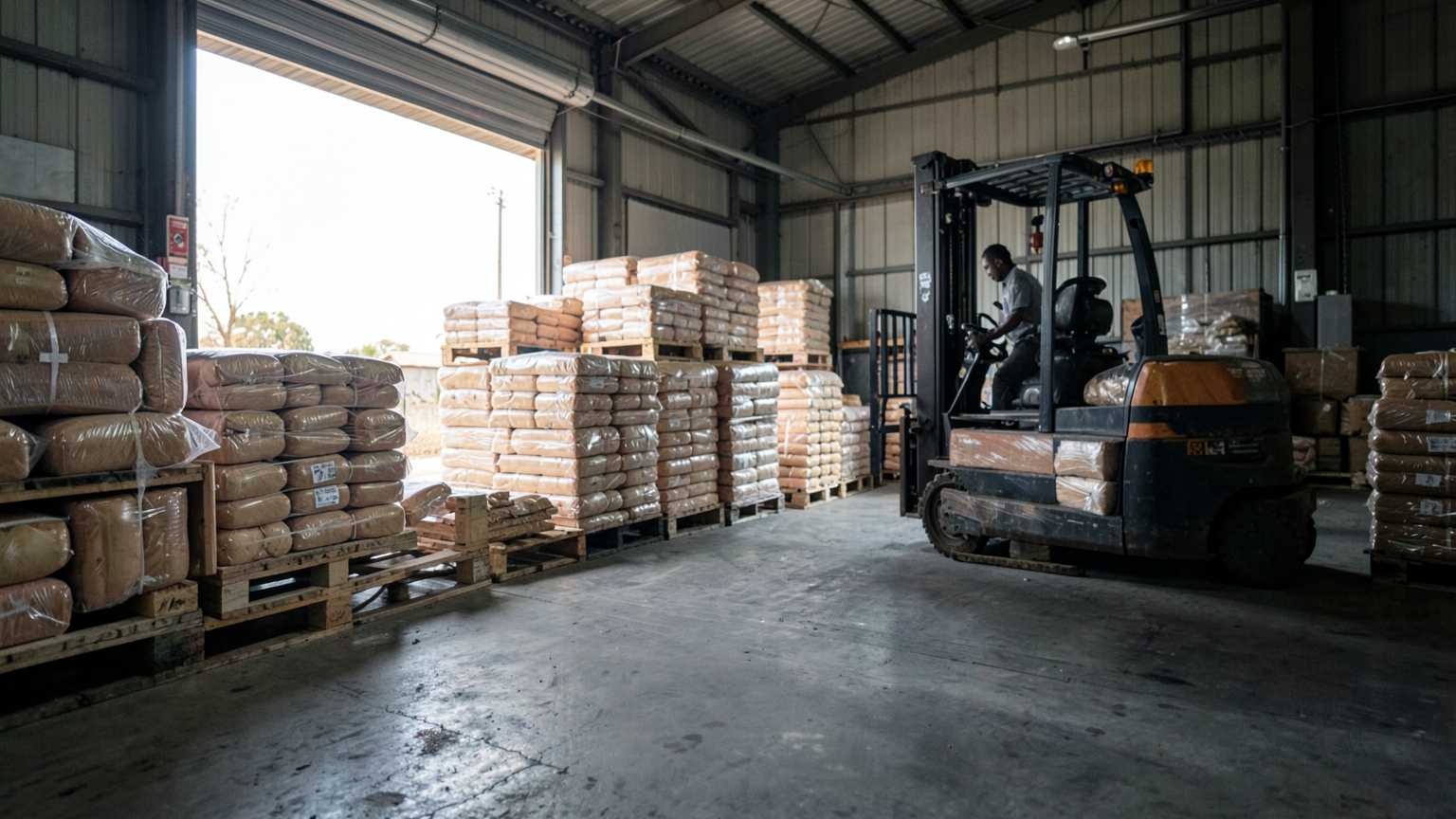
The part that touches a household budget is Millbake, the division that mills grain and bakes bread and which Premier says accounts for roughly two-thirds of group revenue. Millbake revenue rose 1.3% to R9.4 billion, against maize price deflation of 20% and wheat price deflation of 5%. Its EBITDA grew 23.7% to R1.58 billion and its EBITDA margin widened to 16.8% from 13.8%.
Read plainly, the division sold only slightly more in rand terms while grain got much cheaper, and it kept a fatter share of each rand. Premier attributes the gain to investment in new bakeries and to logistics and distribution improvements, not to the grain price alone. What a shopper will notice is the gap between a 1.3% revenue move at the bakery and a 62.1% profit move at the group, and the fact that cheaper maize and wheat did not arrive as a cheaper loaf on the shelf.
The bakery towns are where the numbers turn into people. Premier has commissioned new bakeries at Aeroton in Gauteng and Middelburg in Mpumalanga, and says these replace older sites. The Hermanstad bakery has already closed. The Potchefstroom bakery is due to close once the new sites are commissioned. Premier presents this as efficiency, and on its own terms it is. For the workers and suppliers around Hermanstad and Potchefstroom it is a dated closure, and the company has not said in this material how many jobs go with it.
Groceries, the division carrying the culinary business, lifted revenue to R4.9 billion and EBITDA to R513 million, a margin of 10.4%. Premier says fresh products did well, helped by pies and pastries, while long-life products held up despite the closure of the Tulbagh fruit processing facility. That is a second site closure sitting inside a good set of results, and it is named in the company’s own account without a job count attached.
The balance sheet is strong. Cash from operations rose 43% to R1.8 billion. Premier spent R759 million on capital expenditure, bought back R207 million of its own shares and made voluntary debt repayments of R234 million. Net debt stood at R2.3 billion, and the leverage ratio held at 0.7 times despite the debt taken on for RFG. Basic and headline earnings per share both rose about 27%, to 711 cents, a slower climb than the 62.1% net profit because there are more shares and more of the group in the base.
On costs, Premier says the prolonged conflict in the Middle East contributed to higher fuel costs and pressure on household disposable income, and that it tried to offset some of that through targeted pricing and internal improvement. That is the company’s own attribution of a cost pressure, and it is the closest the results come to explaining the consumer side of the equation.
Looking ahead, Premier expects merger benefits to accelerate in the second half as integration progresses, and expects grain prices to stay deflationary for the rest of the financial year before El Niño weather patterns push them the other way. Management says rising cash generation will go to capital expenditure, debt reduction and further buybacks.
One item sits outside the results but inside the same file. Premier’s own material carries a reference to the Competition Commission moving to revoke the R5.6 billion Premier-RFG merger over non-disclosure. The results do not resolve that question, and nothing in the half-year statement says how it will. For the workers at Hermanstad and Potchefstroom, and for the shoppers watching a loaf price while grain deflates, that unresolved matter is the one that decides what the next set of numbers looks like.