Al Jazeera reports torched cars and shuttered shops in Soweto and Durban, and no authority has yet said what it knew or did
The broadcaster's account names the two cities and the damage but no department, no arrest figure and no response from the institutions that would have to act, which is where a South African reader's questions start.
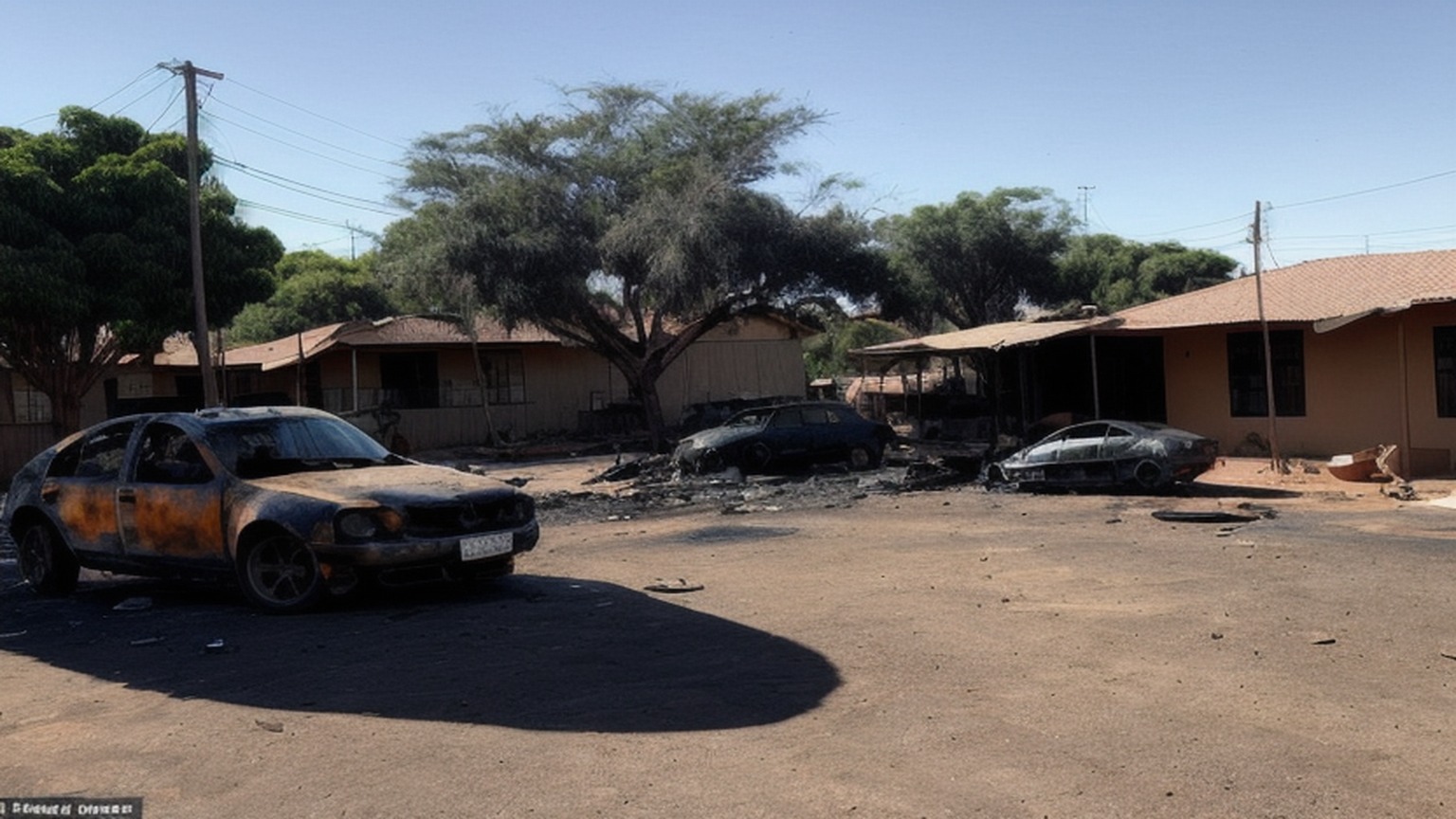
Al Jazeera English reported on 8 October 2026 that protests over an asylum ruling turned violent, with several cars torched and foreign-run businesses forced to shut in Johannesburg’s Soweto and in Durban. That is what the broadcaster published, and it is the starting point for this report, not the end of it.
The account names two cities and two kinds of damage. It does not name the ruling that is said to have prompted the protests. It does not name a court, a department, a police station or an official. It carries no arrest figure, no injury figure, no statement from the South African Police Service, no statement from the Department of Home Affairs, and no account of what was done to stop the violence or to restore order. Our attempts to work from the broadcaster’s own text are limited because the full item could not be retrieved at the time of writing, so this report rests on its published summary and adds nothing to it that cannot be sourced.
That gap is not a small one for a South African reader, because the institutions that matter here are nameable and accountable. An asylum ruling would ordinarily be a decision of the courts, sitting on the Immigration Act and the Refugees Act, with the Department of Home Affairs as the respondent that administers the outcome. Public violence, arson and the intimidation of traders are criminal matters for the South African Police Service, and prosecutions are the business of the National Prosecuting Authority. Where a crowd forces businesses to close, the law is clear: no group and no individual may enforce immigration law or any other law in this country. That authority belongs to the state, and a blockade or a forced closure is a crime, not a protest tactic.
So the questions a South African reader is entitled to have answered are specific. Which ruling is at issue, and on what date was it handed down? Has the Department of Home Affairs said whether it will comply, appeal or seek clarity? How many people were arrested, how many cases have been opened, and what charges are being considered? Did the police have advance warning, how many officers were deployed to each area, and how long did it take to restore order? And what has been done for the traders whose premises were shut and the vehicle owners whose cars were destroyed?
None of those answers is in the material available to us. We are not treating that as evidence of anything. It is an absence of information, and the honest thing is to say so and to keep asking.
What can be said with confidence is that this is not an unfamiliar pattern in South Africa, and the record matters more than the mood. Attacks on foreign nationals in this country have run in documented waves since 2008, and the response has usually followed a recognisable sequence: police deployment, arrests, a period of calm, and then a much smaller number of completed prosecutions than the number of arrests suggested at the time. That gap between arrest and conviction is the part of the story that foreign coverage almost never carries, and it is the part that determines whether the next wave happens. It is also the part that Home Affairs, the police and the prosecuting authority each control, and each can be asked about by name.
There is a second thing a South African reader knows that a foreign audience does not. Soweto and Durban are not abstract locations in a wire report. They are places where people live, work, queue for services and run businesses, and where the overwhelming majority of residents did not take part in any violence. Where residents have protected neighbours, refused to join a blockade, or helped traders reopen, that is part of the record too, and it is the part that gets left out when a country is summarised in a single paragraph.
It is also worth being precise about what kind of story this is. The protest is described as being over an asylum ruling. That makes it a story about immigration administration and the courts, and about whether the state can enforce its own law without crowds doing it instead. It does not make it a story about the character of South Africans, and we will not report it as one. The failures that will need explaining, if there are failures, will be institutional ones, and they will have names attached to them: a department, a police service, a prosecuting authority, a municipality.
Al Jazeera’s account is accurate as far as it goes. Cars were reported torched and businesses were reported forced to shut. What it does not do is tell a South African reader who has to act now, what that institution has said, or what the next dated step is. That is the reporting we will add as it becomes available, and it is the reporting that will decide whether this becomes a paragraph in a longer history of the same thing, or the point at which the state’s response finally matched the size of the problem.
Source: Al Jazeera English, South Africa protests turn violent amid rage over asylum ruling