408 sick in Bronkhorstspruit after Tshwane sent out water it never warned residents about
The City of Tshwane's Bronkhorstspruit Water Treatment Works ran without chlorine for three weeks, and the national government says residents were never told.
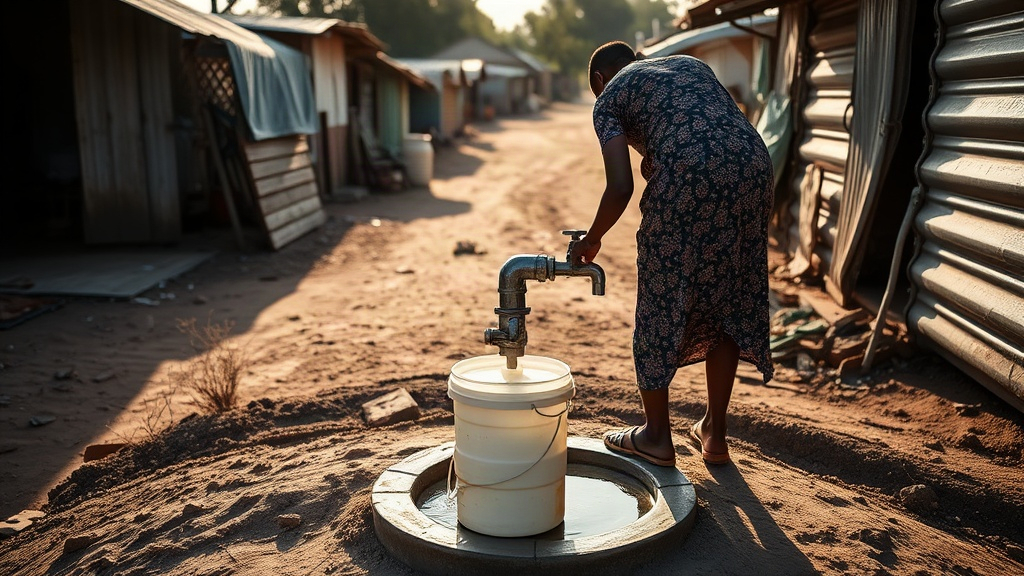
Four hundred and eight people have been treated for gastrointestinal illness across five areas of Tshwane since 7 October, and the national government now believes the tap water did it.
The Department of Water and Sanitation says the City of Tshwane’s Bronkhorstspruit Water Treatment Works (BWTW) sent unchlorinated water into the distribution system for three weeks, from 24 September to 14 October, and that the City failed to warn the residents who were drinking it.
Water and Sanitation Minister Pemmy Majodina set out the findings at a media briefing on Monday evening, alongside Health Minister Dr Aaron Motsoaledi, Deputy Minister David Mahlobo, Gauteng Premier Panyaza Lesufi and Tshwane Executive Mayor Dr Nasiphi Moya. The department has set up a multi-pronged response team.
Patients were treated at the hospital and at local clinics serving Zithobeni, Bronkhorstspruit, Dark City, Rethabiseng and Sokhulumi in Tshwane’s Region 7, the areas largely supplied by the plant.
The laboratory work points one way. Stool specimens analysed by the National Institute for Communicable Diseases (NICD) detected Norovirus, Campylobacter and Shigella in three of four specimens, along with other pathogens that cause stomach cramps and diarrhoea. No cholera bacteria were found in the sampled stools.
Majodina said the mix of pathogens and the speed of the spread “point to a common water supply being the likely source of illness”. Water quality tests the department ran on 14 October found extremely high levels of E. coli and total coliforms in water coming from the plant and in the Ekandustria, near Dark City, and Zithobeni reservoirs.
Further tests are under way to establish whether other harmful contaminants are present, and the NICD is collecting more specimens to strengthen the epidemiological evidence and to decide whether a formal outbreak declaration is required.
The department has appointed the Water Research Commission to run independent water quality tests and an independent investigation into how contaminated water reached residents. That report is expected by 28 October.
On accountability, Majodina said the department’s investigation found the City had difficulties with its chlorine supply, and that as part of its regulatory function “necessary accountability steps have been initiated against those responsible for the water pollution and adherence to norms and standards governing provision of water and sanitation”. She did not name the individuals or say what the steps are.
The sequence since the plant was closed is on the record. The City shut the BWTW on 14 October, restored the chlorine supply by 15 October and reopened the plant into the distribution system on 16 October, telling residents the water was still not fit to drink. Water tankers have been delivering drinking water since last Wednesday, and the City is increasing that supply with 36 tankers in total. Both the City and the department will test that water continuously.
The longer fix sits with Rand Water, which the City is in the process of appointing to improve the plant and deal with components that are not working. Rand Water and departmental engineers are developing an implementation plan with timeframes, which will include assessing whether the plant should be isolated for a further period to allow essential work. Majodina said it is not possible at this stage to say when residents will be able to drink water from the plant again.
She acknowledged the plant has been a longstanding priority for the City, which has spent some R21 million on its upkeep this financial year, with further commitments taking total expenditure and planned investment over the three-year period to more than R107 million. The work remains ongoing, she said, with the City focused on longstanding infrastructure deficiencies, operational reliability and restoring the plant’s capacity.
Until then the warning stands. Residents in areas supplied by the BWTW must not drink, bathe in, brush their teeth with, cook with or wash clothes in tap water. It can be used only for flushing toilets. Previously stored water should be discarded and containers disinfected with household bleach. Drinking water from tankers should be kept in clean containers with lids. Anyone who develops symptoms should seek medical attention early and report suspected cases to the nearest healthcare facility or local health authority.
This report is based on the account published by SAnews (South African Government News Agency) at https://www.sanews.gov.za/south-africa/coordinated-response-launched-tackle-bronkhorstspruit-water-illness-surge, which summarises the ministerial briefing rather than reproducing the underlying test results and investigation records.
- PRASA puts 17 new long-distance buses on the road, first fleet buy since 2010 2026-10-15
- Ekurhuleni wins 2400MW power deal, and residents could see bills cut by up to 31% 2026-10-19
- Tshwane sent Bronkhorstspruit three weeks of unchlorinated water drawn from a sewage-heavy river 2026-10-20
- Tshwane taps ran three weeks without chlorine, and 408 people fell ill, most of them under four 2026-10-21
- Tshwane water crisis: 430 sick, city faces culpable homicide charges if a child dies 2026-10-21
- 408 sick in Bronkhorstspruit as Mashatile inspects the water works 2026-10-26