30 arrests as Durban and Soweto protests over undocumented immigration end in police crackdown
NATJOINTS says heightened deployments will remain at hotspots in Durban and Johannesburg after a week of unrest in the CBD and townships.
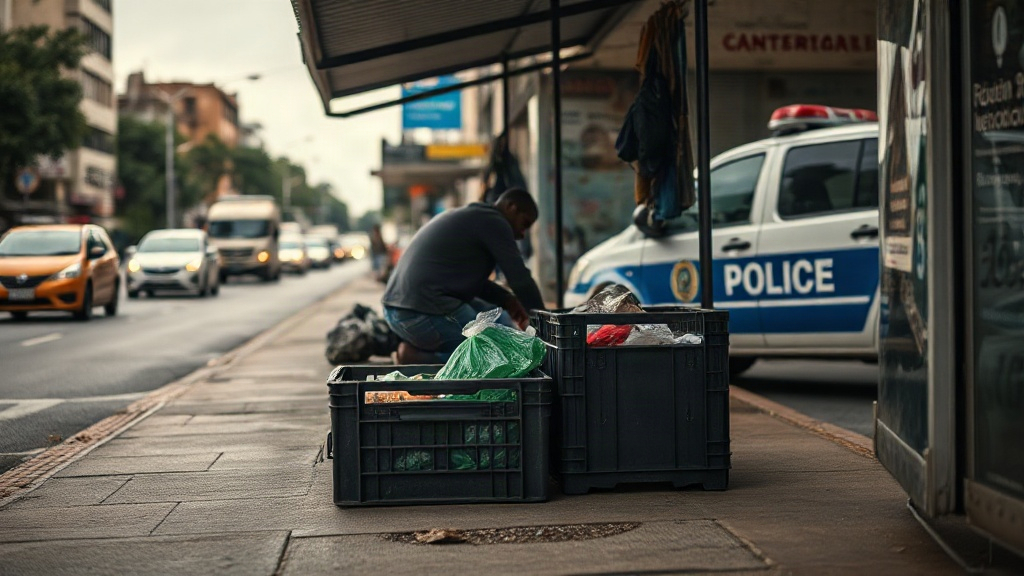
South Africans who took to the streets of the Durban CBD, Soweto and Johannesburg this week to demand action on undocumented immigration have ended the week with 30 arrests, 25 in KwaZulu-Natal and five in Gauteng.
The arrests were for public violence, illegal gathering, obstruction and resisting arrest, according to the National Joint Operational and Intelligence Structure, the inter-departmental body that coordinates the police, metro departments and intelligence services during national operations.
NATJOINTS says heightened police deployments will remain in place at hotspots in Durban and Johannesburg.
For residents of the Durban CBD, the week has been one of disrupted trading, closed routes and a heavy police presence in the streets where many of them make their living. For traders in the informal economy, a day of shutdown is a day of lost income, and the CBD is where a large share of the city’s small traders operate.
The same is true in Soweto and Johannesburg, where the protests spread earlier in the week.
As SABC News reported on 10 October, the unrest followed what it described as violent anti-undocumented immigration protests. The Enquirer credits that reporting for the arrest figures and the NATJOINTS briefing.
What a South African reader knows that a short briefing does not always say is that these protests did not come from nowhere. They follow years of complaints from residents and traders in Durban and Johannesburg about the pressure that undocumented immigration places on informal trading space, on rental housing, on clinic queues and on policing in inner-city areas. Those complaints are not new, and they are not confined to one community.
The enforcement question is a practical one. Home Affairs has a standing backlog in the permitting and asylum system, and the police have repeatedly said that immigration enforcement is a shared responsibility across departments. What residents have been asking, in public meetings and in submissions to local government, is what is actually being done on the ground, who is being removed, and why the visible presence of undocumented people in the CBD has not changed.
That is the question the deployment this week is meant to answer. Whether it does will be judged by what happens after the police go home.
The arrests themselves are a small number against the size of the crowds that gathered, and NATJOINTS has not said how many people took part. The charges are the standard ones that follow a public gathering where police say the gathering was not authorised and where property was damaged. The Enquirer has not been able to establish independently how many people were injured, how much property was destroyed, or how many businesses were forced to close, and NATJOINTS has not released those figures.
What is clear is that the deployment will stay. NATJOINTS has said so directly, and that means residents and traders in the affected areas should expect a continued police presence in the coming days.
The Enquirer will continue to report on the enforcement question, on what Home Affairs is doing about the permitting backlog, and on what residents and traders in Durban and Johannesburg say they need from the state.