30 arrests after Durban and Joburg street clashes, and police still will not say who they are
NATJOINTS says heightened deployments stay in place at hotspots in Durban and Johannesburg after this week's confrontations, but the record so far answers almost none of the questions an arrest of this kind raises.
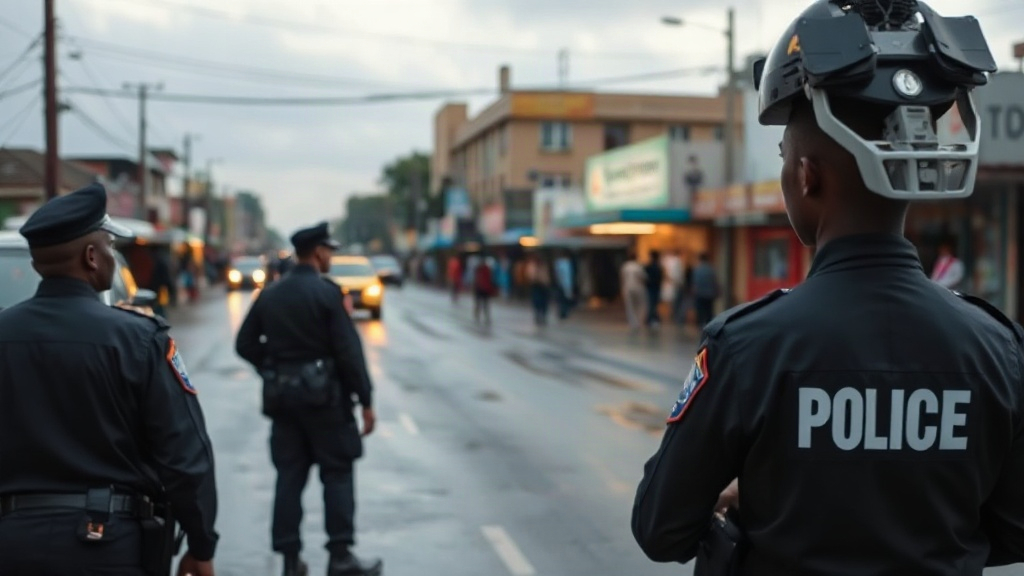
Thirty people have been arrested after days of confrontation on the streets of the Durban CBD, Soweto and Johannesburg, the National Joint Operational and Intelligence Structure said, with heightened police deployments remaining in place at hotspots in Durban and Johannesburg.
The arrests break down as 25 in KwaZulu-Natal and five in Gauteng. The offences cited are public violence, illegal gathering, obstruction and resisting arrest.
That is the state’s account as it stands. It is not yet an account a reader can check person by person, and the gap matters, because the questions that follow an arrest of this kind are the questions that decide whether the enforcement South Africans have been demanding is actually being delivered or merely announced.
NATJOINTS, as it is known, is not a police station or a single unit. It is the standing structure that coordinates the South African Police Service with the metro police departments, the intelligence services and other arms of the state during operations that cross provincial or municipal lines. When NATJOINTS briefs, it is speaking for the machinery of the state rather than for one commander. As SABC News reported on 10 October, the structure briefed on the deployments and on the arrests.
What the record does not answer is most of the detail. The names of the accused have not been published. Their ages have not been established by the state or by any court. Their immigration or asylum status, where it is material, has not been stated. Which of the thirty faces which specific charge, as opposed to which four charges appear on the list, has not been set out. Whether any firearm was recovered, whether any firearm involved was licensed and to whom, and where it came from, has not been put on the record. It has not been said what identity and status checks the police perform after an arrest of this kind. The number of people injured, and how seriously, has not been given. No next court appearance date has been announced.
Each of those is a question this paper puts to the police and to the National Prosecuting Authority. Where the answers come, they will be published.
On the ground, the practical effect for people in Durban and Johannesburg is a continued police presence in the areas the state has identified as hotspots, and a set of criminal charges that will now move through the courts at whatever pace the courts manage. Public violence and illegal gathering are serious counts. They carry consequences for the people facing them, and those people are entitled to the ordinary protections of an accused person, including the presumption of innocence until a court finds otherwise.
The backdrop is the immigration question that has been building on South African streets for months: the pressure on Home Affairs queues, on clinics, on schools, on housing and on informal trading space, and the growing public demand that the state enforce the law it already has. That demand is not a fringe position. It is a position held by a large number of South Africans who are not asking for anything the law does not already allow.
The enforcement demand and the arrests are not the same thing. Arresting thirty people after a confrontation is not the same as fixing a permit system that cannot process the applications in front of it, or a border that leaks, or a Home Affairs office where a person can wait a full working day and leave without a document. The question South Africans are entitled to ask is what changed this week beyond the deployment, and what the department responsible for immigration is doing that it was not doing last month.
That is where the accountability sits. Home Affairs owns the asylum and permit system. The Department of Police and the SAPS own enforcement on the street. The metros own the by-laws that govern trading and public space. The NPA owns the prosecutions. Each of those has a record, and each of those will be asked for it.
The next dated step is the first court appearance of the accused, which has not been announced. Until it is, the thirty arrests remain a number and a list of charges, and the people behind them remain unnamed.
That is not a criticism of the police operation. It is the state of the public record, and the public record is what a reader has to work with.