30 arrested, no names, no ages, no status: what we still don't know about the protest arrests
NATJOINTS says heightened police deployments stay in Durban and Johannesburg hotspots after this week's anti-undocumented-immigration protests, and that 25 of the 30 arrests were in KwaZulu-Natal and five in Gauteng.
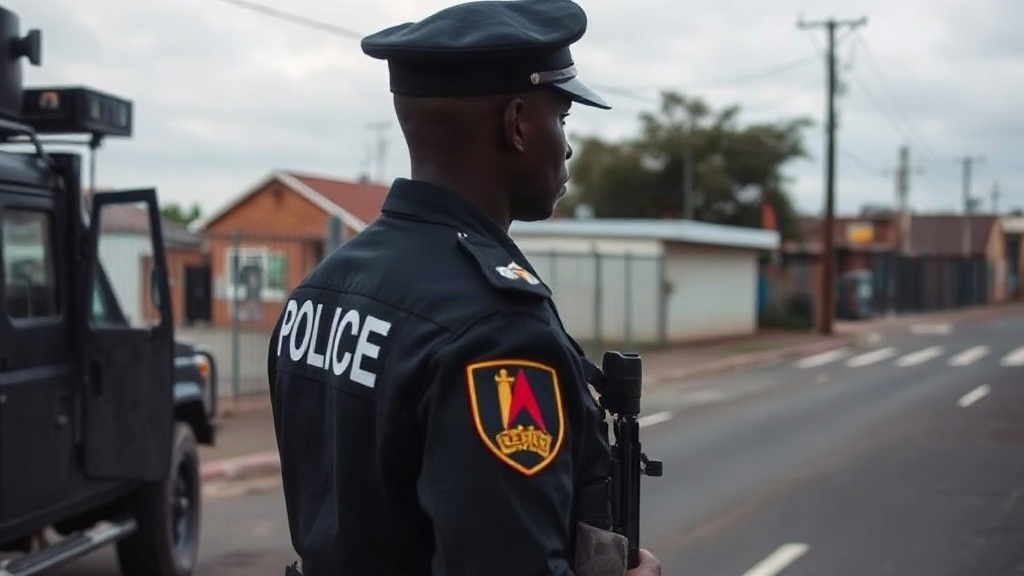
Thirty people have been arrested after this week’s anti-undocumented-immigration protests turned into clashes in the Durban CBD, Soweto and Johannesburg, and the National Joint Operational and Intelligence Structure says its heightened deployments are not coming down yet.
As SABC News reported on 10 October, NATJOINTS briefed on the arrests and on the deployments that remain in place at what it calls hotspots in Durban and Johannesburg. The 30 arrests break down as 25 in KwaZulu-Natal and five in Gauteng. The offences cited are public violence, illegal gathering, obstruction and resisting arrest.
That is the state’s account, and it is the account a South African reader should read carefully, because it is close to everything the state has put on the record so far.
NATJOINTS is not a police station or a single unit. It is the standing structure that coordinates the South African Police Service with the intelligence services, the metro police and other state departments when an event is judged serious enough to need a joint operational command. When NATJOINTS briefs, it is speaking for the coordination of the state rather than for one commander in one province, and its briefings have historically set the tone for how the week’s policing is described.
What the briefing does not do is answer the questions that will decide whether these arrests hold up and whether the public learns anything from them.
The record does not name any of the 30. It does not give the age of any of them. It does not state the immigration or asylum status of any of them, and it does not say whether status was checked at all. It does not say which of the four cited offences attaches to which person, or whether any individual faces more than one count. It does not say whether any weapon was recovered, whether any firearm was involved, whether any firearm was licensed and to whom, or where such a firearm came from. It does not give a number for people injured, or the seriousness of any injury. It does not give a date for a first court appearance.
Where identity may lawfully be published, those are the details that would normally follow an arrest of this kind. Their absence is not proof of anything. It is simply the state of the record, and it is worth stating plainly, because a briefing that leads with a deployment and an arrest count and stops there leaves the public argument where it started.
What South Africans have been arguing about this week is not a mystery. The protests were directed at undocumented immigration, and they took place in the two provinces that carry the heaviest visible load of it. KwaZulu-Natal and Gauteng hold the country’s largest concentrations of informal traders, of Home Affairs queues, of inner-city rental demand and of the schools and clinics where capacity is stretched. The people who marched in the Durban CBD, in Soweto and in Johannesburg were making an enforcement demand, and it is the demand that has to be answered regardless of what happens to the 30 in custody.
That demand has a specific shape. It asks what the state can actually enforce, who may remain, who may be removed, why the queues at Home Affairs form the way they do, and what has changed since the last time this argument was made. A police briefing cannot answer any of that. Only Home Affairs, the Department of Employment and Labour, the border management authority and the municipalities can, and none of them were the subject of this week’s briefing.
There is a second question the record leaves open, and it is the one that will decide how the next few weeks go. The deployments stay in place. That means the state expects the conditions that produced the protests to persist, and it means the people living and trading in those hotspots should expect a heavier police presence for the immediate future. What that presence is for, what it will do, and how long it lasts have not been set out beyond the word heightened.
The 25 to five split is itself worth reading. KwaZulu-Natal carries the larger share of arrests by a wide margin, which is consistent with the Durban CBD having been the centre of the week’s clashes, and it is also consistent with the province having been the centre of this argument before. Gauteng’s five sit against protests in two separate areas, Soweto and Johannesburg, so the per-area picture is thinner than the total suggests.
What a reader should watch for next is straightforward and checkable. The first court appearances will produce a charge sheet, and a charge sheet names the accused where the law allows it, sets out the counts, and gives the court’s own date for the next step. The police will either confirm or decline to confirm whether any firearm was recovered and whether any was licensed. The provincial health departments will either report injury numbers or they will not. Those are the points at which this week’s account can be tested against a record rather than a briefing.
Until then the honest position is that South Africa knows how many people were arrested, roughly where, and under which broad headings. It does not know who they are, how old they are, what their status is, what each is charged with, whether anyone was hurt, or when any of them will stand in a dock. The enforcement demand that produced the marches is still waiting for an answer from the departments that own it, and that answer has not been given this week.