30 arrested in Durban and Joburg immigration protests: police still won't say who they are, what they're charged with, or where they're from
NATJOINTS says heightened deployments will stay in Durban and Johannesburg hotspots after this week's anti-undocumented-immigration demonstrations, but the record answers almost none of the questions a South African reader would ask about the people now in custody.
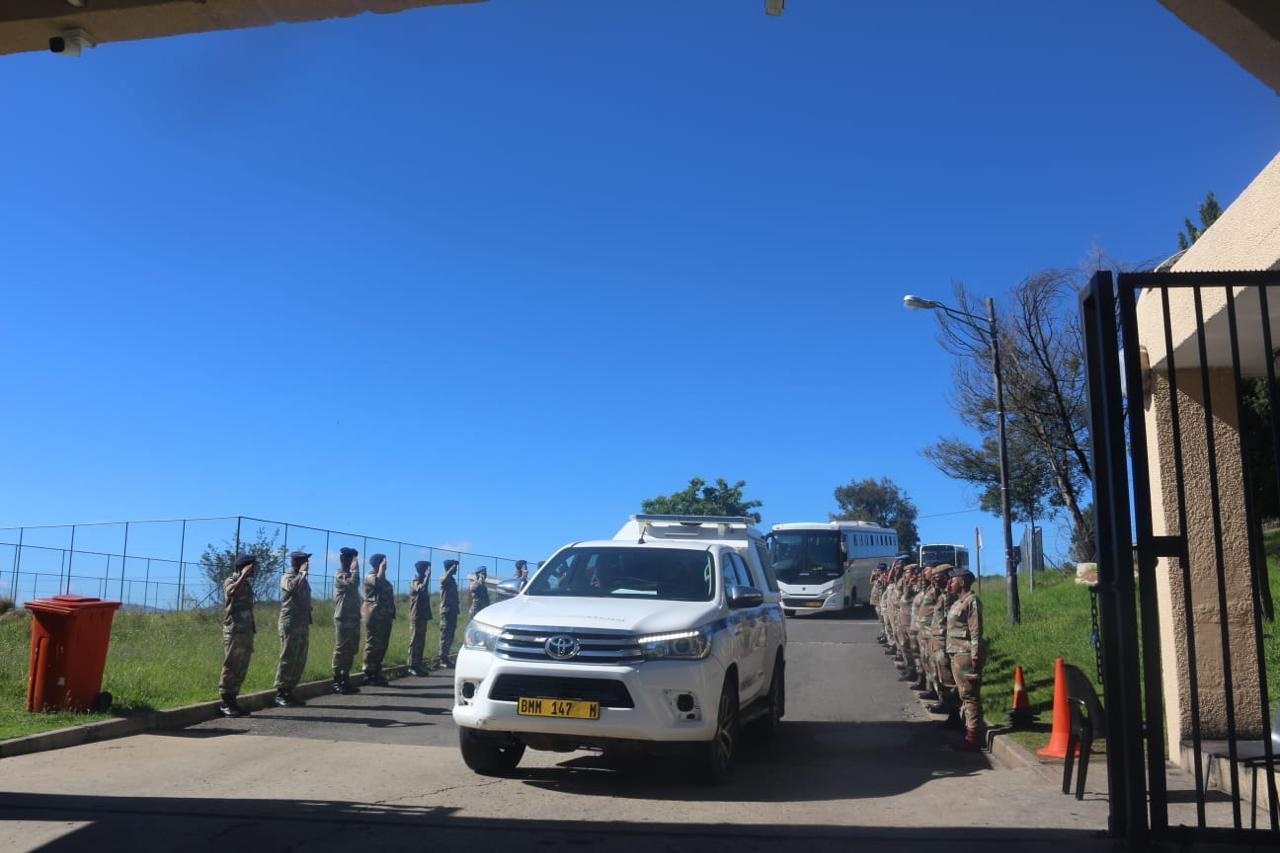
Thirty people have been arrested after this week’s anti-undocumented-immigration protests in Durban, Soweto and Johannesburg, the National Joint Operational and Intelligence Structure said, with heightened police deployments set to remain in place at hotspots in Durban and Johannesburg.
Twenty-five of the arrests were in KwaZulu-Natal and five in Gauteng. The offences cited are public violence, illegal gathering, obstruction and resisting arrest.
That is the state’s account, delivered at a NATJOINTS briefing. NATJOINTS is the standing structure that coordinates the South African Police Service with the State Security Agency, the defence force, the metro police services and the intelligence community when a situation is judged to need a national operational response. When it briefs, it is speaking for the whole security apparatus at once, not for one station or one province.
The demonstrations were against undocumented immigration. The people who marched are the subject of this story, not an afterthought to the arrest count, and their demand is the question the state now has to answer: what is actually being done about the load on the country.
As SABC News reported on 10 October, the deployments will stay in place and criminality will not be tolerated. That reporting is accurate on the facts it carries, and it is where the arrest figures and the charge categories come from.
What a South African reader is not told, from that account or from the NATJOINTS briefing as it has been reported, is nearly everything about the people in custody.
The record does not name the accused. It does not give their ages, or say whether any of them are minors. It does not state their immigration or asylum status, or whether the state has established any status at all. It does not say whether any of the thirty is a South African citizen, a permanent resident, an asylum seeker or a foreign national. It does not say whether any weapon was recovered, whether any firearm was involved, whether any firearm was licensed and to whom, or where a weapon came from. It does not give an injury count, or the severity of any injuries. It does not give a date for a first court appearance.
Those are not small omissions. They are the questions that decide whether this was a public order operation or something else. Identity and age determine whether a child is in a police cell. Immigration status determines which court, which statute and which official has jurisdiction. A recovered firearm, if there was one, determines whether the public violence charge is the whole of the state’s case. An injury count determines whether the state’s own account of the policing is complete.
The Enquirer is not asserting any of these facts. We are recording that the state has not supplied them, and that no court document in the public record has supplied them either.
What the state has said is that the deployments remain. That is a statement about police capacity and posture. It is not a statement about the underlying argument, which is about enforcement, documentation and the load that undocumented immigration places on South African services, housing, clinics, schools and informal trading.
The enforcement questions a South African reader would put to Home Affairs and to the police are straightforward. What changed this week on documentation and removals? Who may remain, and who may be removed? What is the actual state of the asylum system and the permit backlog that feeds the argument? What can the state enforce at the border and in the inner city, and with what capacity? None of that was answered at the briefing as it has been reported.
There is a second set of questions that belongs to the courts rather than to NATJOINTS. Once the thirty appear, the National Prosecuting Authority will decide what each is charged with, and the magistrate will decide bail. Those are the points at which names, ages, status and the strength of the state’s evidence become part of the public record. Until then, the state’s account stands as an account.
The demonstrations themselves were about a real condition. South Africans have been arguing for years about undocumented immigration, about the pressure it places on clinics, schools, housing and informal trading, and about whether the state is willing or able to enforce its own law. That argument is legitimate, it is not going away, and it will not be settled by a deployment order.
What will settle part of it is disclosure. The state has the arrest numbers, the charge categories and the provinces. It does not yet have, in public, the identities, the ages, the status, the weapon question, the injury count or the court date.
Those are the answers South Africans are owed, and they are the answers The Enquirer will report when the record supplies them.