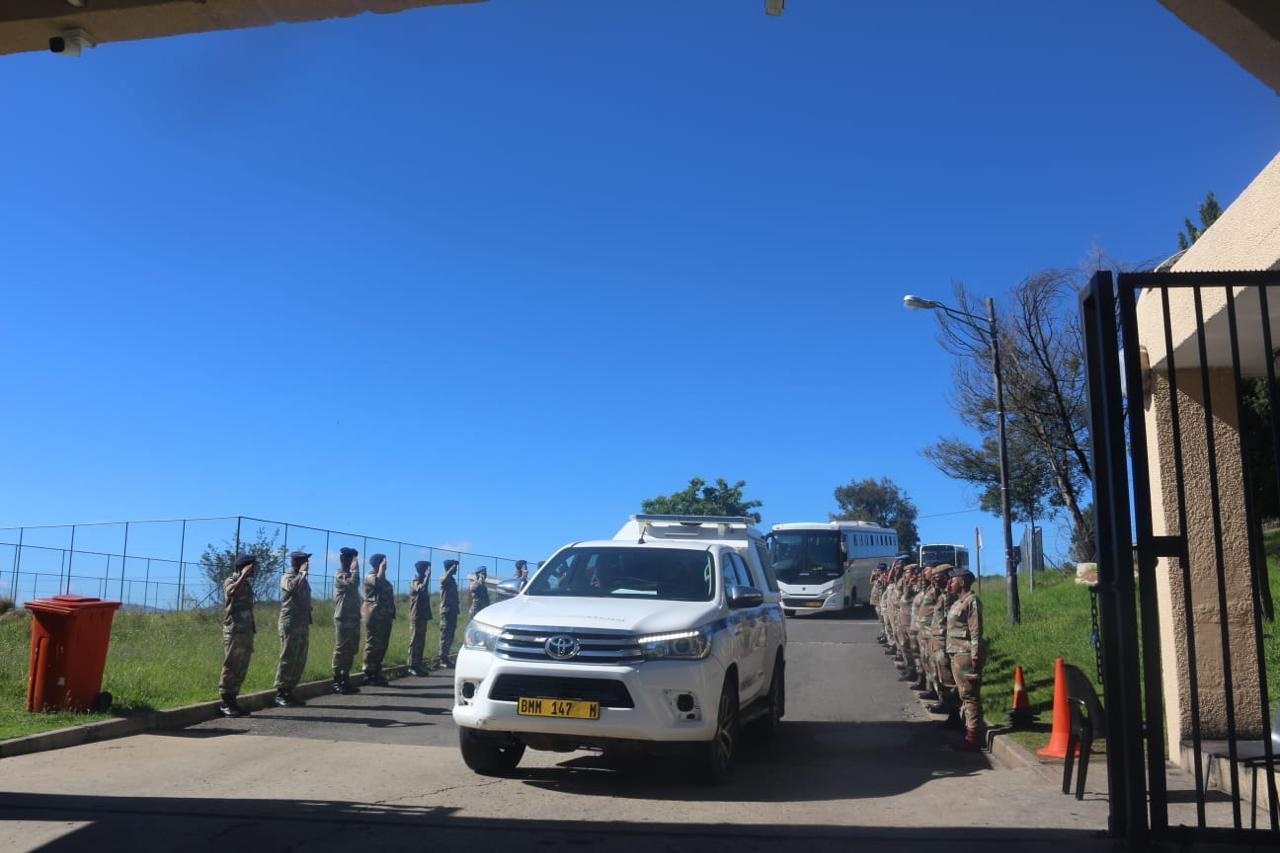
30 arrested as police stay deployed in Durban and Joburg hotspots after immigration protests
NATJOINTS says heightened deployments will remain in place, after 25 arrests in KwaZulu-Natal and five in Gauteng for offences including public violence, illegal gathering, obstruction and resisting arrest.
Thirty people have been arrested after days of protest over undocumented immigration in Durban and Johannesburg, and the police say their heightened deployments in those hotspots are not coming down yet.
As SABC News reported on 10 October, the National Joint Operational and Intelligence Structure, known as NATJOINTS, briefed on the arrests and confirmed that the extra deployments will remain in place. Twenty-five of the arrests were in KwaZulu-Natal and five in Gauteng. The offences cited include public violence, illegal gathering, obstruction and resisting arrest.
That is the state’s account, and it is the only account on the record so far. It is also the account that leaves almost every question a South African reader would want answered still open.
Who the thirty are, whether any of them are South African, what their immigration or asylum status is where the state has established it, how old they are, what each is actually charged with, whether any firearm was recovered or licensed and to whom, what identity and status checks the police perform on people they arrest at a protest, how many people were injured and how seriously, and when the next court appearance is. None of that has been put on the record. Until it is, the arrest count is a number without a case behind it.
The protests themselves were about the load that undocumented immigration places on South African streets, clinics, schools, housing and informal trading. That argument did not start this week and it will not end with a briefing. Residents in the affected areas have been saying for years that the pressure is real and that enforcement is thin. The demand is not complicated. It is that the state does what the law already allows it to do.
NATJOINTS is the structure that coordinates the police, the defence force and the intelligence services during national operations. When it briefs, it is speaking for the whole of the state’s security apparatus, not one station or one province. That is why its silence on the details above matters more than usual. The same structure that can tell the country how many people were arrested can tell the country who they are, what they are charged with, and what happens next.
The 25 to five split is worth reading carefully. KwaZulu-Natal carries the heavier count, which fits the pattern of the past week, with the Durban CBD named as the centre of the unrest. Gauteng’s five reflect Soweto and Johannesburg. Both are provinces where the enforcement question is live and where the public argument is loudest.
The public anger that produced those protests is not going away because deployments stay up. If anything, a standing police presence in a hotspot is an admission that the underlying condition has not changed. The state has the power to remove people who are in the country unlawfully. It has the power to police employers who hire them. It has the power to process asylum claims inside a reasonable time. What South Africans are waiting to see is whether any of that follows the arrests, or whether the country gets another round of briefings and another round of the same complaints in six months.
The Enquirer will report the court dates and the charges once they are on the record. For now, the record says thirty arrests, two provinces, and a deployment that is staying put.