30 arrested as anti-immigration protests hit Durban and Soweto, and the record leaves the big questions open
NATJOINTS says heightened police deployments stay in place at hotspots, after 25 arrests in KwaZulu-Natal and 5 in Gauteng for offences including public violence, illegal gathering, obstruction and resisting arrest.
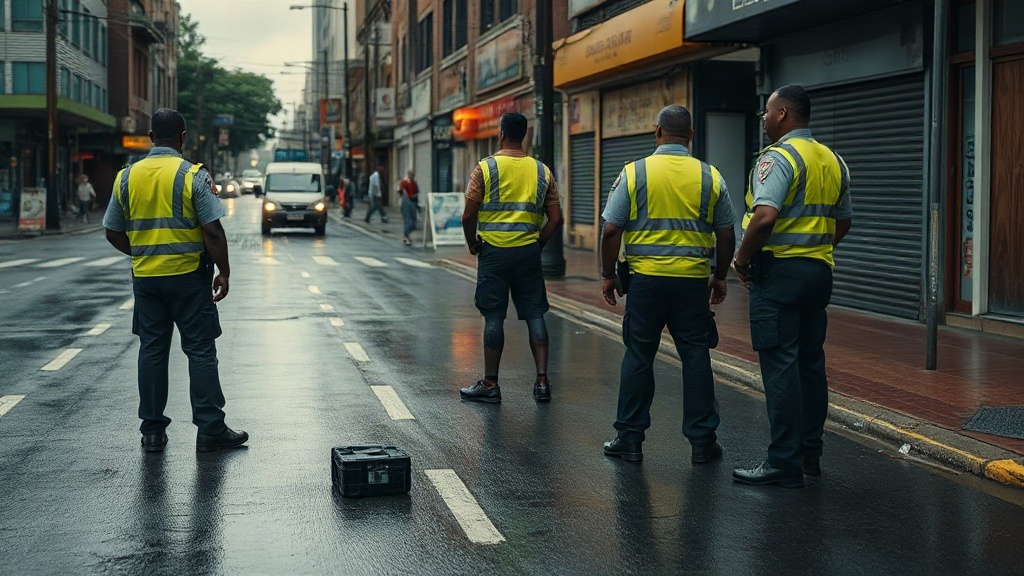
Thirty people have been arrested after a week of anti-undocumented-immigration protest that ran through the Durban CBD, Soweto and Johannesburg, the National Joint Operational and Intelligence Structure said, with heightened police deployments to remain in place at hotspots in Durban and Johannesburg. Twenty-five of the arrests were in KwaZulu-Natal and five in Gauteng. The offences cited include public violence, illegal gathering, obstruction and resisting arrest.
As SABC News reported on 10 October, NATJOINTS briefed on the deployments and on the arrests. That account is the state’s own account of what it did in response to the protests, and it is where the confirmed numbers come from.
NATJOINTS is not a police station or a single unit. It is the standing structure that coordinates the South African Police Service with the metro police services, the intelligence services and other government departments during operations that cross provincial or agency lines. When it briefs, it is speaking for the coordinated state response rather than for one commander in one city. That matters for a reader trying to work out who is accountable for what happens next. The deployments it has announced are operational decisions taken by that structure, and the arrests it has counted are the product of those deployments.
What the public record establishes so far is narrow. There were protests against undocumented immigration in the Durban CBD, in Soweto and in Johannesburg. Police were deployed in numbers. Thirty people were taken into custody, twenty-five in KwaZulu-Natal and five in Gauteng. Charges have been cited in categories rather than against named individuals.
What the record does not yet answer is most of what a South African reader would reasonably want to know.
Who are the thirty? Their names may only be published once the courts allow it, and no court document has been placed on the public record here. The state has not established their ages. It has not established their immigration or asylum status, and this paper will not infer status from a name, an appearance or a neighbourhood. It has not said what each individual is actually charged with, as opposed to the categories of offence cited in the briefing. It has not said whether any firearm was involved, whether any firearm recovered was licensed and to whom, or where a weapon came from. It has not said what identity and status checks the police perform on a person after arrest, which is a routine question in any case where immigration status may later become relevant. It has not said whether any weapon was recovered at all. It has not said how many people were injured, or how seriously. And it has not given a date for the next court appearance.
Every one of those is answerable from the record, and none of them requires speculation. They are the questions this paper puts to NATJOINTS, to the SAPS and to the National Prosecuting Authority.
For readers outside the cities concerned, the practical effect of the announcement is this. The deployments stay. That means a continued police presence in the Durban CBD and in Johannesburg hotspots, more visible policing in areas where informal trading, transport routes and residential streets sit close together, and the ordinary friction that comes with it for commuters, traders and residents going about a working week. It also means the arrest figure is likely to be a running number rather than a final one, because a standing deployment produces further arrests if further gatherings take place.
The protest itself was about undocumented immigration, and the people who marched were South Africans raising a demand about the load on their areas. That demand does not disappear because a briefing has been held. The question the state has to answer is what it is doing about the underlying condition the protesters were naming, and the briefing as reported answers that only in policing terms. Enforcement is one part of a response. The other parts, which include the processing of asylum claims, the documentation of people who are lawfully here, and the capacity of Home Affairs to deal with both, are not addressed in what has been placed on the record so far.
This paper has reported the arrests as the state’s own count. We have not been told who was arrested, and we will not guess. The next dated step is the one the state has not yet given: the first court appearance for the people in custody. When that date is set, and when the charge sheets are placed before a court, the record will answer questions that a briefing cannot.