30 arrested after Durban and Joburg immigration protests, and the record still cannot say who they are
NATJOINTS says heightened deployments stay in place at hotspots in Durban and Johannesburg after this week's protests, with 25 arrests in KwaZulu-Natal and 5 in Gauteng on public violence, illegal gathering, obstruction and resisting arrest counts.
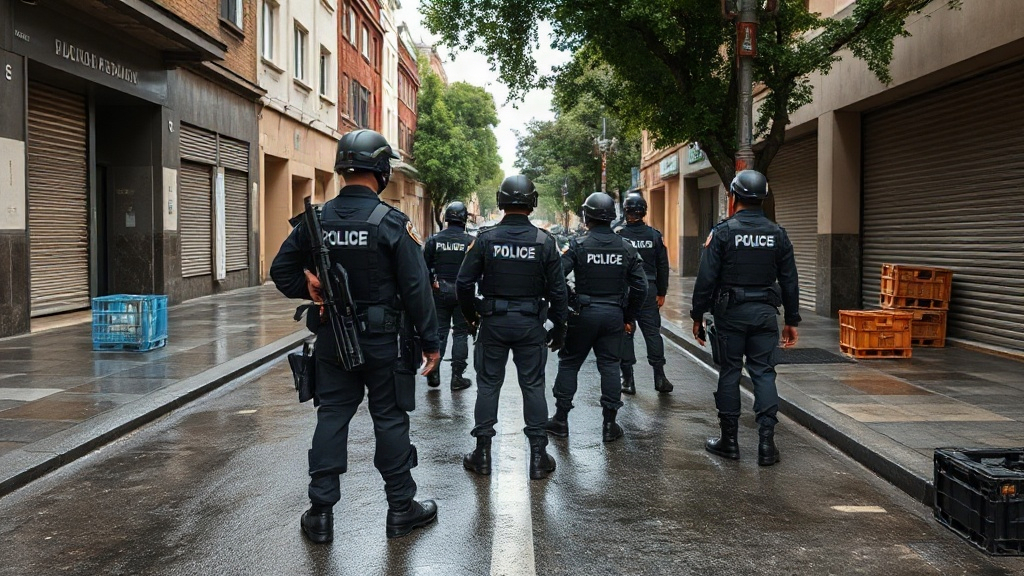
South Africans filled the Durban CBD, Soweto and Johannesburg this week to demand enforcement against undocumented immigration, and 30 of them were arrested before the week closed. The National Joint Operational and Intelligence Structure, NATJOINTS, says heightened police deployments will remain in place at hotspots in Durban and Johannesburg, and that criminality will not be tolerated.
As SABC News reported on 10 October, the arrests split 25 in KwaZulu-Natal and 5 in Gauteng, on counts that include public violence, illegal gathering, obstruction and resisting arrest. That is the state’s account of what happened and what it has done about it, and it is the strongest official record available.
NATJOINTS is the standing structure that coordinates the South African Police Service with the intelligence services and other departments when a situation is treated as a national security matter rather than a local policing one. When it briefs, it is the state speaking in one voice about deployment levels, hotspot lists and arrest figures. It is also the structure that decides how long a deployment stays in a place after a crowd has dispersed.
What the record does not yet answer is the part that matters most to the people who were arrested and to the communities that watched it happen. The state has not published the names of the accused. It has not stated their ages. It has not stated their immigration or asylum status, and it has not said whether any of the 30 are South African, foreign nationals, asylum seekers or permit holders. It has not set out which person faces which count. It has not said whether any firearm was involved, whether one was recovered, whether any was licensed, or to whom. It has not said how many people were injured or how seriously. It has not given a date for the first court appearance.
Those are not gaps in the reporting. They are unanswered questions on the official record, and they are the questions the department and the courts will have to answer as the cases move.
NATJOINTS has not said what identity and status checks the police perform on a person after arrest, which is the point at which an immigration question and a criminal charge become two different processes. A person arrested on a public violence count goes to court. A person who cannot produce a valid permit can be handed to Home Affairs under a separate track. Whether any of the 30 have been routed into that second track is not on the record.
For people living in the affected areas, the practical effect of the week is a police presence that will stay. Deployments at that level are visible in the Durban CBD and in the Johannesburg townships where they are concentrated. They also carry a cost in overtime, in vehicles and in officers pulled from ordinary station work, and that cost is not usually itemised in a briefing.
The frustration that brought people onto the streets is not new and it is not manufactured. It is the load that residents say they carry in clinics, in schools, in housing queues and in informal trading spaces, and the demand that the state enforce the law it already has. That demand is a legitimate political position in this country, and it is the reason the marches happened.
The state’s answer so far is a deployment and an arrest count. What South Africans have not been given is the enforcement detail they are asking for: what changes at the border and at Home Affairs, who may remain, who may be removed, and how quickly a case moves from arrest to outcome.
Until the courts set dates and the department publishes what it holds, the 30 remain a number. The next dated step in this story is the first appearance of the accused, and that date has not been announced.