Soweto and Durban shops stayed shut while 30 were arrested. The traders paid for it.
NATJOINTS says heightened police deployments remain in place at hotspots in Durban and Johannesburg after this week's protests against undocumented immigration, with 25 of the 30 arrests made in KwaZulu-Natal and 5 in Gauteng.
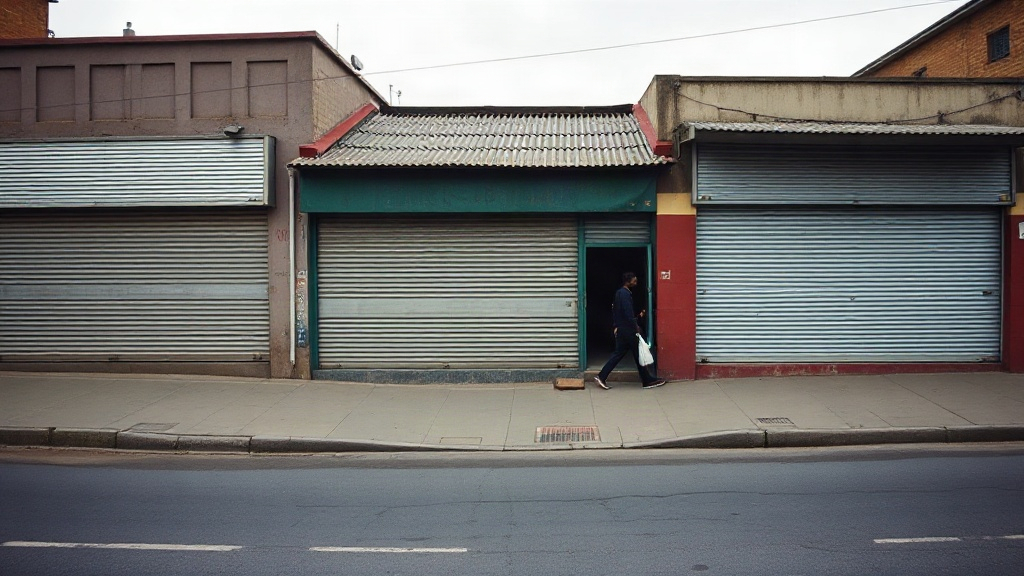
Shops in the Durban CBD and in parts of Soweto and Johannesburg stayed shut this week while residents pressed their demand that undocumented immigration be enforced against, and the people who paid for those closed days were the traders and the commuters who depend on them.
The National Joint Operational and Intelligence Structure, NATJOINTS, says heightened police deployments will remain in place at hotspots in Durban and Johannesburg. Thirty people have been arrested, 25 in KwaZulu-Natal and 5 in Gauteng. The offences listed are public violence, illegal gathering, obstruction and resisting arrest.
As SABC News reported on 10 October, NATJOINTS briefed on the deployments and on the arrests.
Those are charges, not findings. The 30 people arrested have not been convicted of anything. A crowd is not a crime because a street was closed, and a march is not a crime because a charge exists. The state’s case against any named person is a matter for a court, and no person arrested this week has had that case tested.
What South Africans were saying this week is not complicated and it is not new. Residents in the affected areas say the pressure on clinics, on schools, on housing lists and on informal trading space has grown past what their areas can carry, and that the paperwork and the enforcement have not kept up. That is the demand that put people on the streets in the Durban CBD and in Soweto and Johannesburg. It is a demand about capacity and about enforcement, and it is being made by people who live with the consequences of both.
For traders in the Durban CBD, the week was a straight loss. A closed stall is a day of stock that does not move and a day of income that does not come back. For commuters, it was a day of routes that did not run and taxis that did not reach them. For the residents of the affected areas, it was a week of uncertainty about whether the shop on the corner would open, whether the clinic queue would move, and whether anyone in authority was listening to what they were asking for.
That is the part of this story a reader outside the country will not get from a briefing clip. The Durban CBD is not an abstraction. It is one of the busiest trading and transport corridors on the continent, and it is where a large share of KwaZulu-Natal’s informal economy either makes its day or does not. When it shuts, the loss is immediate and it lands on the people with the least room to absorb it.
NATJOINTS is the structure that coordinates the South African Police Service with the other security arms of the state during operations of this kind. Its briefings are the state’s account of what it is doing and why. Its deployments are the state’s answer to the demand on the streets. What the deployments do not by themselves answer is the underlying question residents were asking, which is what changes for them in the clinics, the schools, the housing lists and the trading space once the police go home.
The arrests are a fact and they belong in the record. They are not the whole of what happened this week. The whole of it includes the shops that stayed closed, the residents who said out loud what they want enforced, and the traders who counted the cost of a week they did not choose.
The Enquirer is following the NATJOINTS deployments at the Durban and Johannesburg hotspots, the outcomes of the cases against the 30 people arrested, and what the state does about the capacity questions residents put to it this week.
- Malmesbury teen, 16, to face 15 child abuse material charges after psychiatric assessment clears him for trial 2026-10-07
- Sibiya stays in custody as court postpones bail to 13 October 2026-10-08
- Kimberley man charged with perjury after car he reported hijacked was repossessed 2026-10-08
- Thaba-Nchu stabbing: 39-year-old arrested after man dies at hospital 2026-10-08
- Kanana tavern murder: two Crazy Dogs gang members get 26 years each 2026-10-08
- Namakwa police arrest eight in four-day drug operation 2026-10-10
- Sibiya case postponed to 13 October as suspended deputy police commissioner stays off duty 2026-10-11
- Silver Audi, a sudden turn, and a pistol under the driver's seat: three arrested in Bloemfontein CBD 2026-10-11
- 30 arrests after anti-immigration protests shut Durban and Joburg streets, police stay in hotspots 2026-10-12
- Durban and Soweto rise over illegal immigration, 30 held as police hold the hotspots 2026-10-12