Durban and Soweto rise over illegal immigration, 30 held as police hold the hotspots
Residents in the Durban CBD and Soweto went out over undocumented immigration this week, 25 people were arrested in KwaZulu-Natal and 5 in Gauteng, and NATJOINTS says its deployments will stay in place at the hotspots.
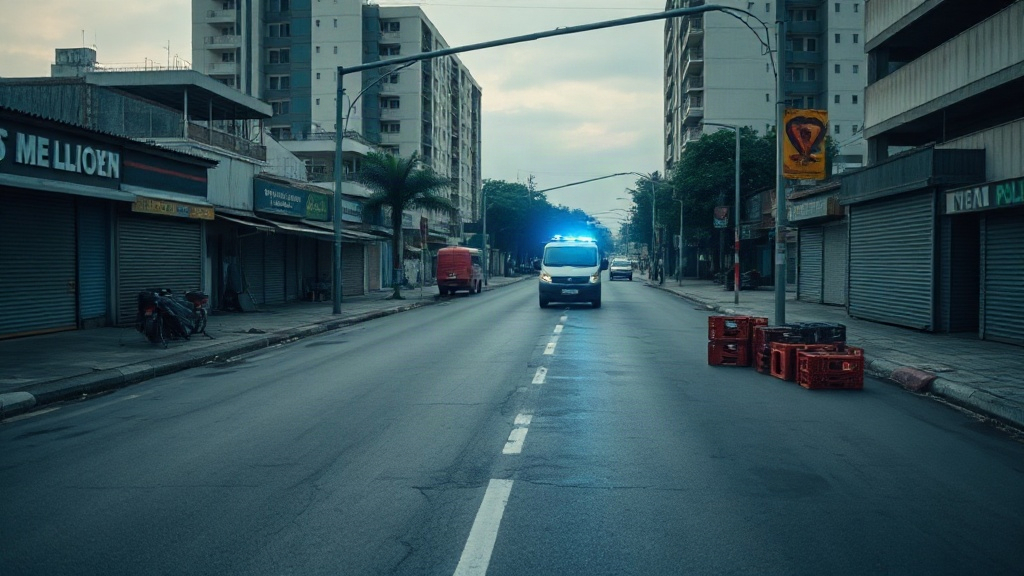
South Africans in the Durban CBD and in Soweto and Johannesburg went out this week over undocumented immigration, and the state’s answer so far is a standing police deployment and 30 people in custody.
The National Joint Operational and Intelligence Structure, NATJOINTS, says heightened police deployments will remain in place at hotspots in Durban and Johannesburg. That is the shape of the official response after several days in which the Durban CBD, Soweto and Johannesburg saw the kind of public confrontation the country has grown used to on this question.
As SABC News reported on 10 October, 30 arrests have been made, 25 in KwaZulu-Natal and 5 in Gauteng. The offences listed are public violence, illegal gathering, obstruction and resisting arrest. Those are the state’s case against the people it has taken into custody. They are not this paper’s description of why anyone went out, and they are not a verdict.
What South Africans were doing in the Durban CBD and in Soweto is a question the country has been arguing about for years, and this week it was argued in the street. The people who went out are residents and traders and commuters who say the load on their streets, their shops and their services has gone past what they can carry, and who want enforcement they can see. That position is not new. It is the position that has been put to Home Affairs, to the police and to successive ministers in memoranda, in community meetings and in the queues outside Home Affairs offices where South Africans wait for documents while the argument about who may stay runs on.
The Durban CBD is the sharpest version of it. It is one of the busiest trading districts in the country, and the competition for pavement space, for stock and for customers is a daily fact of life for people who make a living there. Soweto carries a different version of the same pressure, where residents measure the load in clinics, in classrooms and in the number of people sharing a yard. Neither complaint is a secret. Both have been made in public for years.
What changed this week is that the argument came out of the meeting rooms and onto the road. When that happens in South Africa, the state’s first public move is usually the deployment, and that is what NATJOINTS has now confirmed. The structure is the standing interdepartmental body that coordinates the police, the metro services and the intelligence community when a public order situation runs across more than one province. Its statement that deployments will remain at the hotspots is the clearest signal yet that the state expects the pressure to continue rather than fade.
For the person reading this, the practical consequences are already visible. Roads in the affected areas have been disrupted. Traders in the Durban CBD have lost trading days in a week when many of them cannot afford to lose one. Commuters have had to find another way home. And 30 people are now inside a criminal process that will run for months, whatever the merits of the underlying argument that brought them out.
The arrests themselves do not settle the question the marchers were raising. A charge sheet is not a policy. The demand that was put on the street this week is the same demand that has been put to the state in writing and in meetings, and it is a demand about enforcement capacity, about documentation, about who is allowed to remain and who is not, and about what the state can actually deliver at the points where South Africans feel the pressure most.
That is where the reporting now sits. The deployments are in place. The cases will proceed. The question of what Home Affairs can process, what the police can enforce and what the country intends to do about the load on its townships and its inner cities has not been answered by a briefing, and it will not be answered by an arrest count.
The Enquirer will keep reporting what residents in the affected areas are saying, what the enforcement numbers actually show, and what the state does next with the demand that put people on the street this week.
- Malmesbury teen, 16, to face 15 child abuse material charges after psychiatric assessment clears him for trial 2026-10-07
- Sibiya stays in custody as court postpones bail to 13 October 2026-10-08
- Kimberley man charged with perjury after car he reported hijacked was repossessed 2026-10-08
- Thaba-Nchu stabbing: 39-year-old arrested after man dies at hospital 2026-10-08
- Kanana tavern murder: two Crazy Dogs gang members get 26 years each 2026-10-08
- Namakwa police arrest eight in four-day drug operation 2026-10-10
- Sibiya case postponed to 13 October as suspended deputy police commissioner stays off duty 2026-10-11
- Silver Audi, a sudden turn, and a pistol under the driver's seat: three arrested in Bloemfontein CBD 2026-10-11
- 30 arrests after anti-immigration protests shut Durban and Joburg streets, police stay in hotspots 2026-10-12
- Soweto and Durban shops stayed shut while 30 were arrested. The traders paid for it. 2026-10-12