Ramaphosa names six green hydrogen projects, Saldanha Bay first to reach investment decision
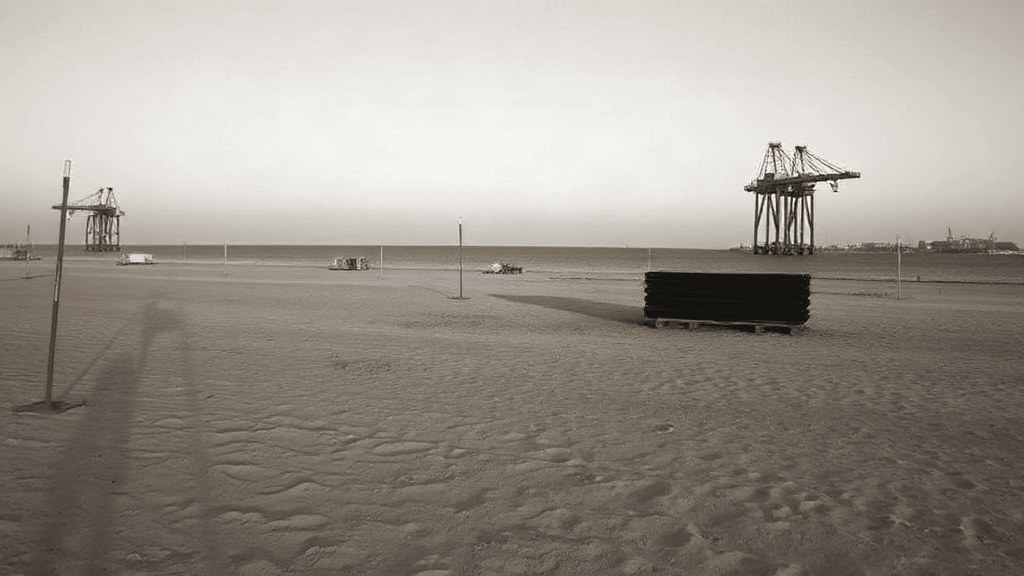
The first wave of projects puts a R1,8 billion sustainable aviation fuel plant on the West Coast, with construction due to start in early 2027 and exports from 2029.
Six green hydrogen projects have been named as South Africa’s first wave under the national programme, and one of them has already crossed the line that matters most to investors.
The Phelan Green Group’s electro-sustainable aviation fuel project at Saldanha Bay has reached final investment decision, a commitment of about $100 million, with construction expected to begin in early 2027 and exports projected by 2029. President Cyril Ramaphosa announced the six at the African Green Hydrogen Summit in Cape Town on Tuesday, 15 September 2026, in an address delivered on his behalf by Electricity and Energy Minister Kgosientsho Ramokgopa. As The Citizen reported on 16 September, the projects emerged from an assessment process intended to standardise how bankable each one is and to give investors a clearer picture.
What the six are, and where they sit
Alongside the Saldanha Bay aviation fuel plant, the first wave includes the Coega Green Ammonia Project in the Eastern Cape, the Saldanha Hydrogen Direct Reduced Iron Project, the Prieska Power Reserve in the Northern Cape, a Green Methanol Corridor aimed at European demand, and the Green Hydrogen Solutions Project for domestic supply.
The spread is deliberate. Coega already has the deep-water port, the industrial development zone and the grid connection that heavy ammonia production needs. Saldanha has the port and the iron ore handling infrastructure. Prieska sits in the Northern Cape’s solar belt. Taken together they test the three things the sector has to prove in South Africa, which are whether the power is available at a price, whether the port can move the product, and whether a foreign buyer will sign for fifteen years rather than express interest.
Ramaphosa put the test plainly in the address. “It is not presentations or announcements that matter, but capital committed, equipment ordered, construction under way, production achieved and customers secured.”
Why the buyer, not the plant, is the hard part
The binding constraint on green hydrogen is not electrolyser capacity. It is offtake. A plant producing ammonia or aviation fuel needs a customer contracted for long enough to service the debt taken on to build it, and those contracts are signed in Rotterdam, Tokyo and Singapore, not in Cape Town.
Ramaphosa named that directly, calling on prospective buyers to convert interest into credible long-term offtake agreements, and on African development finance institutions to design instruments suited to first-of-a-kind risk. That is a real gap. A technology deployed at commercial scale a handful of times worldwide carries a cost profile no commercial bank will underwrite on standard terms, which is why the concessionary and development finance piece is not a footnote to this programme. It is the programme.
The manufacturing argument
The address also set out where South Africa wants to sit in the value chain. “Africa must not simply be a source of renewable energy or minerals. We must participate as owners, manufacturers, technology partners, producers and markets. Communities must be stakeholders, not bystanders.”
That is the part with the clearest consequence for employment beyond the construction phase. Electrolysers, compressors, storage vessels and the specialised steel that goes with them are currently manufactured almost entirely outside the continent. Ramaphosa called on technology partners to establish manufacturing, training and research capacity here, and warned against Africa being treated as a market for imported equipment.
The record on this is mixed and worth watching closely. South Africa’s experience with renewable energy manufacturing has been thin, with most wind turbine components and solar panels imported even as the country built one of the largest renewable generation programmes in Africa. Whether the hydrogen programme does better depends on whether local content requirements are written into the procurement and whether they are enforced.
What it means on the West Coast and in the Eastern Cape
The Saldanha Bay project is the one to watch because it is the one with money committed. A plant of that scale means construction jobs in a town where the steel industry has shed them, and it means demand for the port’s bulk handling capacity. Coega’s ammonia project would sit inside an industrial zone that has spent two decades chasing tenants.
The timelines are long. Construction from early 2027 and exports from 2029 means the first measurable effect on employment is roughly a year away and the first export revenue roughly three years away. The summit’s own framing, that this is a once-in-a-generation opportunity, is a claim about a decade, not a budget cycle.
Ramaphosa’s closing argument was about positioning. “In an increasingly contested world, the nations of the Global South are charting a new energy future on their own terms,” he said.
The next dated step is the start of construction at Saldanha Bay in early 2027. Between now and then the programme’s credibility rests on the offtake agreements Ramaphosa asked for, because a project that reaches final investment decision without a contracted buyer is a project that stalls at the first cost overrun.
Source: The Citizen, Ramaphosa launches first wave of Green Hydrogen projects
- Constitutional Court confirms Refugees Act provisions unconstitutional 2026-09-10
- High Court forfeits R326 million in assets linked to Tembisa Hospital case 2026-09-14
- Kubayi extends court services to 18 courts from 31 March 2026-09-14
- Ramaphosa appoints Adrian Mopp as Western Cape prosecutions chief 2026-09-14
- Free wills drafted at Legal Aid offices until Friday 2026-09-14
- Justice department opens national wills week at eMalahleni stadium 2026-09-14
- Ramaphosa names Adrian Mopp Western Cape prosecutions chief 2026-09-15
- Ramaphosa names six green hydrogen projects as Saldanha Bay plant takes $100m 2026-09-15
- Kubayi opens National Wills Week in Bushbuckridge as service desks open in all provinces 2026-09-15
- Cape Town activists appeal 174 MVA Equinix data centre approval 2026-09-16